
Generalist AI Releases GEN-1.5: A Robot Foundation Model That Learns New Tasks From One 3–12 Second Demo
MarkTechPost Asif Razzaq
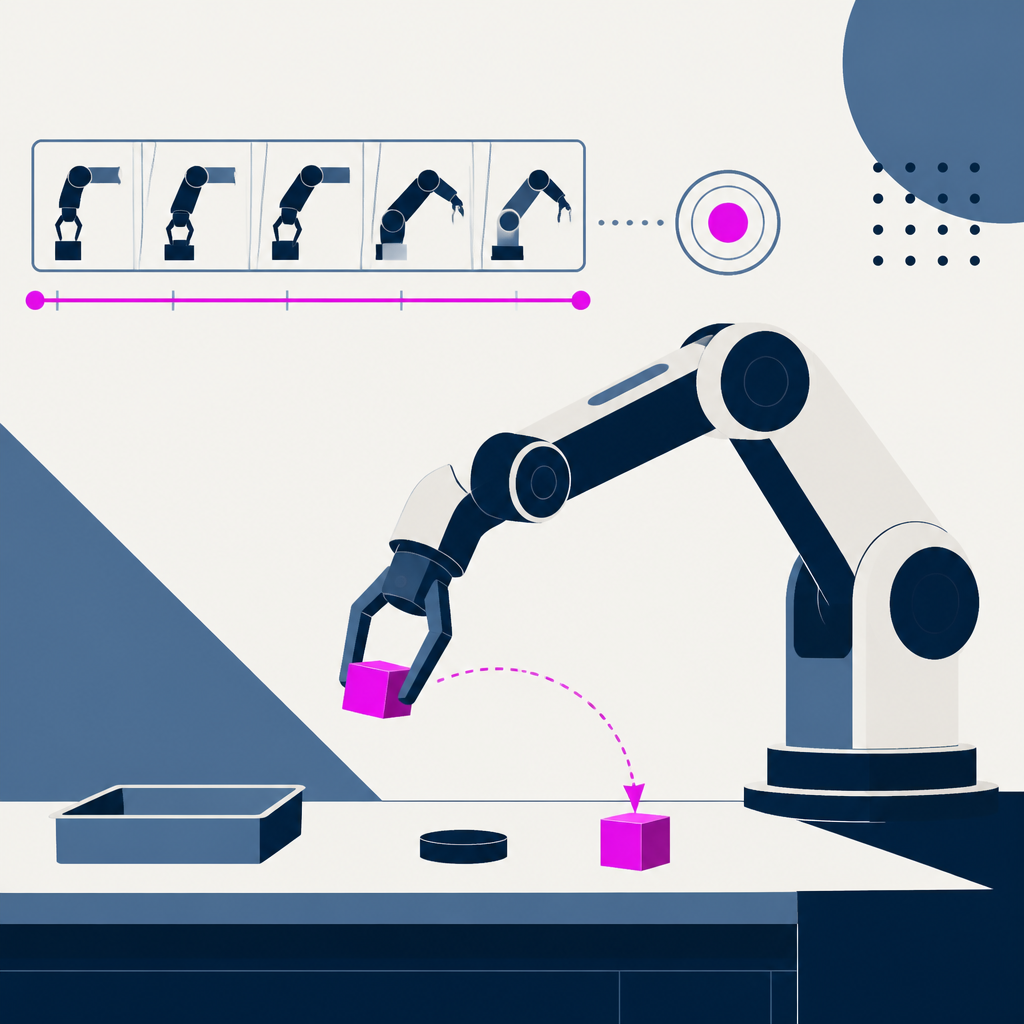
Generalist AI says its new robot model learns a task from a 3–12 second demo. That’s wild, but it’s still a research release with no public weights or API.
Based on reporting by MarkTechPost, Asif Razzaq — read the original for the full story.
Summary, retelling and take written by AI under human oversight; images are AI-generated illustrations. How we work · Report an error
Generalist AI has released GEN-1.5, a robot foundation model built to pick up a new physical task from a single short demonstration. The company says you drop a 3–12 second sensorimotor example into a 30-second context window, and the robot can try the task right away, with no gradient updates, no fine-tuning and no task-specific code.
The model is a multimodal system that takes video, sensor, language and proprioceptive inputs, then outputs 100 Hz action trajectories. Generalist says it has been pretrained continuously for more than eight months on physical interaction data collected in homes, warehouses and factories. It calls the learning mechanism physical prompting, and says it was not built with special in-context-learning tricks: no architectural changes, no meta-learning loop, no auxiliary objectives.
The headline result is simple enough to be dangerous. Across 10 manipulation tasks, one-shot in-context prompting averaged 59% success, with a 10-point standard deviation, using the pretrained model as-is. When the team allowed 10 gradient steps on five minutes of data per task, the average rose to 83%, with a 9-point standard deviation. In one held-out case, a single gradient step on one minute of data reached 66.5% without a special hyperparameter sweep.
There are a few transfer results that make the system feel less like a parlor trick and more like a signpost. Two separate prompts can be chained into one longer behaviour, with the model filling in the missing motions between them. A demo recorded in simulation can work on a real robot even though the pretraining data did not include simulation. And in some cases a person can demonstrate with their own hands, while the robot copies the task with its own.
Generalist is careful not to oversell the thing as a product. There are no public weights, no API, no pricing page and no self-serve offering. The company runs GEN-1.5 on its own fleet and data engine, and anyone who wants access has to go through a direct partnership. So yes, this is interesting. But it is interesting in the way a lab result is interesting: as proof that a certain kind of robot skill might emerge from scale, not as something you can buy this afternoon.
My take — AI-written commentary, not fact-checked reporting
This is the kind of result that should annoy both camps: the people who think robots need hand-built rules, and the people who pretend every demo is basically deployment. It’s a strong research signal, not a finished product, and that distinction gets blurred far too often in AI. The real story here is that physical prompting seems to emerge from scale the same way prompt-following did in language models — which is exactly why closed access and vague product talk deserve side-eye.
Read more about this at: MarkTechPost
Related stories
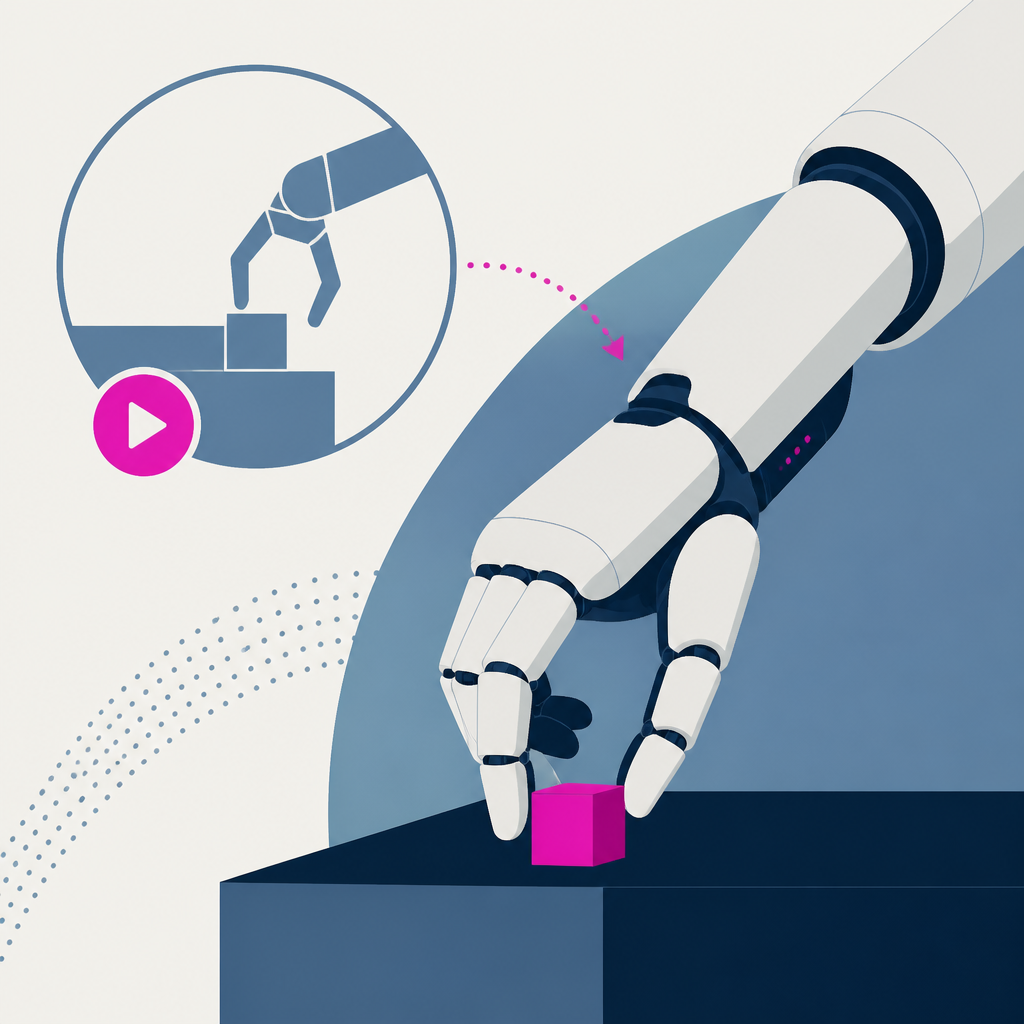 Skild AI Taps NVIDIA Physical AI to Teach Robots New Tasks From a Single Video
NVIDIA Blog · 1 month ago ·
45
Skild AI Taps NVIDIA Physical AI to Teach Robots New Tasks From a Single Video
NVIDIA Blog · 1 month ago ·
45
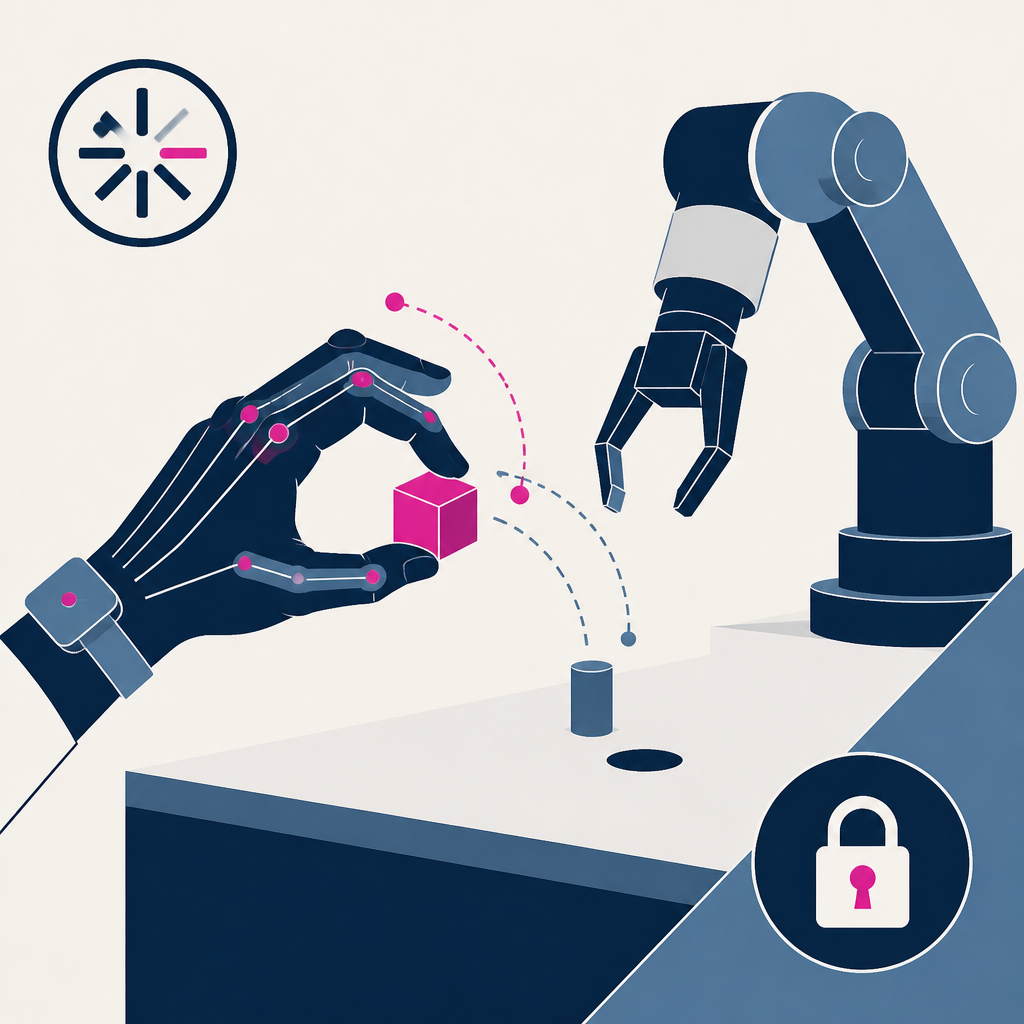 Reward AI Releases OM-1: A Robot Policy Trained on Human Demonstrations Only, With No Teleoperation or On-Robot Data
MarkTechPost · 1 month ago ·
1
Genie 3: A new frontier for world models
Google DeepMind · 11 months ago ·
19
Reward AI Releases OM-1: A Robot Policy Trained on Human Demonstrations Only, With No Teleoperation or On-Robot Data
MarkTechPost · 1 month ago ·
1
Genie 3: A new frontier for world models
Google DeepMind · 11 months ago ·
19