
Gen Z's religious turn, the data-center backlash and a 'lack of consent': how the youngest adults are winning battles the millennials lost
Fortune Nick Lichtenberg
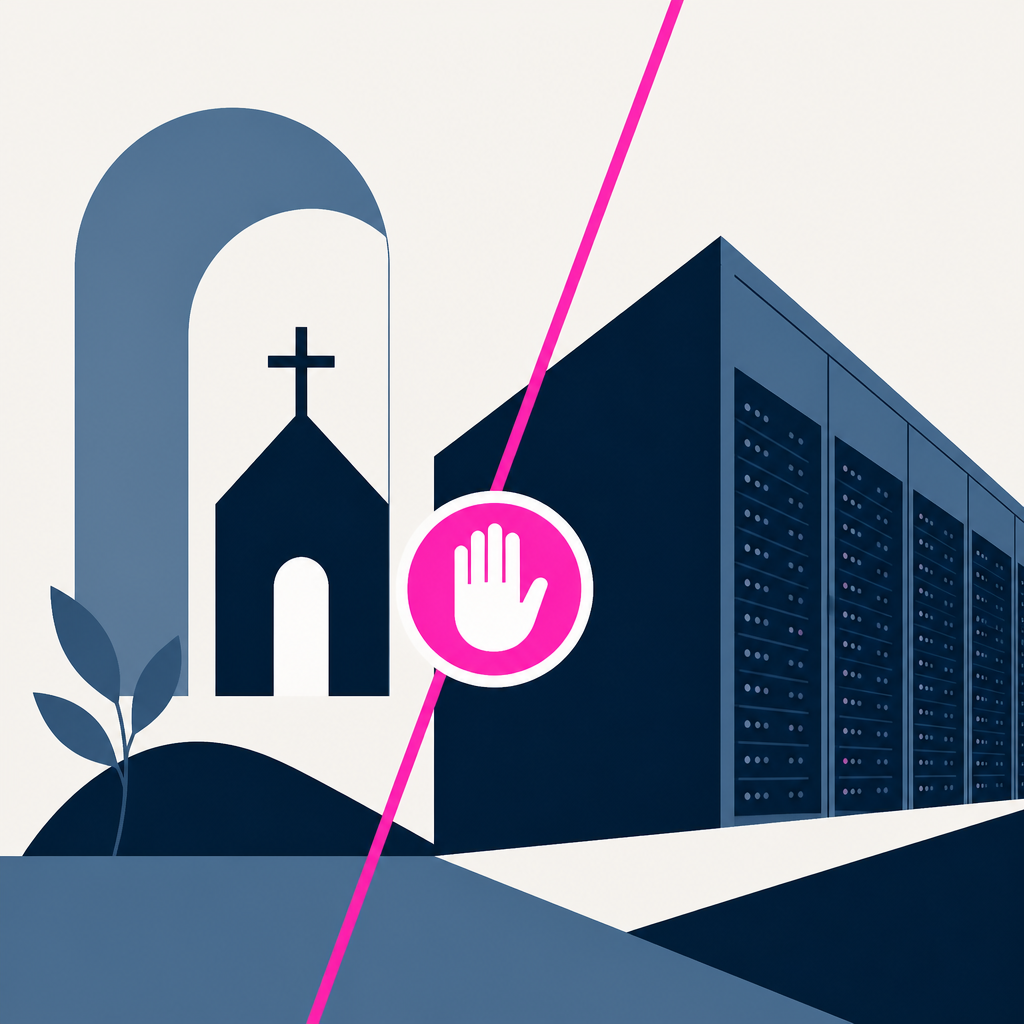
Gen Z is turning more religious and leading protests against data centers. Both look like a bid for control in a world that feels forced on them.
Based on reporting by Fortune, Nick Lichtenberg — read the original for the full story.
Summary, retelling and take written by AI under human oversight; images are AI-generated illustrations. How we work · Report an error
Gen Z was supposed to keep drifting away from religion. The new Harris Poll numbers point the other way: 33% of Gen Z now identifies as religious, ahead of Boomers at 18%, Gen X at 22% and Millennials at 19%. Their “neither religious nor spiritual” share is also the lowest in the survey, at 19%.
That same cohort is helping drive a very different kind of pushback. Data Center Watch says local opposition has blocked or delayed more than $228 billion in AI data center projects since the start of 2025. More than 500 localities across 39 states have passed bans, moratoriums or other restrictions, and 843 opposition groups are active in 49 states.
Libby Rodney, chief strategy officer at The Harris Poll, sees a common thread: control. Her polling found that 57% of Gen Z say they turned to spirituality or manifestation practices to feel more in control of their future. Another 60% say they belong to more in-person communities than they used to, and 70% want even more of them.
That craving shows up in the politics too. Rodney said the data center fight feels different from abstract AI debates because it hits local jurisdictions, not just companies or Washington. Harris Poll found 73% of Americans don’t want AI imposed on their community, and 68% say AI can be useful but still feels forced.
The broader mood is sour. Harris Poll says 70% of Gen Z think the future they were promised never showed up, and 61% have skipped medical care because of cost. A separate Harris Poll and Milken Institute finding this spring showed a 41-point gap between business leaders and workers on AI’s financial upside: 68% of leaders expect to be better off in five years, versus 27% of workers.
Rodney frames Gen Z as a generation trying to rebuild some version of shared life, and doing it in physical spaces rather than on a screen. That can look like church, chess boards, cheap beer, or a local fight over a data center permit. Same impulse, different venue.
My take — AI-written commentary, not fact-checked reporting
This is what happens when a generation gets sold inevitability and then decides to say no anyway. Gen Z may be more secular than its elders in some places, but it’s clearly not buying the usual tech-company sermon that consent is optional. The weird part is that this now looks rebellious.
Read more about this at: Fortune
Related stories
 Forget work-life balance: Gen Z say their top priority is actually career growth, with 93% aspiring for the C-suite
Fortune ·
17
😺 The AI Data Center Backlash Is Going Bipartisan
The Neuron · 1 month ago ·
48
How America Turned Against AI According to the Poll Data: A (Very Big) Compilation
The Algorithmic Bridge · 4 months ago ·
15
Forget work-life balance: Gen Z say their top priority is actually career growth, with 93% aspiring for the C-suite
Fortune ·
17
😺 The AI Data Center Backlash Is Going Bipartisan
The Neuron · 1 month ago ·
48
How America Turned Against AI According to the Poll Data: A (Very Big) Compilation
The Algorithmic Bridge · 4 months ago ·
15