
Gemini Flash Gets Pricey, AI Act Delays, Agents Drive Online Traffic
The Batch Analytics DeepLearning.AI ● Covered by 2 sources
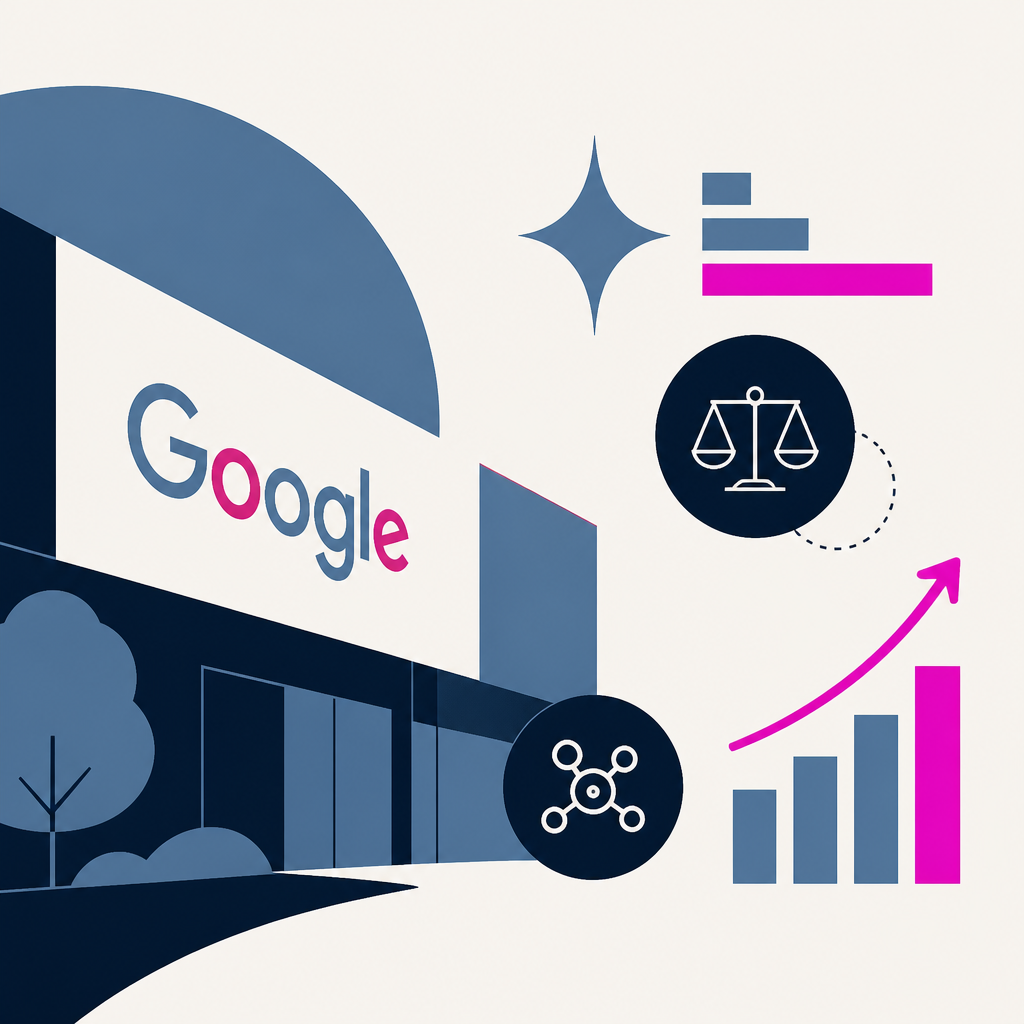
Google's new Gemini 3.5 Flash model costs three times more than its predecessor, and the EU just delayed big chunks of its AI safety law. Prices are climbing while regulators back off — a rough week for anyone hoping AI would get cheaper and safer at once.
Based on reporting by The Batch, Analytics DeepLearning.AI — read the original for the full story.
Summary, retelling and take written by AI under human oversight; images are AI-generated illustrations. How we work · Report an error
Google rolled out Gemini 3.5 Flash at its I/O event, and the headline isn't really the upgrade — it's the bill. The model brings real gains in agentic tasks, visual reasoning, and raw speed over the previous Gemini 3 Flash, but it costs three times as much to run. API pricing lands at $1.50 per million input tokens, $0.15 for cached tokens, and $9.00 for output. Google claims the new model often runs at less than half the cost of rival systems, yet independent testing from Artificial Analysis found that, on the same intelligence benchmarks, it actually costs more per test than Google's own Gemini 3.1 Pro. That undercuts the whole premise of a "Flash" tier: cheap and fast used to be the deal, and now it's just fast.
The benchmarks tell a mixed story. Gemini 3.5 Flash topped the APEX-Agents-AA test, which measures long agentic tasks pulled from fields like investment banking and corporate law, beating GPT-5.5 by nearly ten percentage points. It also led the MMMU-Pro multimodal benchmark with 84 percent accuracy, edging out Gemini 3.1 Pro Preview's 82 percent. But on broader measures of intelligence, knowledge, and coding, it trails the field, landing well behind Anthropic's Opus models on the Text Arena and WebDev leaderboards. This is a model built for speed and agent work, not for topping every chart, and Google seems fine with that trade-off even as the price tag climbs. Anthropic and OpenAI have both nudged up per-token prices on their newer models too, so Gemini 3.5 Flash isn't an outlier — it's a pattern.
On the other side of the Atlantic, the EU just softened its own AI rulebook. The European Parliament and member states agreed to delay and simplify parts of the AI Act after years of complaints from businesses that the law made European companies less competitive. Deadlines for "high-risk" AI systems — things used in law enforcement, employment, migration, and critical infrastructure — move from August 2026 to December 2027. Watermarking and transparency rules get pushed to around December 2026, and requirements for AI-driven machinery and toys stretch out to August 2028. Smaller companies and "small mid-cap" firms also get lighter compliance burdens under the new terms.
The changes didn't come from nowhere. Executives at 163 companies signed a letter back in 2023 calling the law bureaucratic, and 110 companies followed up in 2025 asking for a postponed timeline, arguing the rules were unclear and overlapping. Firms like Siemens and SAP lobbied directly for revisions. Two influential reports — one from former Italian Prime Minister Enrico Letta, another on European competitiveness — argued that fragmented regulation was holding the bloc back against American and Chinese firms. The EU did tighten one thing rather than loosen it: the amendments now ban generating sexually explicit images of children and non-consensual nude images of real people.
Reaction split along predictable lines. Industry groups welcomed the breathing room, while consumer advocates pushed back hard. The European Consumer Organization said the deal makes the digital environment less safe and opens dangerous loopholes for AI companies. Whether that's true or overstated, the timing is notable: just as the EU eases up on oversight, the companies it's trying to regulate are raising prices and racing to ship faster, more agentic tools with less transparency about what's under the hood.
My take — AI-written commentary, not fact-checked reporting
Nobody should be surprised that a law written to slow down AI got watered down the moment 163 well-lobbied executives complained about paperwork — that's just how regulation works when the industry it targets has more money and urgency than the people writing the rules. The more interesting tell is Google's pricing move: a "Flash" tier that costs more than the flagship model on the same benchmark is not a pricing tier, it's a marketing label wearing a discount costume. Developers building agentic products should stop assuming smaller model name means smaller bill, because that math stopped holding months ago.
Read more about this at: The Batch
Related stories
 Google AI Just Released Gemini 3.7 Flash: A Coding and Agent Model at $0.75/1M Input Tokens
MarkTechPost · 1 month ago ·
11
Introducing Gemini 3.6 Flash, 3.5 Flash-Lite, and 3.5 Flash Cyber
Google · 1 month ago ·
40
Gemini 3 Flash: frontier intelligence built for speed
Google DeepMind · 9 months ago ·
20
Google AI Just Released Gemini 3.7 Flash: A Coding and Agent Model at $0.75/1M Input Tokens
MarkTechPost · 1 month ago ·
11
Introducing Gemini 3.6 Flash, 3.5 Flash-Lite, and 3.5 Flash Cyber
Google · 1 month ago ·
40
Gemini 3 Flash: frontier intelligence built for speed
Google DeepMind · 9 months ago ·
20