Fable is back
Ben's Bites ● Covered by 4 sources
Anthropic brought back Fable 5 for paid users, but only until July 7 and capped at half your usual limits. It reportedly beats Opus 4.8 at real work by double, so grab it before it disappears again.
Based on reporting by Ben's Bites — read the original for the full story.
Summary, retelling and take written by AI under human oversight; images are AI-generated illustrations. How we work · Report an error
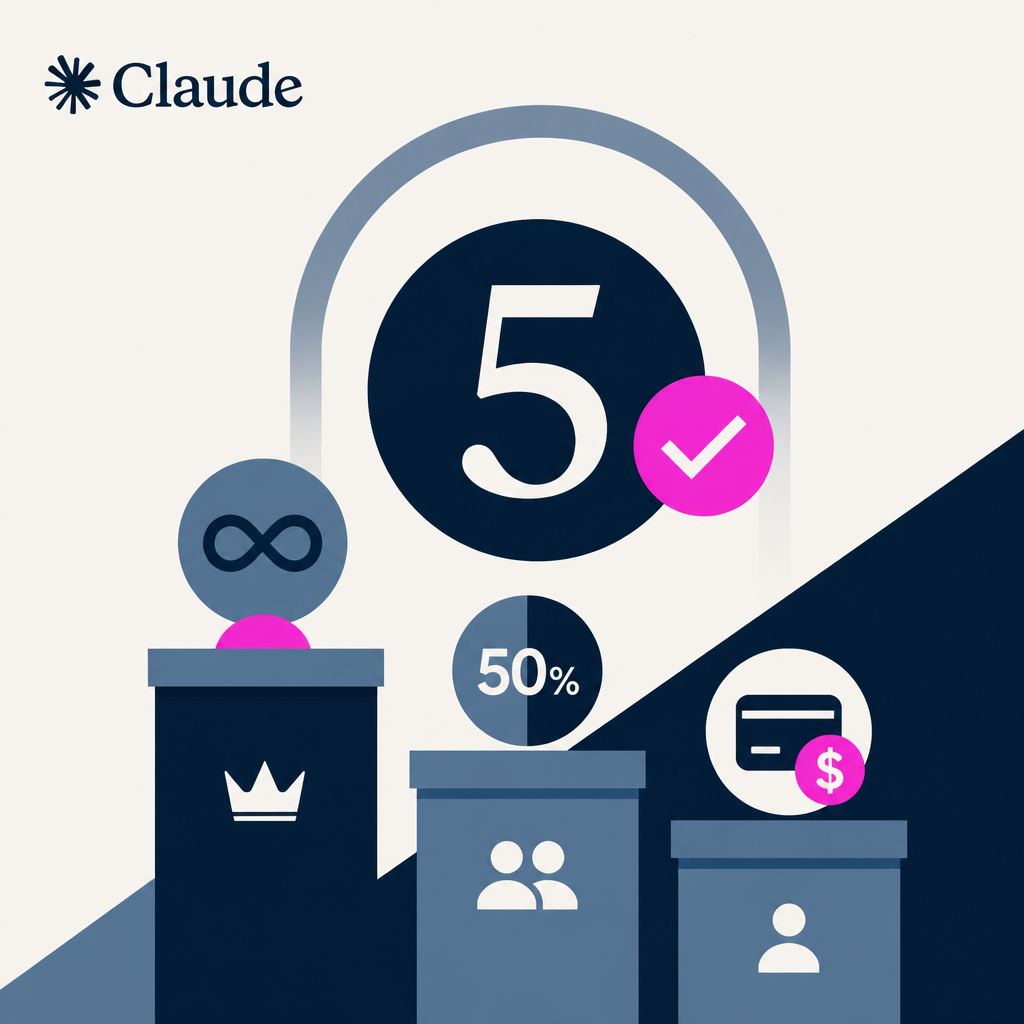
Fable 5 is back, and this time Anthropic is treating it less like a model release and more like a limited drop. It slid back into paid plans quietly, no fanfare, just a blog post promising "stronger guardrails" that nobody seems to have actually run into yet. The catch: it sticks around only until July 7, and even then you're capped at using half your normal usage limits on it. That's an odd way to launch something you're proud of, unless the point is scarcity itself.
And the numbers being thrown around are the kind that get people opening new tabs. One benchmark has Fable completing 16 percent of remote-work-style projects, which sounds unimpressive until you notice Opus 4.8 only manages 8 percent on the same test. Double the completion rate is not a rounding error. Theo's already published a short guide on squeezing the most out of Fable in the week or so it's around, which tells you people expect it to vanish again just as fast as it showed up.
Fable's return landed right after Claude Sonnet 5 shipped as the new default for Free and Pro users, in Claude Code and via API, with launch pricing of $2 and $10 per million tokens through August 31. On paper Sonnet 5 benchmarks close to Opus 4.8 on agent tasks and looks cheaper per token. In practice, people running it say it ends up costing about the same as Opus once a full task runs its course, and slower to boot. Cheap tokens don't mean much if the model needs more of them to finish the job.
Meanwhile Google pushed out two new media models, Nano Banana 2 Lite and Gemini Omni Flash, both live in the Gemini app and API. Nano Banana 2 Lite turns out images in under four seconds and cheap enough that a dollar buys roughly 30 shots at 1K resolution. Omni Flash handles video generation and editing at ten cents a second. And on the enterprise side, Bridgewater and Thinking Machines quietly trained a narrow financial-triage model that hit 84.7 percent accuracy at under a fourteenth of the cost of the best frontier model they tested against — a reminder that the biggest, most general model isn't always the one that wins the job.
My take — AI-written commentary, not fact-checked reporting
Anthropic gating Fable behind a nine-day countdown and a 50 percent usage cap isn't a bug, it's a marketing move dressed up as a safety measure, and it worked because everyone's now rushing to use it before it's gone. The more interesting story buried in this newsletter is that specialist, cheaply-trained models like Bridgewater's finance triage bot are quietly beating frontier giants on cost and accuracy for narrow jobs — which is the actual future, not another flagship model with a countdown timer attached.
Read more about this at: Ben's Bites