
China Joins Rush to Rethink the Smartphone for the AI Era
Bloomberg
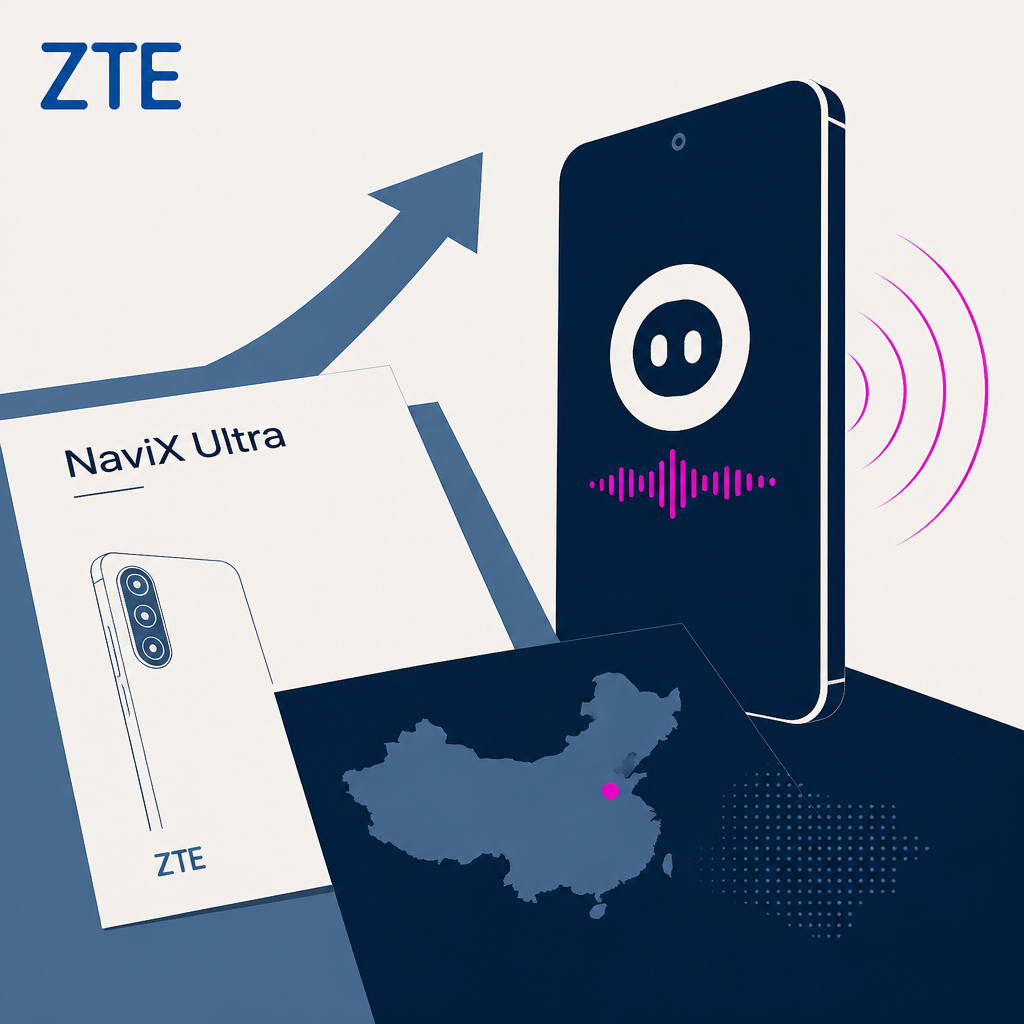
ZTE just dropped a phone built around AI agents instead of apps. Say a command, and it launches ByteDance's Doubao assistant straight away.
Based on reporting by Bloomberg — read the original for the full story.
Summary, retelling and take written by AI under human oversight; images are AI-generated illustrations. How we work · Report an error
ZTE wants you to stop tapping icons and start talking. The company's new NaviX Ultra, part of a broader lineup co-designed with AI partners, is being pitched as the world's first "agentic" smartphone — one voice command and it hands control over to ByteDance's Doubao assistant, no menu-digging required.
That's a meaningful shift from how phones have worked for nearly two decades. Since the iPhone, the app grid has been the interface: find the icon, open the app, do the thing. ZTE's bet is that AI agents can collapse that whole process into a sentence, letting Doubao book a ride, draft a message, or pull up information without you ever touching a home screen.
ZTE isn't doing this in isolation. Chinese phone makers have been racing to bolt large language models onto hardware for the past two years, but most of that effort has looked like Siri or Google Assistant with a chatbot skin — useful, sure, but still bounded by the same tap-to-open logic. Tying the phone's core experience to a third-party agent like Doubao, built by one of China's most aggressive AI players, is a bigger swing. It also signals how much leverage ByteDance now has in mobile hardware, despite not making phones itself.
The timing lines up with a broader industry mood: Apple, Samsung and Google have all talked up agentic AI features without fully committing to rebuilding the phone around them. ZTE, competing in a crowded and price-sensitive Chinese market, has less to lose by going all-in early. Whether Doubao-on-command actually beats opening an app remains to be seen once real users get their hands on it, but the intent is clear — ZTE wants the interface itself, not just the assistant, to change.
My take — AI-written commentary, not fact-checked reporting
I've watched three straight years of phone makers slap a chatbot onto the lock screen and call it innovation, so credit to ZTE for actually rearranging the furniture instead. But let's not pretend an agent replacing app icons magically escapes the walled gardens — Doubao is still ByteDance's black box, and 'agentic' won't mean much if it just swaps one gatekeeper for another. Open-model alternatives on-device would be the real game changer here, and China's not there yet either.
Read more about this at: Bloomberg