
CBO chief warns it's 'probably not plausible' that a strong economy alone can steady U.S. debt as 5%-6% growth is needed—more than Bessent's 3% view
Fortune Jason Ma
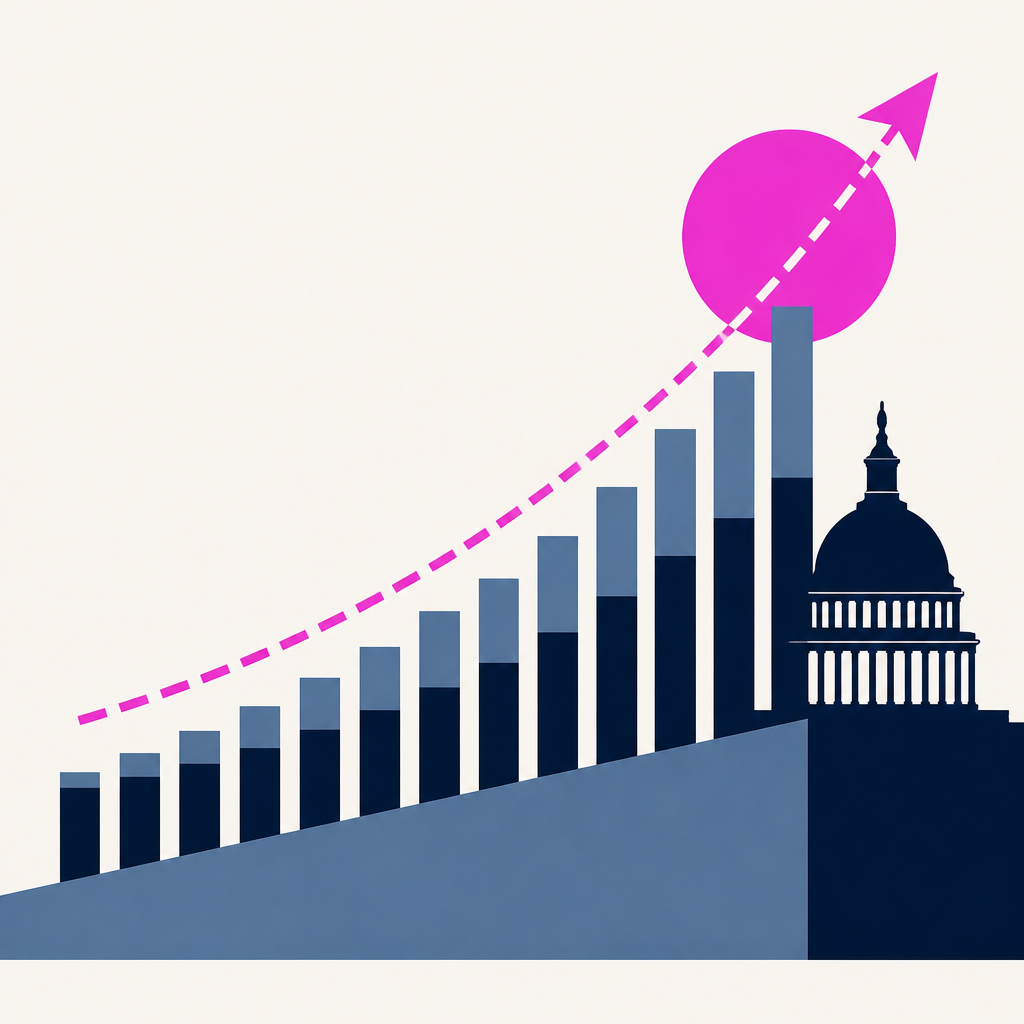
CBO says the U.S. can’t count on growth alone to fix its debt. Phillip Swagel says it would take much faster growth than many expect, and politics still has to do the hard part.
Based on reporting by Fortune, Jason Ma — read the original for the full story.
Summary, retelling and take written by AI under human oversight; images are AI-generated illustrations. How we work · Report an error
The U.S. can’t simply grow its way out of the debt problem, according to Congressional Budget Office Director Phillip Swagel. Speaking at a Minneapolis Fed conference on Thursday, he said stronger growth would help because it brings in more revenue. But it also pushes up wages, spending on programs like Social Security, and interest rates, which raises borrowing costs. That mix makes the math uglier, not cleaner.
Swagel said gross debt has reached $40 trillion, while publicly held debt is already 100% of GDP. If that ratio is going to stay flat, let alone come down, the economy would need a long, powerful surge. The CBO currently expects the debt-to-GDP ratio to climb to 120% by 2036. His verdict was blunt: growth will help, but it is “probably not plausible” that growth alone will stabilize the fiscal path.
AI came up too. Minneapolis Fed President Neel Kashkari asked whether it could supercharge growth, and Swagel said the CBO has already seen an increase in total factor productivity, a measure of how efficiently labor, capital and other inputs are used. The agency’s next forecasts, due early next year, will fold in its view of AI. Even so, Swagel said the deficit is so large that the extra growth from AI won’t be enough on its own.
He also sketched out what would actually be needed. With interest rates at 4% to 5%, he estimated nominal GDP growth would have to run at 7% to 8%, and real GDP growth at 5% to 6%. That is far above the latest 2.2% real GDP pace in the second quarter and above even bullish Wall Street expectations for 2.5% full-year growth. It also goes past Treasury Secretary Scott Bessent’s view that 3% growth would be enough to grow out of the debt.
Swagel warned that a sharp jump in interest rates would create a nasty feedback loop: higher rates increase the deficit, which increases the debt, which can push rates higher again. The bond market is still taking in all the Treasury’s issuance, but long-term yields are already at 24-year highs. Some of that reflects the strong economy, rate expectations, oil prices and AI-related borrowing. Some of it, Swagel said, is simply the sheer size of the debt itself.
My take — AI-written commentary, not fact-checked reporting
This is the part Washington keeps pretending is optional: spending and taxes are political choices, not a spreadsheet glitch. Growth is nice, but it’s not a magic broom that sweeps away a $40 trillion bill. The cheerful talk about 3% growth sounds a lot better than the math coming out of the CBO, which is usually how fiscal trouble gets a head start.
Read more about this at: Fortune
Related stories
 The U.S. economy is running hot and stuck on a hamster wheel as GDP growth must outpace borrowing costs—or risk getting sucked into a debt spiral
Fortune ·
31
Will AI soon lead to double-digit growth?
Ghosts of Electricity · 4 weeks ago ·
24
The U.S. economy is running hot and stuck on a hamster wheel as GDP growth must outpace borrowing costs—or risk getting sucked into a debt spiral
Fortune ·
31
Will AI soon lead to double-digit growth?
Ghosts of Electricity · 4 weeks ago ·
24
 The economy has undergone a structural transformation that ended the low-cost era. 'The regime change in inflation and interest rates is the outcome'
Fortune ·
18
The economy has undergone a structural transformation that ended the low-cost era. 'The regime change in inflation and interest rates is the outcome'
Fortune ·
18