
AJ Scaramucci’s Solari Capital emerges from stealth with $350 million deployed and a case that companies stay private too long
Fortune Amanda Gerut ● Covered by 2 sources

AJ Scaramucci’s Solari Capital comes out of stealth with $350 million already deployed. Its pitch: private companies are staying private too long, and regular investors are locked out.
Based on reporting by Fortune, Amanda Gerut — read the original for the full story.
Summary, retelling and take written by AI under human oversight; images are AI-generated illustrations. How we work · Report an error
AJ Scaramucci’s Solari Capital has stepped out of stealth with a simple complaint hiding inside a much bigger bet: too much value is being created behind closed doors. The firm says it has already deployed $350 million since launch, spreading it across early-stage deals, later-growth investments, and companies it builds itself.
Scaramucci’s backers are not exactly small names. They include Ron Conway of SV Angel, Jim Breyer of Breyer Capital, Stephen Pagliuca of Bain Capital, former Alphabet chief executive Eric Schmidt, and Peter Diamandis. He is also the son of SkyBridge Capital founder Anthony Scaramucci, which helps explain why the name got attention before the portfolio did.
The firm’s umbrella concept is “programmable reality,” Scaramucci’s idea that rising computing power will make biology, intelligence, physical matter, and money more engineerable. That sounds lofty, but the holdings are concrete enough: xAI, Suno, Tessera Therapeutics, Varda Space, and Northwood Space. Solari also points to Fission Labs, which tokenizes shares of private companies for secondary trading, and Architect Financial, a derivatives exchange aimed at the AI economy.
The real argument, though, is about timing. Scaramucci told Fortune that companies used to reach the public markets in about four years and now take 12 to 15. Jay Ritter, the University of Florida professor known as Mr. IPO, backs up the direction of travel: the median VC-backed tech company was six to nine years old at IPO through much of the 1990s, 13.5 in 2024, and 12 last year. The number of tech listings has also collapsed, with 34 in 2025 versus 205 in 1995.
That matters because a lot of the upside now happens before public investors can buy in. Solari’s answer is to push some of that value into markets sooner, whether through tokenized private shares or through collectibles like art, dinosaur bones and trading cards. It is a neat theory. It also sounds like a fight over who gets to own the good stuff before everyone else shows up.
My take — AI-written commentary, not fact-checked reporting
This is classic late-stage venture logic: if the public market door won’t open, build a side entrance and call it innovation. The bigger tell is how normal this sounds now. When private-company liquidity starts looking like a consumer product, the market has already admitted the old model is broken.
Read more about this at: Fortune
Related stories
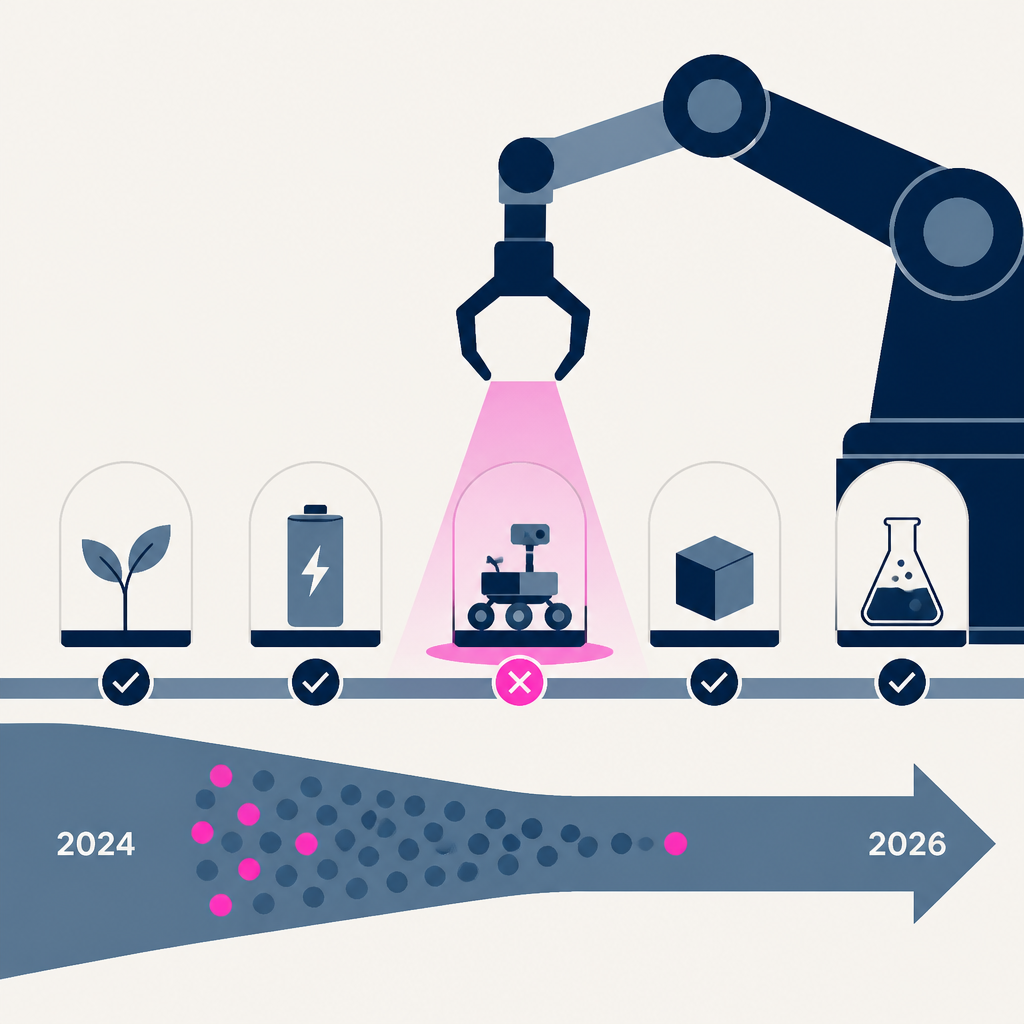 Portfolio review takes on a new urgency for VCs as AI makes 2024's great deals look like 2026's clear mistakes
Fortune ·
29
OpenAI Needs Fresh Capital After Shelving Its IPO, Reportedly at a $1.2 Trillion Valuation
Trending Topics · 3 days ago ·
37
Portfolio review takes on a new urgency for VCs as AI makes 2024's great deals look like 2026's clear mistakes
Fortune ·
29
OpenAI Needs Fresh Capital After Shelving Its IPO, Reportedly at a $1.2 Trillion Valuation
Trending Topics · 3 days ago ·
37