AI’s finally expensive enough to make Wall Street nervous
The Verge Elizabeth Lopatto ● Covered by 75 sources
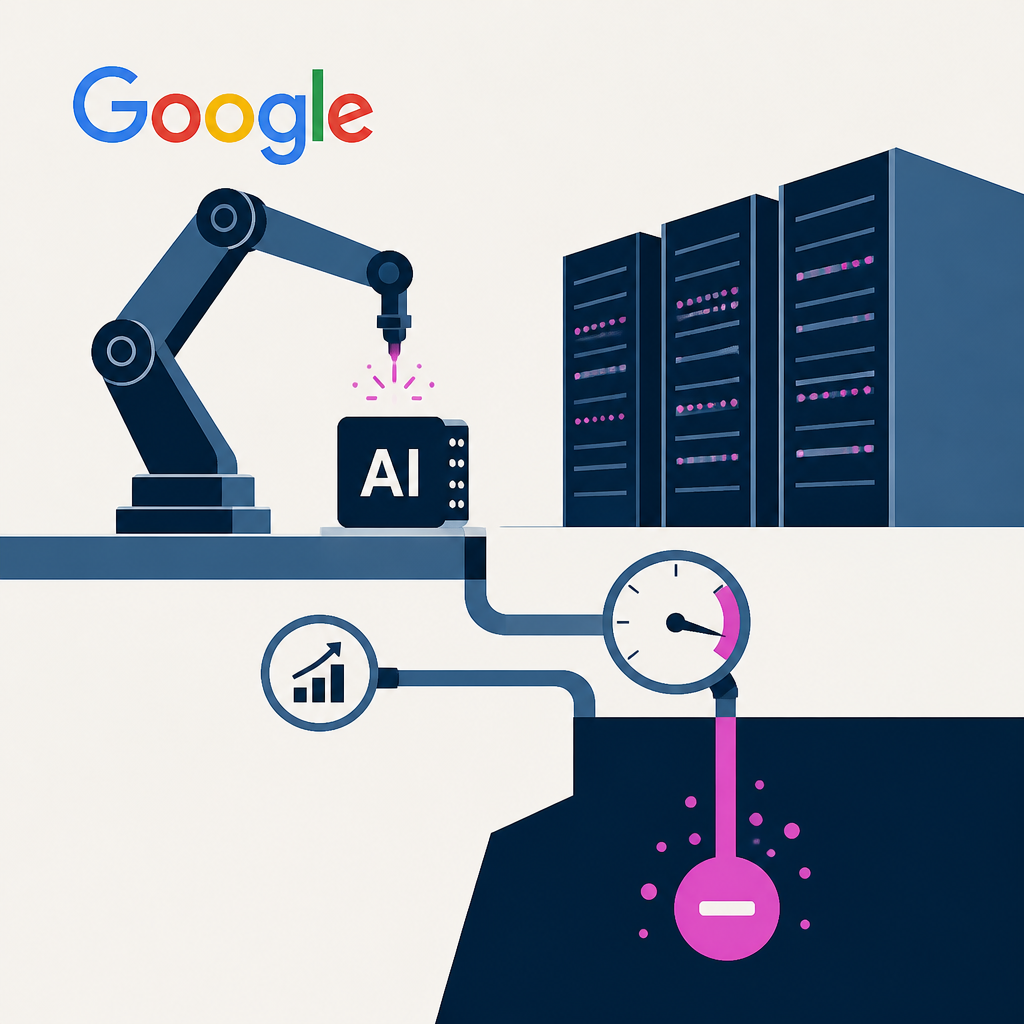
Google hiked its AI spending forecast to $205 billion, up from $190 billion last quarter. Even Google can't nail down its own costs — and that's spooking Wall Street.
Based on reporting by The Verge, Elizabeth Lopatto — read the original for the full story.
Summary, retelling and take written by AI under human oversight; images are AI-generated illustrations. How we work · Report an error
Google's earnings call this week delivered a jolt: the company now expects to spend as much as $205 billion, up from the $190 billion ceiling it floated just one quarter ago. The new floor of the range, $195 billion, already exceeds what Google used to call its top end. That's not a rounding error; it's a signal that the company can't reliably predict its own costs.
The math gets uglier once you notice Google is spending more than it's bringing in, all while facing pressure from Chinese AI tools and a market that expects it to hold prices steady or drop them further. Spend more and hold prices flat, and the return shrinks. Spend more while prices fall, and the return gets worse still.
Google isn't alone in this. Meta, Amazon, and Microsoft all report earnings this week, and plenty of people expect similar admissions about data center costs running past projections. Add to that the sight of SpaceX shares trading at almost half their peak value, growing unease over Oracle's data center debt — Oracle being treated as a public-market stand-in for OpenAI — and Nvidia running deal talks worth a combined three-quarters of a trillion dollars, and a picture forms of an industry quietly bracing for something.
The clearest tell might be Nvidia agreeing to guarantee $250 billion of OpenAI's debt. Billy Leung of Global X Management called it, per Bloomberg, "as much a reminder of funding strain in the AI build-out as it is a demand signal." Layer on a new model release from a Chinese startup — another reminder that Chinese firms keep matching US AI performance despite theoretically restricted GPU access — and the worry sharpens: maybe there isn't enough real demand to justify all these data centers, and maybe the chip spending spree has a shelf life.
Even people who stay bullish on AI expect this stretch to end in overbuilding and a wave of company failures, and they're betting the survivors will pay off more than the losers cost. Everyone in this market, boosters included, is watching for the top, even though nobody can call it in advance. Earnings from the rest of Big Tech this week could calm things down. Or they could confirm what a growing number of investors already suspect.
My take — AI-written commentary, not fact-checked reporting
When a company as buttoned-up as Google admits it can't forecast its own AI bill within $15 billion, that's not a rounding error — it's an industry confessing it's flying blind. Nvidia backstopping OpenAI's debt while chasing deal talks worth three-quarters of a trillion dollars looks less like confidence and more like propping up demand that might not be there. The smart money is already betting on whoever survives the shakeout, which is a polite way of saying everyone expects a graveyard first.
Read more about this at: The Verge