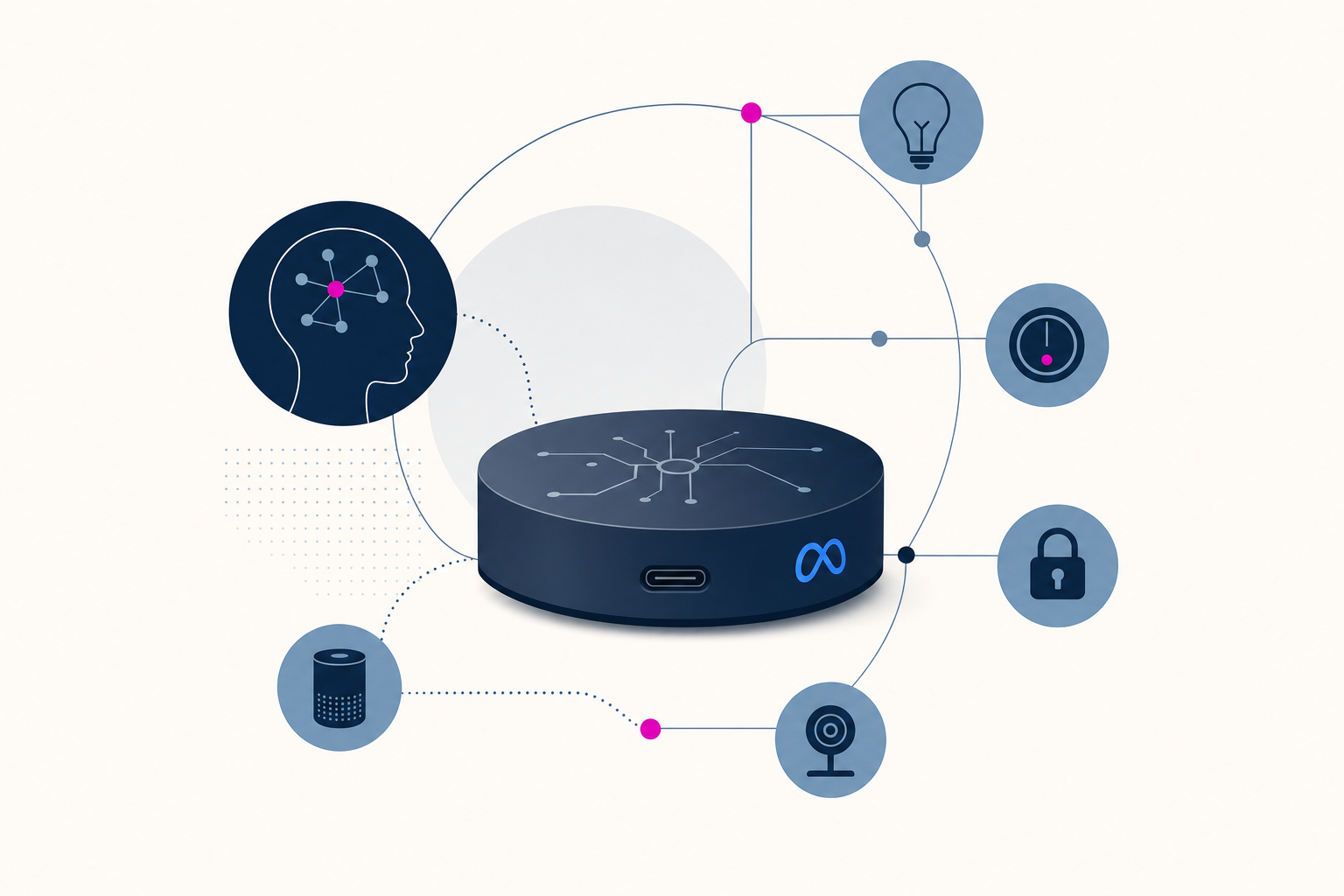
Meta used today’s announcements to turn Muse from a chat experience into a control surface. With Muse Gadgets, the company is releasing open-source firmware and a Linux SDK that lets developers build custom, USB-C-powered devices that can connect directly to its Muse personal AI agent. Meta is also giving away 5,000 “Muse Home Link” units to Muse subscribers while supplies last, a move that doubles as both distribution and developer enablement. The practical idea is simple: instead of treating AI as an app, Meta wants it to ride along on physical endpoints—lighting, sensors, appliances, or whatever inventors can prototype.
That theme—AI that can act in the real world—also showed up in robotics, where FieldAI is reportedly pursuing a $700M funding round that could value the company at $10 billion. The pitch is built around a map-free robot approach and a “digital twin platform,” scaling autonomy without relying on pre-existing environments. If the numbers hold, FieldAI’s valuation leap from last August signals investors are still willing to underwrite the costly work of turning perception and planning into reliable motion.
Together, these stories point to the same shift: more than smarter outputs, companies are chasing durable pathways from models to hardware, whether that’s a developer’s gadget plugged into a home or a robot navigating without a map.