OpenAI Blog
·
2 months ago
● 2 sources
Sea Limited is deploying OpenAI's Codex across its engineering teams to accelerate software development processes in Asia. The company's Chief Product Officer stated that Codex integration focuses on enabling AI-native development practices rather than simply automating code generation. Engineering teams can now reduce development cycles by leveraging AI assistance for routine coding tasks, allowing engineers to focus on higher-level architectural decisions.
Amazon Science
·
2 months ago
Amazon researchers presented Promptimus, a method that automatically optimizes existing large language model prompts by identifying failure points and making targeted improvements without full rewrites. The system achieved best results on 16 of 20 benchmarks with an average performance score of 0.792 compared to 0.765 for the best baseline, typically reaching 90% of final performance within 300 metric evaluations. Enterprises can now improve production prompts across different LLM models without manual reengineering while preserving critical domain requirements and business logic.
Ben's Bites
·
2 months ago
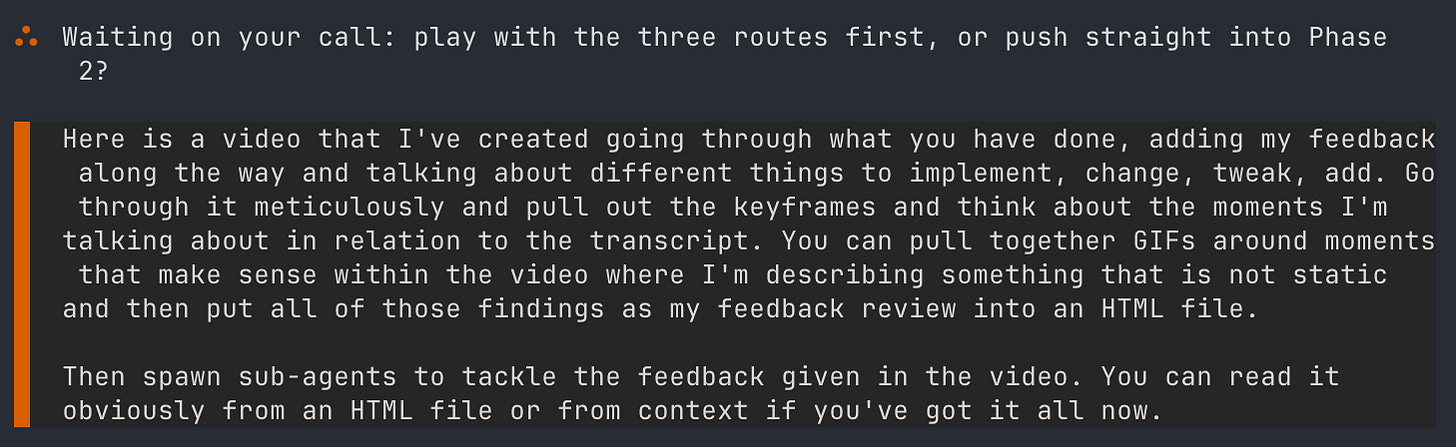
A developer is testing a workflow where screen recordings with voiceover are converted into structured HTML documents with transcribed text, keyframes, and GIFs for providing feedback to AI agents. The method creates visual reports with timestamped information and action checklists that can be saved and referenced. This approach is token-intensive but provides clearer feedback loops compared to traditional text-based methods.
OpenAI Blog
·
2 months ago
Codex can now be accessed through the ChatGPT mobile app, allowing users to work with the code generation tool on phones and tablets. The mobile app enables real-time monitoring, steering, and approval of coding tasks across different devices and remote work setups. This expands where developers can manage their coding workflows beyond desktop environments.
Together AI
·
2 months ago
Together AI released Violin, an open-source video translation tool that uses speech recognition, language models, and speech synthesis to translate video content across languages. The system processes videos through three stages—automatic speech recognition via Whisper V3, translation using DeepSeek V4 Pro, and speech generation with Cartesia's Sonic 3—and includes a chat assistant for querying video content. The tool is available as a web app, command-line interface, and agent skill under an MIT license, designed to address the gap where 66% of top YouTube videos are in English compared to 15% in Spanish.
