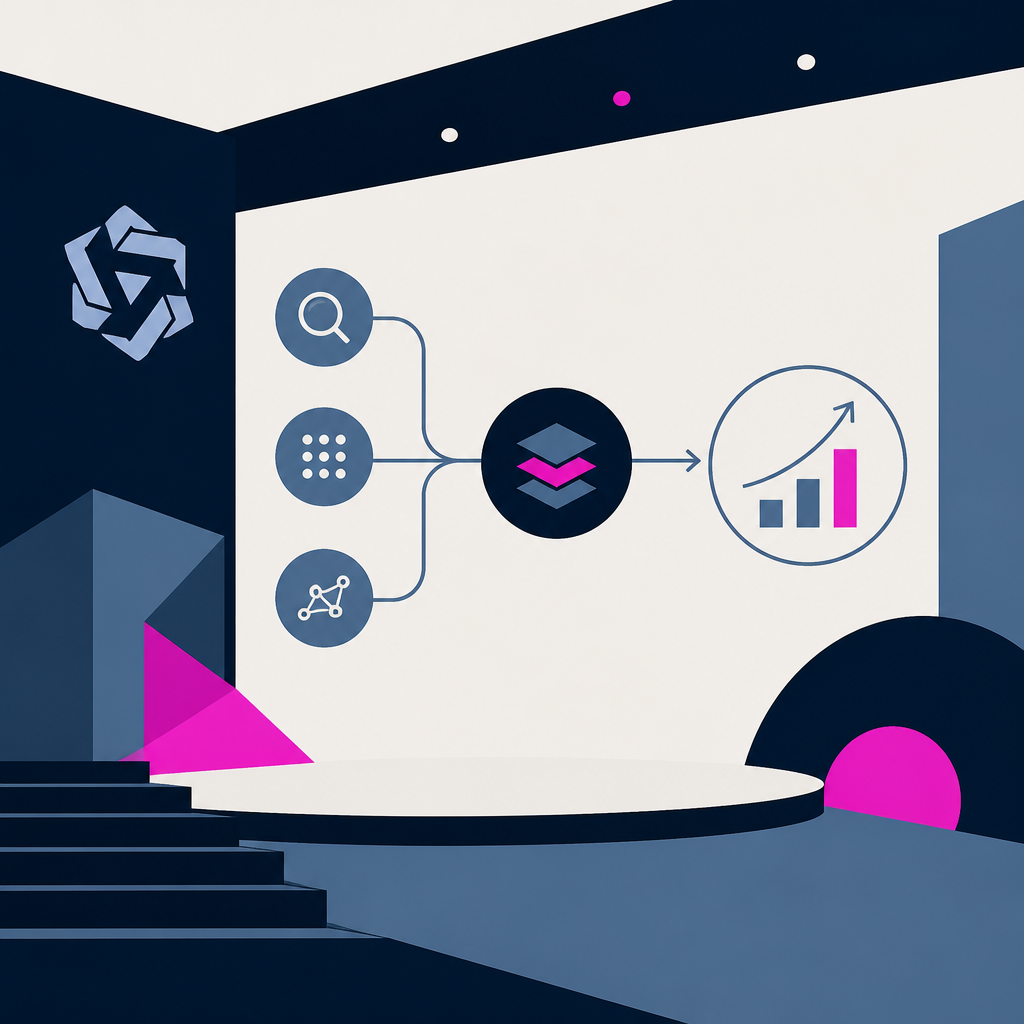
Qwen Developer open-sourced zg (zvec-grep), a local-first search layer that unifies ripgrep, BM25, and vector search behind one interface for humans and coding agents. On a 20-question SWE-QA-Bench sample, it cut tool calls by more than half and input tokens by nearly half while raising the Judge score by 1.50 points. It reduces agents’ search-related spending and context-building work by adding local indexing, MCP wiring with two default tools, and output limits designed for token economy.
Australian teams can now access OpenAI GPT-5.6 Sol, Terra, and Luna through Amazon Bedrock by calling the Bedrock Runtime endpoint in Sydney (ap-southeast-2) or Melbourne (ap-southeast-4), with Bedrock routing requests to supported AWS destination regions automatically. The setup supports context windows up to 1 million tokens. This changes deployment by letting apps avoid manual cross-region routing while enabling use via the Responses API, Chat Completions API, and the Bedrock Converse API, plus features like prompt caching and Codex integration.
An AWS team built an automated content validation system to catch dashboard failures that infrastructure monitoring misses, by visually and numerically checking hundreds of dashboards and alerting owners. The setup cut mean time to detection from up to 72 hours to less than 1 hour. As a result, content issues that previously required user reports became detectable in under 1 percent of cases with real-time Slack notifications and faster owner fixes.
Amazon Bedrock AgentCore was used to automatically generate and publish up-to-date architecture documentation by analyzing code changes and creating UML/Mermaid diagrams that are ingested for search and question answering. The production pipeline has been running since Q1 2026 for a global interdealer broker’s electronic trading platform. The workflow shifts documentation from manual, quickly outdated diagramming to an automated CI/CD-driven system that maintains searchable architecture diagrams as code evolves.
University Startups and g/d/n/a built Trinity, a conversational agentic AI system that generates IDEA-aligned IEP transition plans for students with disabilities and supports districts in scaling it on AWS. Trinity’s plan export takes five to ten seconds, after a two-phase workflow that routes a student through intake and then consolidates outputs into a structured transition plan. The rollout expands across dozens of U.S. school districts and adds localization work for Saudi Arabia and Kuwait, while scaling requires switching from a single LLM to a hierarchical six-agent design with compliance and accessibility controls.
Vercel built design.md by running more than 200 agent runs and using a feedback loop that treats agent instructions like software to reduce recurring page-generation failures. In Vercel’s three-scenario test, deterministic checks found 39 known failure-mode instances with design.md versus 91 without it, a 57% reduction on a six-page sample. The released prompt file plus evaluation and update process lowered the frequency of named failures, while still requiring corrections because every tested page still had a blocking issue.
Grove launched as an AI-native macOS script runner that lets you and an AI coding agent control the same terminal processes together.
It automatically sets up a menu bar, a CLI, and an MCP server when you connect a folder.
This changes the workflow by enabling start, inspect, and stop of shared processes through a unified interface for agent-assisted development.
Paint.NET’s author said Direct2D on WINE was too incomplete to finish, so the app now uses a from-scratch, clean-room reverse-engineered Direct2D rewrite activated with /wine. The rewrite is contained in PaintDotNet.Windows.Direct2D1.Managed.dll and totals about 180,000 lines of code. This changes Paint.NET on WINE by bypassing Direct2D instead of disabling it, at the cost of needing ongoing oversight for resource management and design issues.
Every AI story that matters,
in your inbox by 8am.
TLDRocket reads all relevant sources, removes duplicate coverage, and summarises the
day in two minutes. Follow companies and topics for alerts, or get the
briefing in Slack. Free, no spam, unsubscribe anytime.
Reading TLDRocket needs no cookies, and the readership counts we rely on come from
our own cookieless analytics. Google Analytics is the exception: it sets cookies and
reports to Google, so it stays switched off until you allow it. You can change your
mind any time from “Cookie settings” in the footer.
Strictly necessary
Session security and form protection (tldrocket-session,
XSRF-TOKEN, 2 hours). The site cannot work without them,
so they need no consent.
Always on
Google Analytics 4 (_ga,
_ga_<id>, up to 2 years). Measures which
stories and sections readers use. Google acts as a third-party processor and may
store the data outside the EU. No advertising, no profiling, no data sold.