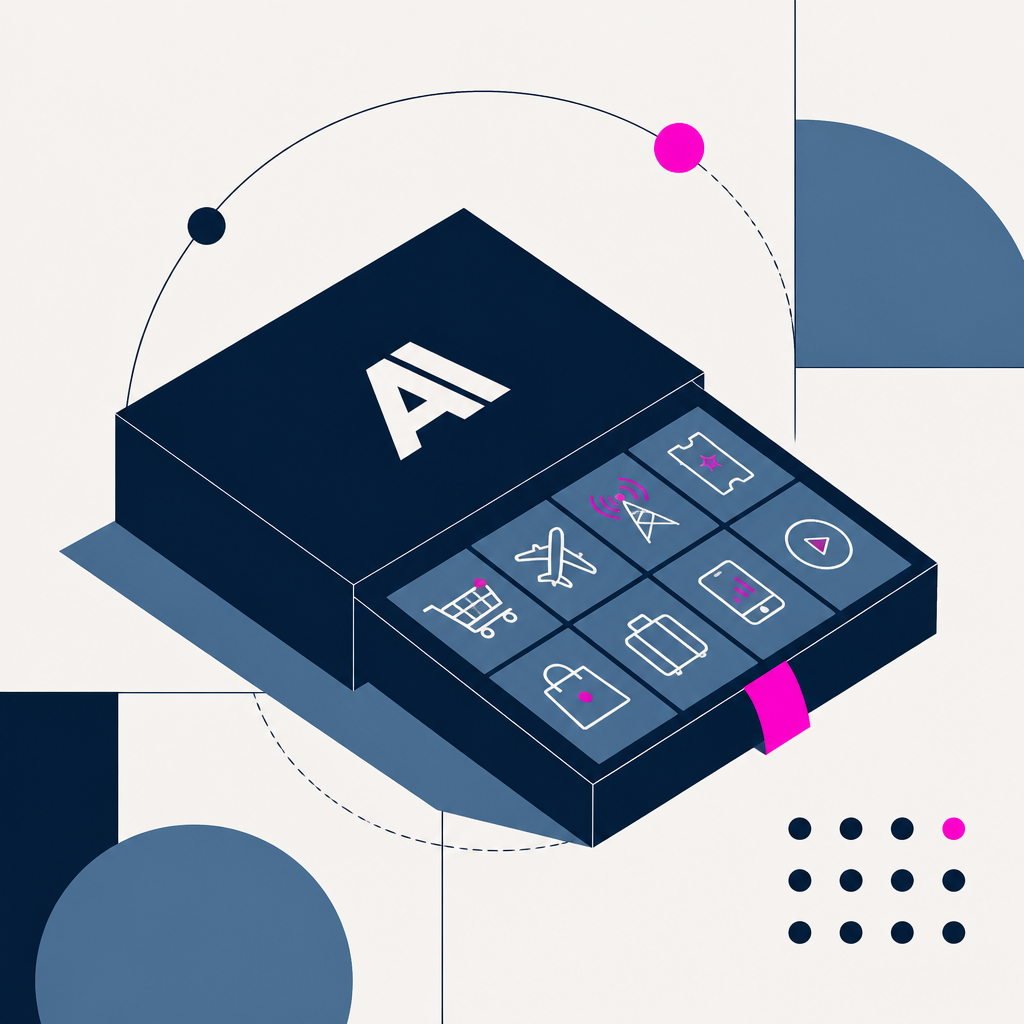
Anthropic released an Apache-2.0 code blueprint for Claude commerce agents that implement both shopping and merchant agent loops, including runnable verticals for retail, travel, telecom, and entertainment. The repository runs locally on Python 3.11+ and Node 22 and uses an ANTHROPIC_API_KEY. Teams can now deploy the same reference architecture across multiple Claude-hosting platforms with typed UI components, skill-based modularity, and prompt caching aimed at 90–99% hit rates.
Enterprise AI support and CI agent systems (Concierge and Pathfinder) saw rapidly growing latency and costs as autoregressive history re-billing compounded across multi-step runs. The article’s baseline pricing example is $3 per 1M input tokens and $15 per 1M output tokens. It proposes fixes including dynamic context injection/RAG, prompt compression (LLMLingua-2), strict JSON/schema enforcement, output token bounding, caching with up to 90% discounted reads, semantic caching, context compaction, and model cascading to keep token growth bounded.
PhiloLabs ran Claude Fable 5.1 coding agents to recreate a 3D Union Square in the browser using real geographic data and reference images. The full run used about 8 million tokens and cost about $33 in API calls. Reviewers used Playwright screenshot checks and nine reports to create a punch list for the agents, showing that conventional tests would miss visual and proportion issues.
Amazon Bedrock AgentCore reference implementations were published to close the gap between AI-driven development lifecycle concepts and working code, using agents such as Kiro. The SQL-to-ER-diagram sample uses AWS Lambda triggered by Amazon S3 uploads and generates Mermaid diagrams with AgentCore memory set to a 90-day expiry. Teams can now run schema-to-diagram automation and multi-agent secure handoff code scanning end-to-end with human-in-the-loop review through the provided deployment instructions.
Amazon Quick integrates with Microsoft Outlook by using Microsoft Graph API and OAuth 2.0 authorization to connect email and calendar access. The setup specifies that AI-assisted email automation uses OAuth 2.0 so Quick can act without storing Outlook passwords. After integration, users can summarize long email threads, draft contextual replies, schedule meetings, and trigger automated workflows using Quick chat agents, Quick Flows, and Quick Automate.
OpenAI Codex for enterprise coding agents is being deployed with a customer-operated LiteLLM gateway on Amazon ECS to centralize control over generative-code model access and usage. The validated walkthrough targets the us-east-1 region and uses an example gateway alias openai.gpt-5.5 mapped to bedrock_mantle/openai.gpt-5.5. Codex request traffic is routed from developers’ workstations through the ECS-hosted LiteLLM gateway to Amazon Bedrock, enabling enforced model routing, budgets, rate limits, and gateway telemetry while keeping tool execution local.
Amazon Quick Automate coordinates multi-agent enterprise automations across systems, UI/API actions, and third-party apps, and the article lays out design best practices for deploying these agentic workflows reliably. It highlights that Quick Automate charges by agent hour, not by tokens, influencing how teams should use deterministic steps to shorten execution time. As a result, teams are urged to start from process understanding and measurable success targets, break work into focused agents with bounded tools and structured outputs, add deterministic logic and human-in-the-loop only where needed, and run ongoing evaluation and observation to maintain trust.
Retrieval engineering for AI agents is being spotlighted as deployments increase, because agent query concurrency can break retrieval layers and make company data stale or unavailable at the right time. The live event is scheduled for September 24 at 12 p.m. Eastern/9 a.m. Pacific. The discussion will compare a unified retrieval layer against a fragmented setup to improve freshness, relevance, and response speed under heavy multi-agent workloads.
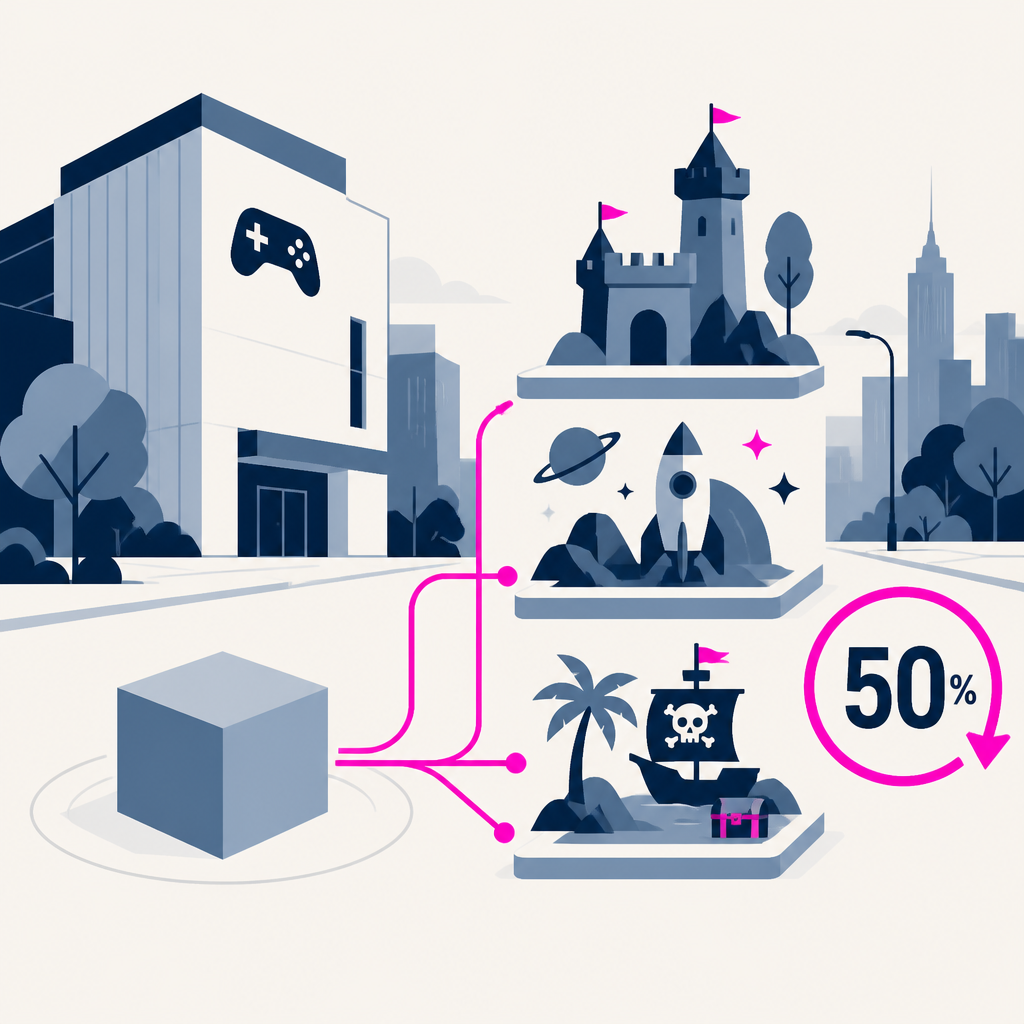
Playco used GPT-6 Astra to build three themed game prototypes from a single grey box foundation. It reported 50% fewer manual fixes than with its previous model. As a result, Playco says prototyping requires less manual intervention during iteration.
Clockwork launched to let users schedule AI coding agents on a real calendar that run unattended in sandboxed git worktrees on a Mac. It offers up to 2 years free for startups. The workflow shifts from on-demand agent runs to recurring scheduled jobs with approvals for risky actions and dollar-cost reports.
Coding agents using separate sessions across machines lose prior context because their reasoning and trace logs aren’t automatically usable in later runs. On the handoff-vs-recall benchmark, recall was 8x cheaper than a written handoff on one task and 4x on the other. The funes tool adds a durable, locally computed memory layer that indexes prior agent turns and lets agents retrieve the original passages with provenance across sessions, agents, and machines.
A language model training pipeline was built to generate p5.brush JavaScript sketches that paint watercolor-style images, using an open RL environment and open reward pool tied to aesthetic preference judgments. The post reports an HF command that trains with 110 steps and 240 episodes per run. As a result, three GRPO training runs with different reward-model weightings produced comparable watercolor outputs and all the RL environment, pool, training scripts, and trained models were published to run end-to-end on Hugging Face.
Every AI story that matters,
in your inbox by 8am.
TLDRocket reads all relevant sources, removes duplicate coverage, and summarises the
day in two minutes. Follow companies and topics for alerts, or get the
briefing in Slack. Free, no spam, unsubscribe anytime.
Reading TLDRocket needs no cookies, and the readership counts we rely on come from
our own cookieless analytics. Google Analytics is the exception: it sets cookies and
reports to Google, so it stays switched off until you allow it. You can change your
mind any time from “Cookie settings” in the footer.
Strictly necessary
Session security and form protection (tldrocket-session,
XSRF-TOKEN, 2 hours). The site cannot work without them,
so they need no consent.
Always on
Google Analytics 4 (_ga,
_ga_<id>, up to 2 years). Measures which
stories and sections readers use. Google acts as a third-party processor and may
store the data outside the EU. No advertising, no profiling, no data sold.