Simon Willison
·
1 week ago
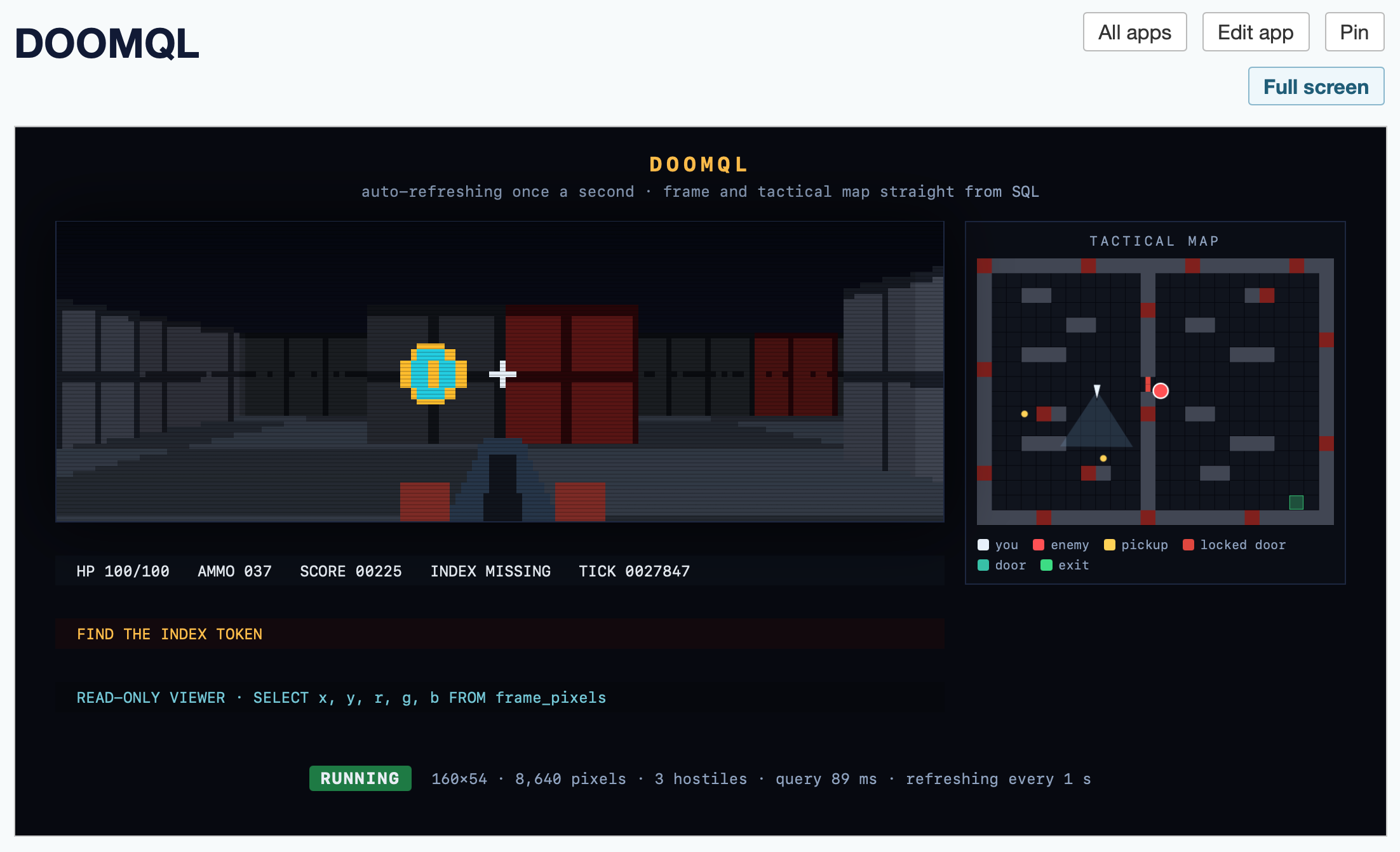
Peter Gostev built a Doom-like game engine using SQLite, where SQL queries handle all game mechanics including movement, collision detection, enemies, combat, and graphics rendering instead of storing data separately. The implementation runs as a Python terminal script that generates a recursive CTE ray tracer query and creates a playable game accessible through both the command line and a Datasette web interface. Players can now monitor game state through a live-updating HTML dashboard with minimap functionality, generated by Claude from a natural language prompt.
Simon Willison
·
1 week ago
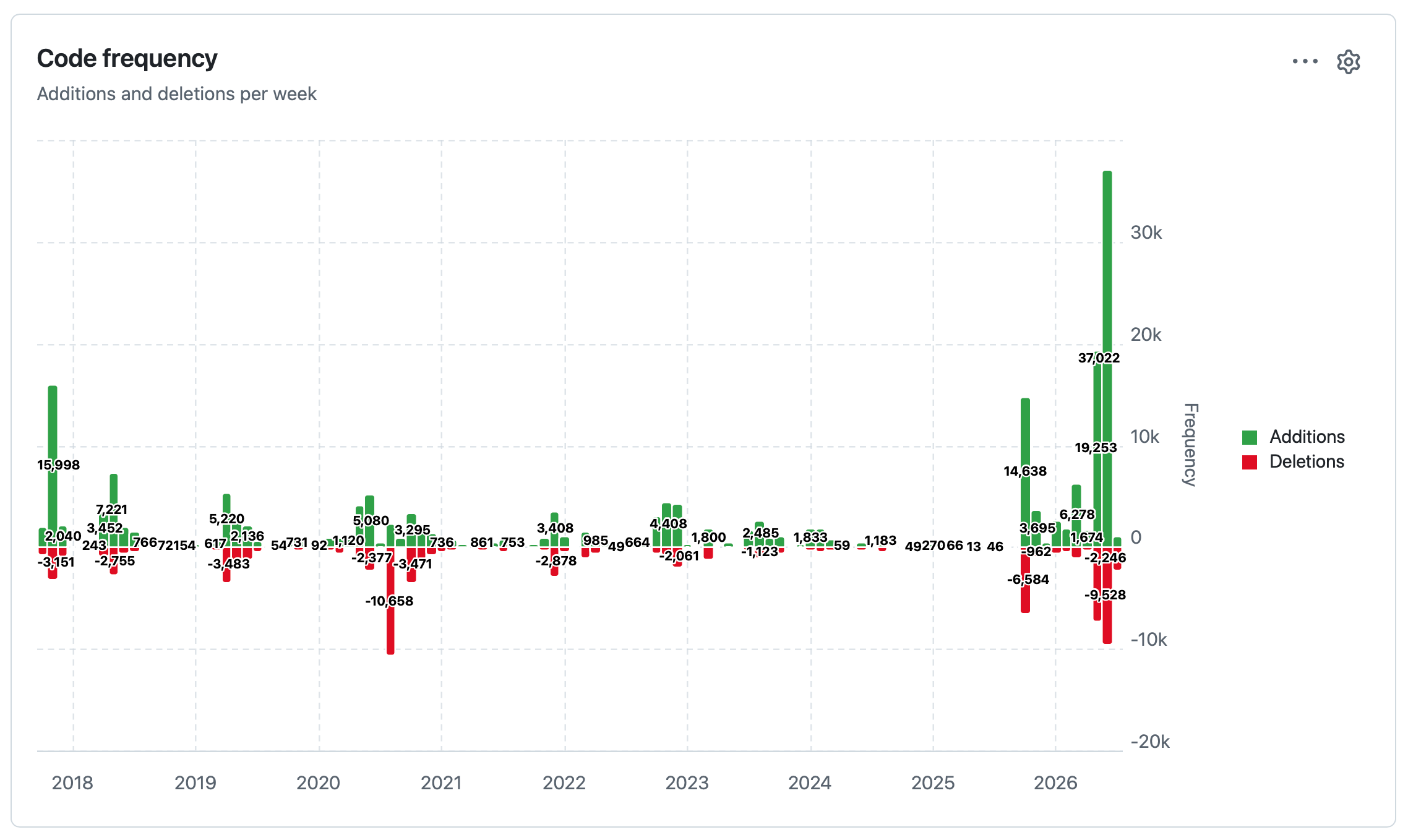
Simon Willison examined his Datasette open source project's GitHub code-frequency chart to measure the impact of AI coding assistants on his productivity. A notable spike in commit frequency appeared in the most recent period, coinciding with the release of models including Opus 4.8, GPT-5.5, Fable 5, and GPT-5.6 Sol. The increased activity suggests AI coding tools have accelerated his development pace on the project.
AWS Machine Learning
·
1 week ago
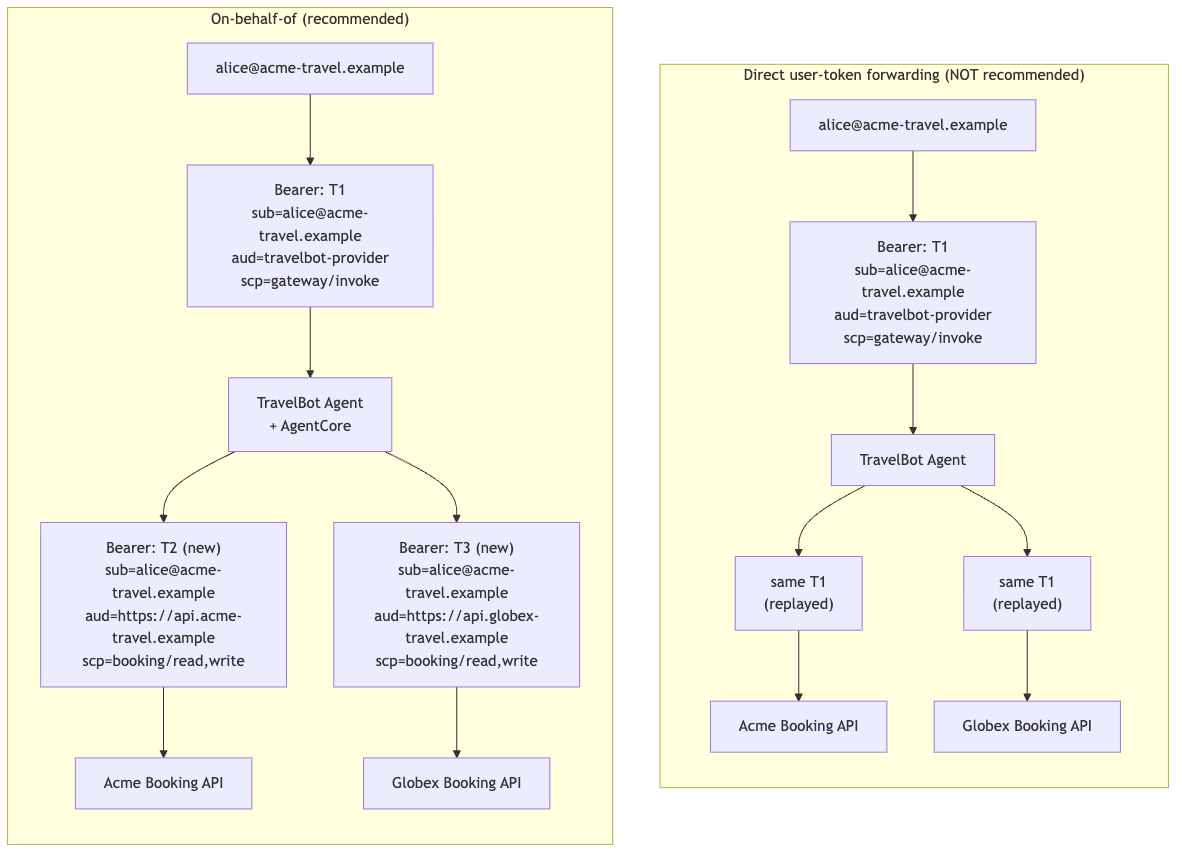
Amazon Bedrock AgentCore Gateway now supports OAuth 2.0 Token Exchange (RFC 8693) to enable secure on-behalf-of token exchange in multi-tenant AI agent architectures, allowing agents to call downstream APIs with tokens bound to specific users and tenants rather than the agent's service identity. The reference implementation demonstrates the pattern using TravelBot, a multi-tenant booking assistant serving two example tenants (Acme and Globex) with token exchanges orchestrated transparently by AgentCore without requiring agent-side exchange logic. This approach preserves user identity end-to-end through the sub claim while cryptographically scoping each downstream call to a single service through the aud claim, preventing confused deputy vulnerabilities and enabling independent token validation by downstream APIs.
AWS Machine Learning
·
1 week ago
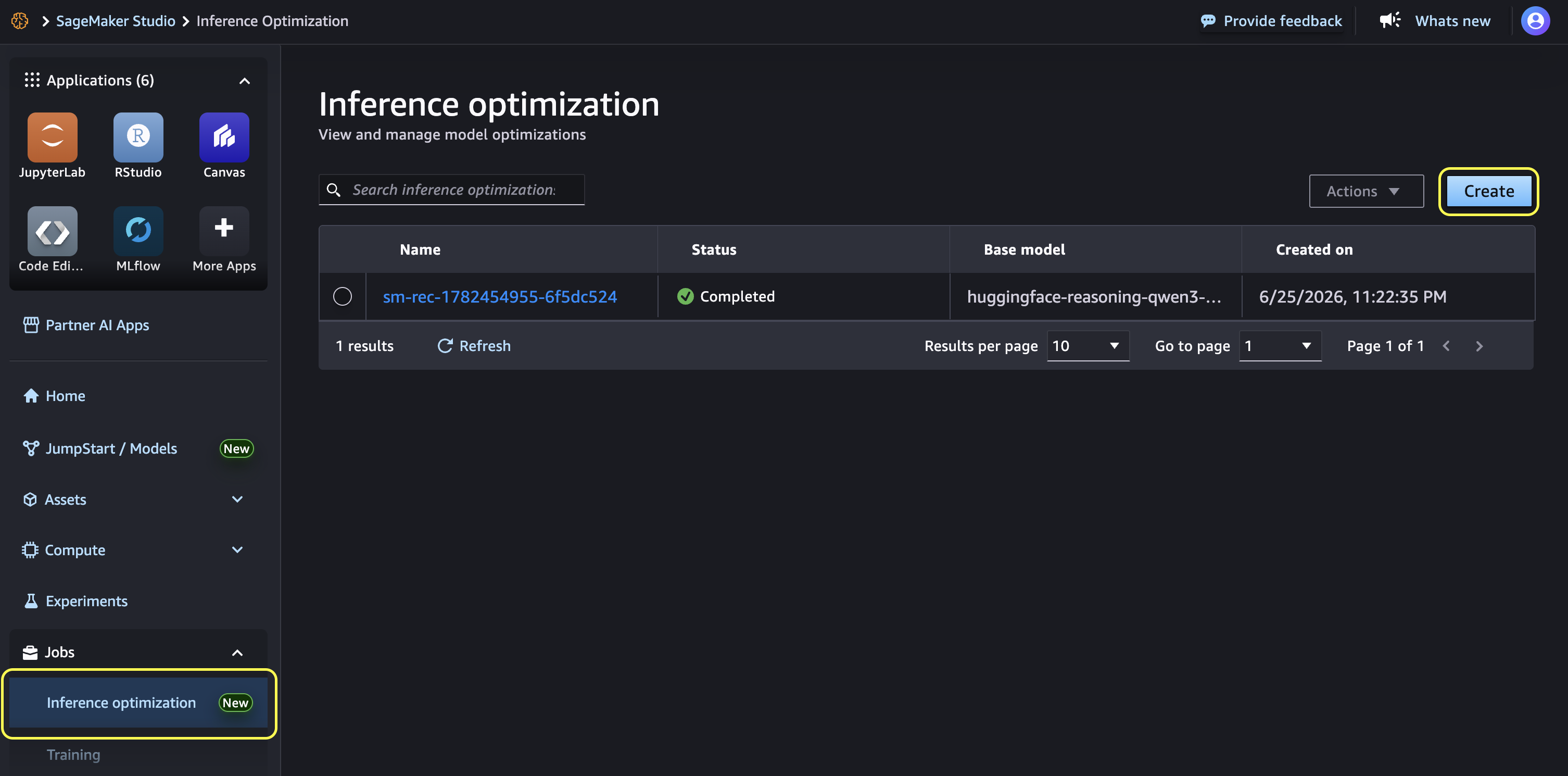
Amazon SageMaker AI launched a UI in Studio for generative AI inference recommendations, enabling users to find optimal instance types and configurations without manual benchmarking. The feature uses preset use-case profiles and optimization goals to generate production-ready configurations in minutes for common workloads and hours for custom ones, with no additional cost beyond standard compute charges. Teams can now compare performance trade-offs and deploy recommended configurations through a visual interface without writing code.

The New Stack
·
1 week ago
A Webflow engineer describes how AI assists with context gathering and initial code generation but creates new bottlenecks in code review, verification, and pull request sequencing. AI compressed the time spent on context hunting and first drafts by connecting to documentation, codebases, and issue tracking through tools like MCP, but shifted burden to reviewing generated code for correctness, architectural fit, and maintainability. The tradeoff means AI enables faster individual work but increases coordination challenges when developers produce more unfinished work than teams can safely review and merge.

TLDR Dev
·
1 week ago
Software development has transformed rapidly, with developers building code faster through automation but trading focused flow states for generative thinking modes. Developers now spend less time writing code by hand and more time reviewing, refactoring, and solving technical debt before it reaches production. This shift forces engineers to think at higher levels of abstraction and reconsider whether the creation method matters if the final code is solid and well-reviewed.

TLDR Dev
·
1 week ago
Algolia has released a feature that allows users to convert their search indexes into MCP servers with a few clicks in the dashboard, enabling AI agents to query indexed content directly. The process takes under 5 minutes and requires selecting indexes and tools in a UI that generates a public MCP server URL. This enables both external use cases like better documentation search for users and internal use cases like helping content creators discover existing posts and plan new ones.

TLDR Dev
·
1 week ago
Mindwalk is a visualization tool that replays AI coding-agent sessions as glowing light moving through a 3D map of a repository to show how the agent understood and navigated the task. The tool runs as a single Go binary that processes Claude Code and Codex session logs entirely locally, with optional evaluation summaries sent to the user's own Claude or Codex CLI. The visualization enables developers to see at a glance which files the agent searched, read, and edited during task completion.

TLDR Dev
·
1 week ago
Open-Inspect is an open-source background coding agent system inspired by Ramp's Inspect that automates development tasks in isolated sandbox environments with support for multiple AI models including Claude and GPT. The system supports multiplayer collaboration, integrations with Slack, GitHub, and Linear, and can spawn parallel sub-tasks across up to 10 repositories simultaneously with proper commit attribution to individual users. The architecture is designed for single-tenant deployment only, requiring all users to be trusted members of the same organization, with per-user repository access validation handled through GitHub OAuth tokens for PR creation.

TLDR Dev
·
1 week ago
A mathematician used AI coding agents to port approximately two dozen old Java applets to modern JavaScript, completing a task that would have taken much longer by hand, and used the same approach to build two new visualization tools including a special relativity explorer that he had abandoned in 1999. The porting process took hours instead of the original weeks of manual work, with only one minor bug found across all applets. The success has prompted him to consider adding interactive visualizations generated with AI assistance to accompany future papers and teaching materials.
TLDR Dev
·
1 week ago
This article is a tutorial guide on using Large Language Models for programming, covering LLM fundamentals, prompts, agents, and the OpenCode tool configuration with MCP servers and plugins. The key concrete detail is that LLMs assign probability percentages to predicted token sequences based on training data, with the highest probability option selected to continue text generation. As a result, developers can now use configured AI agents like OpenCode to handle complex programming tasks by connecting to LLM providers and augmenting them with specialized tools and MCP servers for improved code understanding and modification.
TLDR Dev
·
1 week ago
● 2 sources
Researchers measured token consumption of Claude Code and OpenCode on identical tasks and found Claude Code uses approximately 33,000 tokens for system prompts and tooling before the user's actual prompt, compared to OpenCode's 7,000 tokens. Claude Code also wrote cache tokens at up to 54 times the rate of OpenCode, with real production setups using 75,000-85,000 tokens before any user input, and subagent delegation multiplying costs further. The difference narrowed on newer models and when Claude Code batched multiple tool calls efficiently, but Claude Code's larger baseline overhead remains a significant factor in production agentic AI systems.

TLDR
·
1 week ago
Practitioners should shift from giving AI detailed step-by-step instructions to simply describing desired outcomes, a change driven by the principle that increasingly capable AI systems will outperform human-specified procedures. The transition involves converting "how" prompts into "what" prompts—for example, specifying an end result rather than the method to achieve it. This approach prevents constraining AI's native capabilities with outdated human guidance that becomes less optimal as models improve.
The Neuron
·
1 week ago
Agent Draw uses voice descriptions to automatically create and update drawings on tldraw, an infinite-canvas SDK, while a user presents by speaking descriptions into rectangular areas they define. Claude Opus 3.5 demonstrated the strongest results, producing a fully realized cricket scene with the pen tool, while smaller models like Claude Haiku and Gemini Flash settled for simpler primitive shapes. The implementation queues multiple capture requests, transcribes speech via Mistral's Voxtral model, and removes unnecessary agent actions like camera repositioning and shape-overlap review to reduce model calls by roughly half per drawing.

The Neuron
·
1 week ago
PlugThis is an AI tool that generates functional Chrome extensions from plain-English descriptions without requiring coding knowledge. Users can build working extensions in 2–3 prompts, with examples including one completed in under a day and another deployed in approximately ten minutes. The tool generates complete Manifest v3-compliant code with optional backend integration via Supabase and AI model connectivity, which users can then publish to the Chrome Web Store or modify as needed.

The Neuron
·
1 week ago
Scarlett is an AI assistant that integrates with Slack and over 3,000 external tools to automate recurring reports, data analysis, and multi-step workflows across business functions. The product can be set up in under 3 minutes, connects to tools like Stripe, Notion, and GitHub, and executes tasks end-to-end rather than just generating text. Users can automate daily briefs, weekly reports, customer feedback analysis, and other recurring work that previously required manual effort.

The Neuron
·
1 week ago
Microsoft Research released Flint, an open-source visualization language that lets AI agents generate polished charts from simple, human-editable specifications. In evaluation across three AI models on Tidy Tuesdays test data, Flint achieved judge scores of 16.27 with GPT-5.1 compared to 15.91 for a baseline direct Vega-Lite approach. The same Flint specification can compile to multiple visualization backends including Vega-Lite, Apache ECharts, and Chart.js, with an accompanying MCP server enabling agents to create and render charts directly in chat environments.

The Neuron
·
1 week ago
GitHub released Spec Kit, an open-source toolkit that enables developers to write executable specifications that directly generate working code implementations through AI coding agents. The toolkit installs via `uv tool install specify-cli` and works with over 30 AI coding agents including GitHub Copilot and Claude. Users define project principles, create specifications describing what to build, establish technical plans and task lists, then execute implementation—shifting development from code-first to specification-first workflows.
Allen Institute (AI2)
·
1 week ago
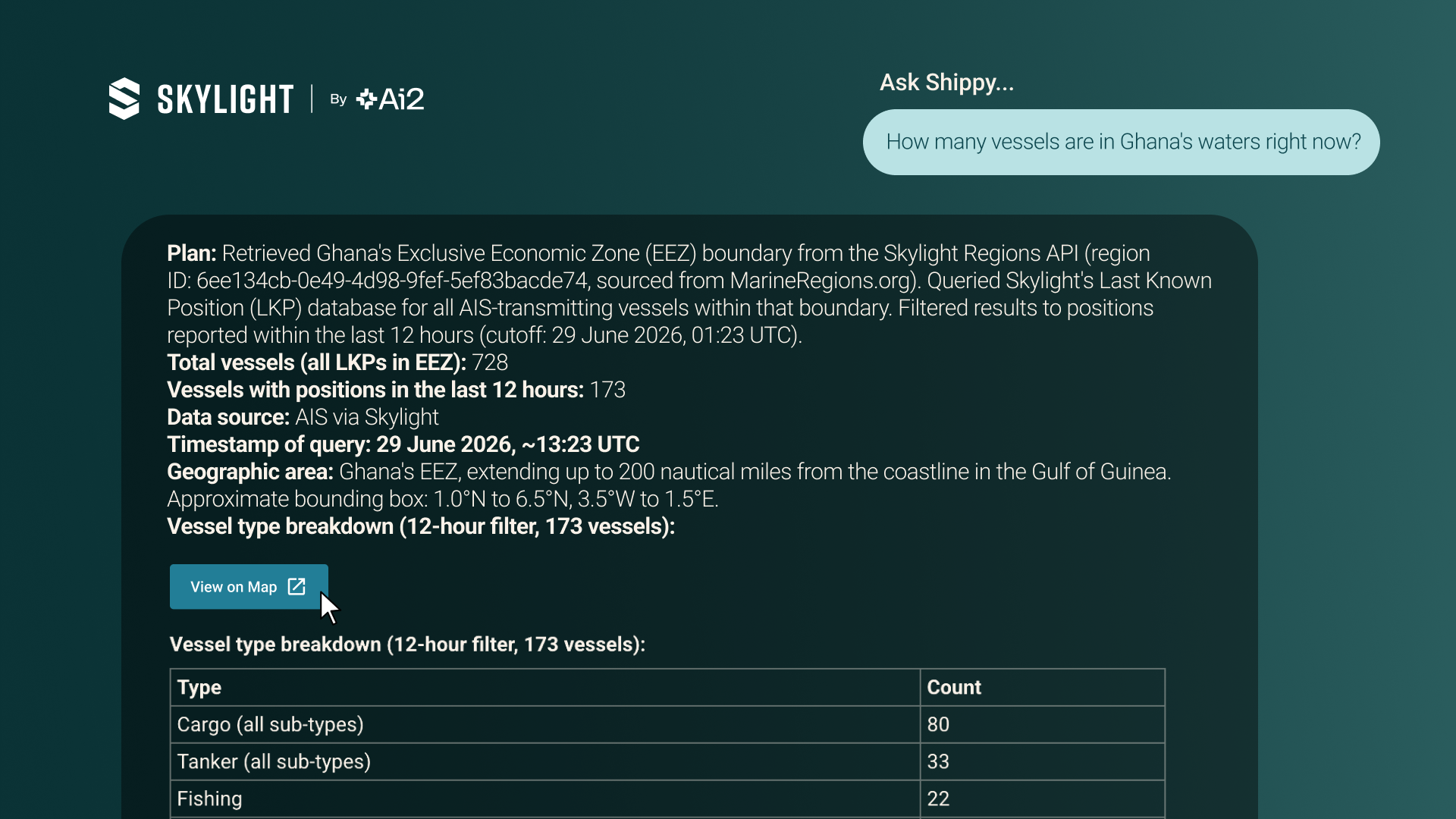
● 2 sources
Ai2's Skylight team built Shippy, an AI agent for maritime domain awareness that makes high-stakes operational decisions based on real-time satellite and vessel data. The system uses a modular architecture with a versioned Docker image containing the agent's persona and skills, a deterministic CLI interface to the Skylight API to prevent subtle bugs, and Mothership, a Kubernetes-based hosting platform that isolates each user's session and data with dedicated pods. The team developed a custom evaluation framework scored by subject-matter experts against live data, and Shippy will expand to control Skylight's map interface, route queries to smaller models, and maintain cross-thread memory for persistent user context.
