
Vibe genes? Natural(ish) language comes to protein, genome design software
Ars Technica John Timmer
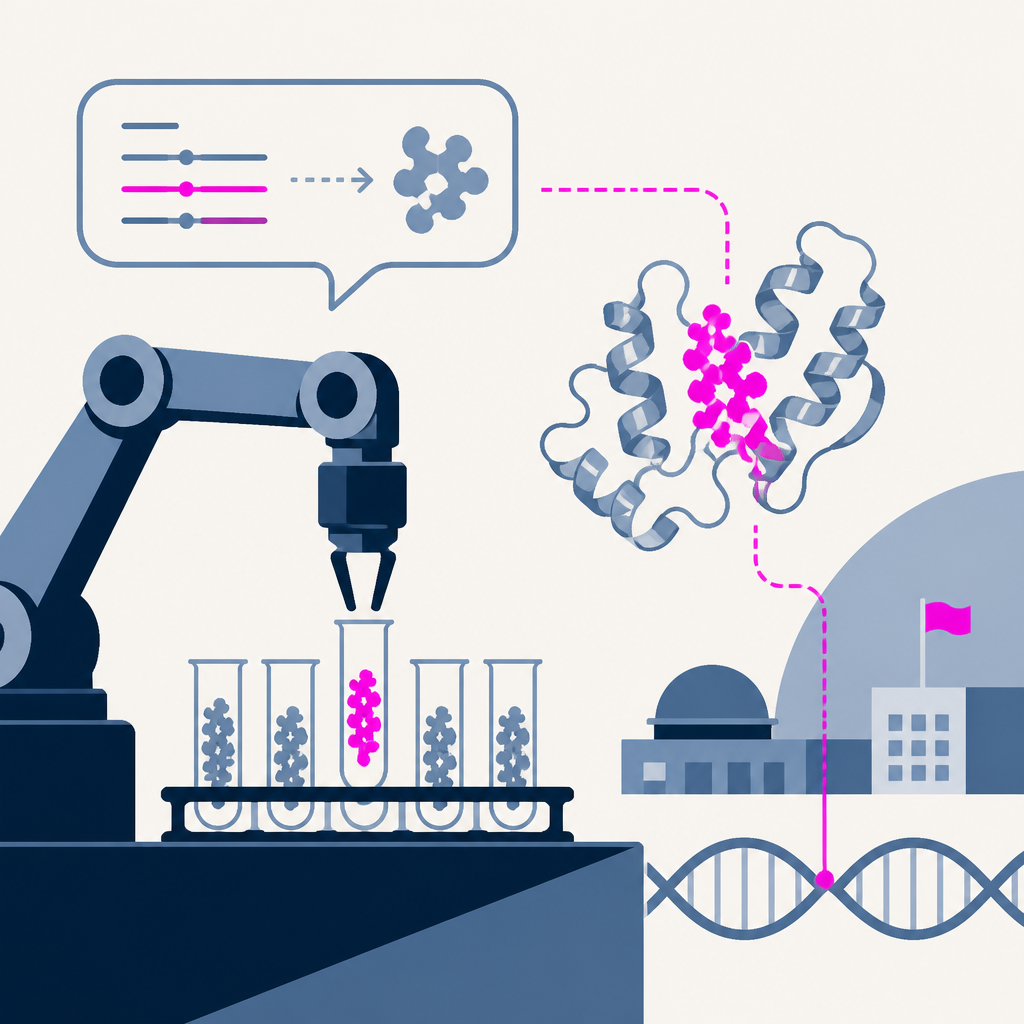
Researchers built a protein design tool that takes plain-language prompts. It’s easier to use, but you may need a lab to sift the winners from the many misses.
Based on reporting by Ars Technica, John Timmer — read the original for the full story.
Summary, retelling and take written by AI under human oversight; images are AI-generated illustrations. How we work · Report an error
Protein design software has usually expected users to think like structural biologists. You don’t just ask for a protein and hope for the best; you need to know details like where key amino acids sit, how an enzyme works, and even which water molecules belong in the active site. Once those constraints are set, the software can fill in the rest around them.
A research group in China is trying a looser approach. Their system takes natural-language prompts and turns them into proteins with the function the user asks for. That sounds a lot closer to “vibe coding” than to traditional molecular design, and that is probably the point: make the interface less demanding, even if the underlying science stays hard.
The catch is obvious. If success means a protein that actually works, the hit rate is not impressive. The source description is blunt about that. Still, the system does produce usable designs, which is enough to make the idea feel real rather than purely speculative.
And the concept is not staying at the protein level. Hugging Face says it is now hosting a tool that does something similar for DNA. So the same natural-language idea is spreading across biological design, with the practical limit unchanged: someone still has to test the output and separate the good candidates from the pile of failures.
My take — AI-written commentary, not fact-checked reporting
This is exactly the sort of thing open tooling is good at: making hard systems easier to touch without pretending the science got easy. The hype machine will call it democratization; the lab bench will call it screening. Same story, different packaging, and biology still gets the last laugh.
Read more about this at: Ars Technica
Related stories
 Genome language models can design cancer vaccines
TLDR · 1 month ago ·
38
 Hugging Face Releases Carbon-X, a 14B Open DNA Language Model that Brings DNA and Natural Language Together for the First Time
MarkTechPost · 2 days ago ·
16