
IEEE Spectrum AI
·
1 month ago
The article commemorates 70 years since AI was established as a formal field in 1956 at the Dartmouth Summer Research Project. The Stanford AI Index 2026 shows AI adoption is outpacing historical technologies like the telephone and personal computer. Responsible governance and human-centered development are essential as AI transitions to autonomous systems capable of operating with minimal human oversight.

Interconnects
·
1 month ago
Z.ai released GLM-5.2, an open-weight model on June 16th, 2026, that matched or exceeded closed-source models from OpenAI and Anthropic in agent and coding benchmarks. The model achieved performance parity with Claude Opus 4.5 in just 6.8 months after that model's November 2025 release, closing the historical capability gap between U.S. and Chinese labs. GLM-5.2's availability creates pricing pressure on closed-model providers like Anthropic and accelerates adoption of open models across inference platforms, while raising regulatory questions about whether capable Chinese open models should face restrictions similar to those imposed on Anthropic's Claude Fable.

Hugging Face Blog
·
1 month ago
PaddleOCR released PP-OCRv6, a new optical character recognition model family supporting 50 languages across three size tiers. The medium-tier model achieves 86.2% detection accuracy and 83.2% recognition accuracy, improving over the previous version by 4.6 and 5.1 percentage points respectively. Users can deploy PP-OCRv6 through PaddleOCR, Transformers, or ONNX Runtime backends on devices ranging from edge computers to servers.
TheSequence
·
1 month ago
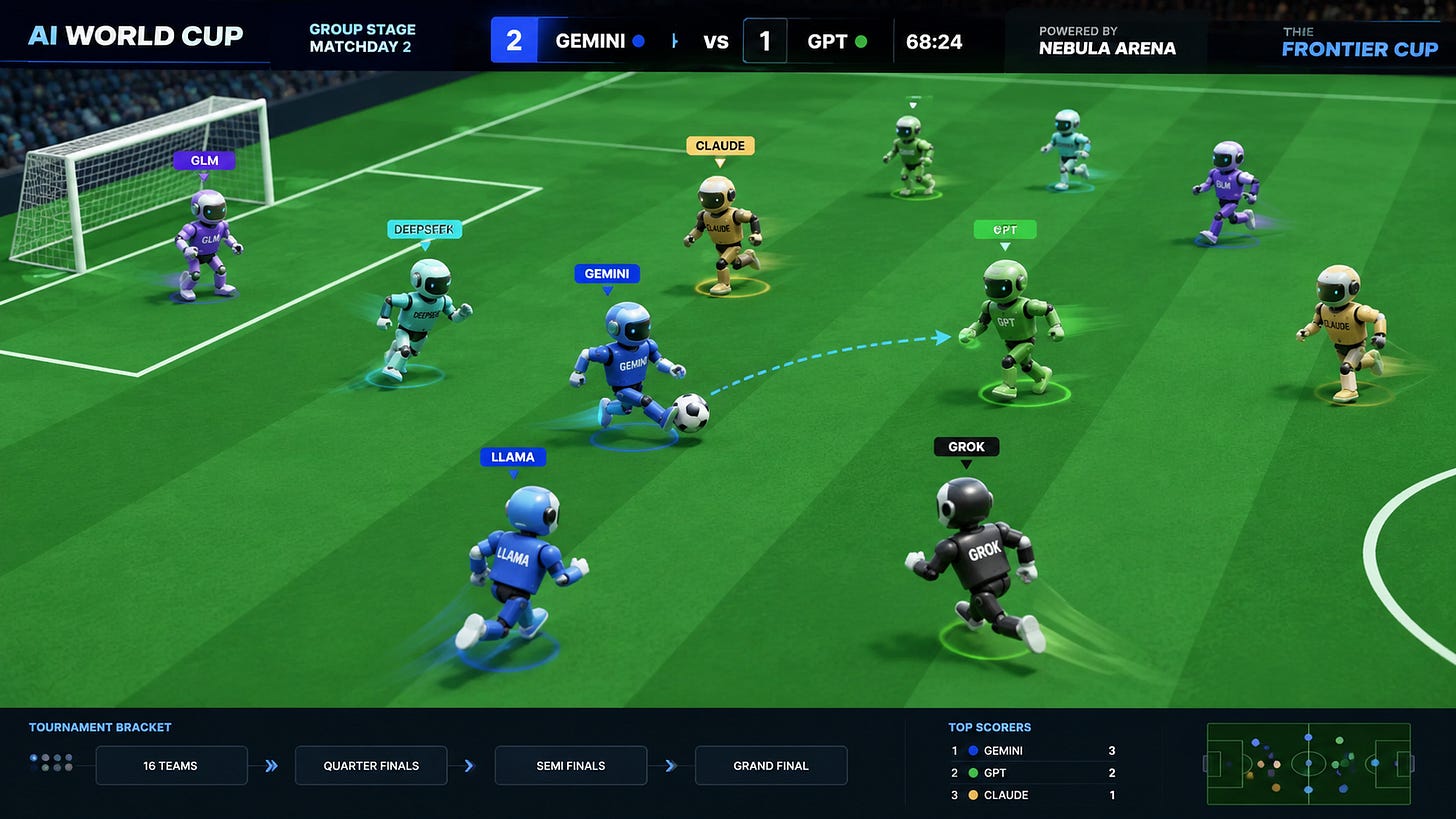
LayerLens launched the Stratix Cup, a soccer tournament where 16 frontier AI models compete against each other in a simulated environment with three phases: pre-game strategy planning, real-time gameplay execution, and halftime strategy revision based on observed performance. The tournament runs June 22-26 with 16 models organized in four groups of four competing through group stage and knockout rounds to determine a champion. The evaluation tests whether AI models can plan under uncertainty, execute strategies against adversarial opponents, and diagnose and correct their own failures based on evidence.
TLDR
·
1 month ago
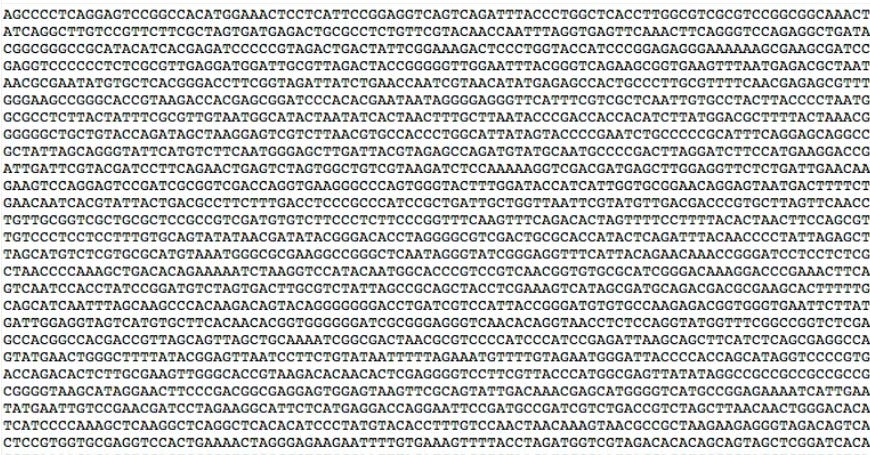
A philosophical essay compares the human genome and neural network weights as analogous informational structures: both are passive sequences brought to life only through external processes (cellular machinery for DNA, inference engines for AI), both are products of massive search processes (evolution and gradient descent), and both remain largely opaque despite being completely readable. The essay notes that just as the complete human genome was only sequenced in 2022 yet 98% of it has unknown function, interpretability research shows that 90% of neural network weights can be pruned without performance loss, suggesting both systems are radically overbuilt. The parallel observation raises questions about whether either system contains genuinely useless material or performs functions we're not yet clever enough to detect.
