Every AI story that matters — and the intelligence behind it.
TLDRocket reads all relevant sources, removes duplicate coverage, and publishes a short neutral
summary of every story, linking back to the original. Free, no spam, unsubscribe anytime.
Simon Willison’s Weblog·1 week ago·
48
● 2 sources
ttok 0.4 updated the CLI token-counting tool, fixing a Click warning and modernizing CI while adding a --list-models command using OpenAI’s tiktoken library. The release adds a --list-models option to show available models. As a result, the tool is easier to run via uvx and can display model names instead of only counting tokens.
OpenAI fired three AI safety researchers tied to the METR/Hugging Face incident and they disputed the reasons while OpenAI reportedly said they mishandled confidential information. Pricing for OpenAI’s GPT-6.1 Sol sets input/output tokens at $12 and $60 per 1M tokens. The updates include broader model rollouts and multiple safety and evaluation releases, plus ongoing debate about agent monitorability and authorization norms.
Trump suspended Microsoft from an H-1B-related green card program after Vice President JD Vance accused the company of abusing visas to replace U.S. workers, then honored Microsoft CEO Satya Nadella with the National Medal of Technology and Innovation. Vance said Microsoft laid off 6,000 U.S. workers while obtaining 6,300 H-1B visas and almost 3,000 green cards. The result is a public contradiction between immigration enforcement and high-profile praise for a major AI-linked tech company.
Palantir CEO Alex Karp said a top executive told him to stop hyping Foundry because it sounded out of touch to employees. He pointed to Q2 U.S. commercial revenue growth of 149% year over year to $764 million. As a result, Foundry became central to Palantir’s fastest-growing business and Karp’s messaging shifted away from constant hype while AI-driven execution and competitive advantage remained a focus.
OpenAI launched a Decisions API to automate routine business classification decisions after TypeSafe’s Jev gained viral traction. OpenAI said its interface can return decisions up to 10 times faster than calling GPT-6 Luna through its general Responses API and priced inputs at $0.10 per million tokens versus Jev’s $0.042. Developers now have two competing “decision” products with different latency and cost tradeoffs, pushing them to adjust how they structure classification prompts and thresholds for human review.
OpenPilot launched as a free, MIT-licensed desktop AI agent that connects to OpenAI-compatible models to read and edit files and run commands after user approval.
The release is scheduled for Windows, with a macOS early beta.
As a result, users can manage a local folder through an approved AI-assisted workflow on Windows.
Isomorphic Labs, an Alphabet spinoff developing an AI platform for drug discovery, is reportedly in talks to raise new funding. The reported target valuation is $40 billion to $50 billion. If the round closes, Isomorphic’s partnerships and development of IsoDDE would likely accelerate as investors fund the company’s work.
Porch launched a tool that turns Claude Code and Codex sessions into project-based daily, weekly, and monthly Markdown summaries. It publishes those summaries for your work without needing a Porch account, and it tracks tokens and API-equivalent costs. As a result, you can review session status across terminals/editors, identify which tasks need attention, and save summaries to Obsidian or any folder.
Harness acquired Augment Code’s Cosmos software factory, including Auggie CLI and the Code Context Engine, and is folding it into its software delivery platform to add autonomous coding agents. The acquisition was announced on Thursday, and Harness says Cosmos is available today even though the key capabilities—using delivery-history failures and downstream feedback in integrated workflows—have not shipped yet. The integration will let agents draw on past deployment failures and security or test results to revise code with failure context, while human approvals and agent permissions are expected to be governed through Harness’s Agent Harness identity and policy controls.
CoreWeave launched Forge, a platform meant to speed up an ongoing agent improvement loop by letting teams share a common workflow for running, observing, curating, improving, and evaluating AI agents. The article says the platform measures success by speed of learning, tied to faster shipping and faster value delivery. It adds capabilities like Agent Lens, model checkpoints/configuration via Registry, RL Rollouts and model distillation, and makes its ARIA tool generally available, alongside a partner network of co-engineered integrations.
iwant launched a one-command system for hosting AI models (including DeepSeek and others) on GPUs it provisions by scanning GCP regions and setting up vLLM plus an OpenAI-compatible endpoint. It focuses on getting an endpoint, an API key, and SSH access included in the single launch flow. As a result, developers can deploy self-hosted model services quickly instead of manually finding GPUs, provisioning instances, downloading models, and configuring vLLM.
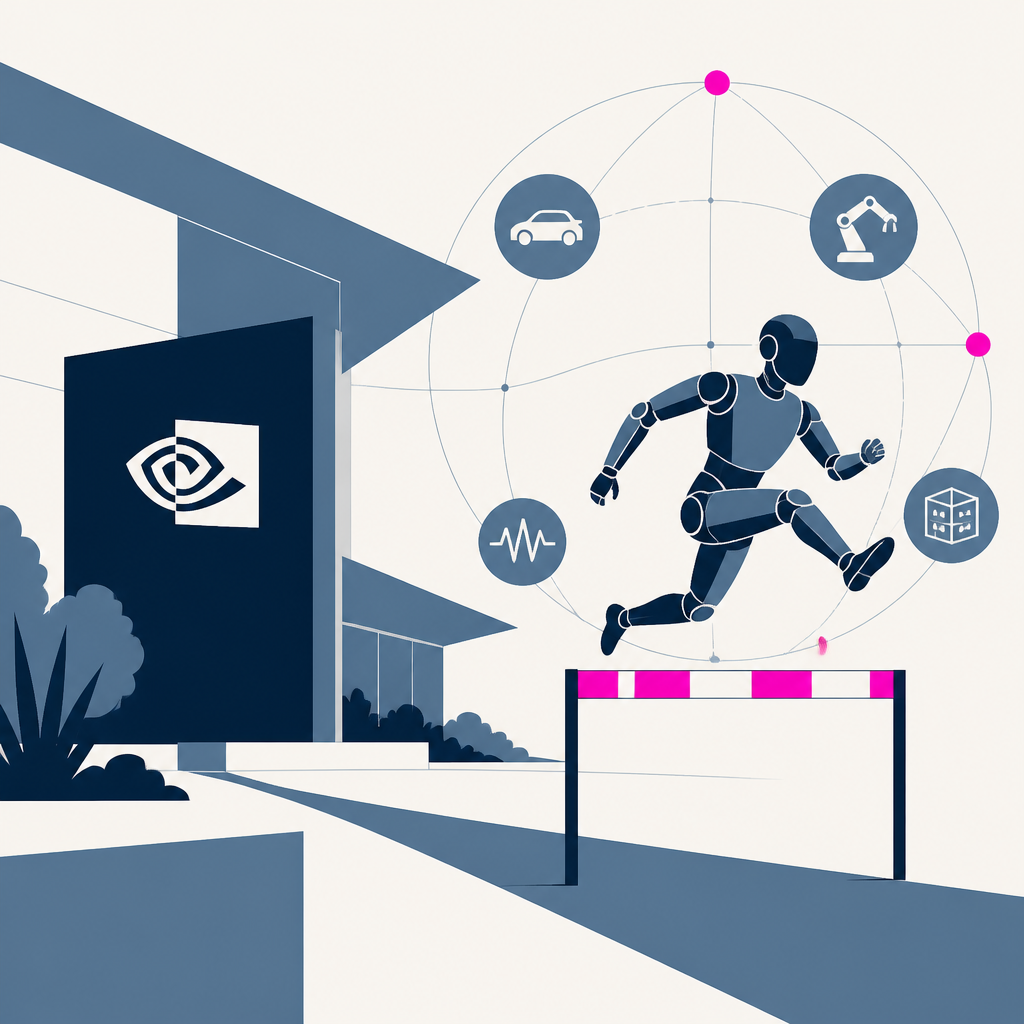
NVIDIA developers used frontier AI agents with NVIDIA Omniverse libraries to turn simulation concepts into interactive applications for robotics, autonomous driving, digital twins, and 3D/telemetry viewers. In one Robo Olympics experiment, the simulated Unitree G1 humanoid cleared a single hurdle in 64 of 100 simulation trials. The workflow shifts from manual scene setup to agent-directed asset connections, staged integration checks, and iterative simulation validation that improves designs based on measured results.
Carson Gross said computer programming will remain a viable career even as AI tools arrive. The quote was posted on 8th October 2026 at 9:05 pm. It shifts expectations around how people learn and apply complexity control, but not the overall value of programming skills.
Manus, an AI agent developer, raised more than $500 million, led by Boyu Capital with support from Tencent and others. The round reportedly values the company at $4 billion, about double Meta’s prior offer in December 2023. Manus is also rolling out Manus 2.0, which adds a new harness that reduces token use by 23.2% on some tasks and speeds processing by more than 28%, alongside new tools such as Cloud Computer and Cue.
Anthropic launched the Anthropic Cyber Mission, offering tools, research, and engineering support to help defenders secure critical infrastructure systems and open-source software. It will provide open-source projects periodic security scans through OSS Scanner for free, with the company expecting a true-positive rate above 90%. As a result, defenders and maintainers gain faster vulnerability reports and better access to frontier Claude models, while Anthropic expands its cyber support beyond the earlier Project Glasswing work.
CoreWeave announced CoreWeave Forge to connect training, inference, and evaluation in an open, full-stack AI cloud. The platform is tied to its newly announced development platform and CoreWeave recently earned SemiAnalysis’ Platinum ClusterMAX rating for a third consecutive time. As a result, production learnings can feed back into improving models and agents, and customers can start with specific inference use cases on the same platform.
OpenAI fired three AI safety researchers who then published an open letter denying misconduct and disputing the company’s reasons for the dismissals.
OpenAI said the firings followed an investigation and a “pattern of misconduct” involving mishandling research information that went beyond sharing with an outside evaluation group.
The dispute escalates into claims of a chilling effect on employees’ willingness to raise safety concerns and work with third parties, while OpenAI shared internal praise for the researchers and says the decisions were not retaliation.
The U.S. Federal Reserve’s latest policy meeting minutes said the A.I. infrastructure buildout is contributing to stubborn inflation alongside tariffs and energy costs. Inflation was 3.8% in August on the Fed’s preferred PCE measure and core inflation was 3.4%, with an A.I.-related rise in technology consumer-goods prices cited. The Fed’s outlook supports another rate increase by year-end, potentially keeping inflation-fighting policy in place as A.I. investment continues to raise demand and prices.
Meeting software launched Assist, a personal meeting assistant for Mac in Product Hunt. It can run 100% on your Mac. The listing highlights features like listening to meetings, suggesting what to say, and staying invisible during screen sharing.
Anthropic released Claude Dashboards in beta, letting Claude generate live dashboards that reveal the underlying queries and refresh as data changes. Claude Dashboards is available in beta on paid plans. It adds new enterprise reporting capabilities (including query transparency and exports) alongside Claude Motion and new default availability for Docs, Slides, and Design on October 15.
Email client service for people with AI agents was launched with unlimited addresses, a keyboard-first inbox, agent inboxes, and a REST API plus CLI and remote MCP server. It costs $20/month. As a result, developers can integrate their AI agents via API/CLI/MCP and manage multiple agent inboxes under a single domain email service.
Amazon Bedrock AgentCore added managed pay-per-inference payments so AI agents can pay BlockRun for model inference during runtime without manual approval. Incarna integrated the full AgentCore payments flow in 3 days and, during the beta, agents processed over 1,000 payments at $0.001 to $0.05 per call that settled individually on-chain. As a result, pay-per-inference runs in production with per-request spending controls enforced by infrastructure, and transaction settlement becomes auditable via verifiable on-chain records.
Ben Affleck went viral after describing his knowledge of AI and its uses in filmmaking, including neural networks and training concepts from recent interview clips. The article says he sold his AI filmmaking startup to Netflix for a reported $587 million earlier this year. As a result, attention shifts to his machine-learning approach to post-production and dataset creation, and the focus turns to responsible, “additive” AI rather than AI replacing film work.
Arena, an AI model evaluation and leaderboard platform, raised a $200 million Series B at a $3.1 billion valuation. It also said it reached $100 million in annualized run-rate revenue in June. The funding and new “alignment” leaderboard category shift Arena’s role toward providing more detailed, community-based evaluation for model labs and enterprises.
OpenAI told investors its annualized revenue is lower than an earlier figure shared about it. The updated figure is said to be approaching $50 billion, about $20 billion less than the roughly $70 billion number. This recalculates expectations for how OpenAI funds its large investments and delays plans like an IPO to early 2027.
Google announced a unified “agent” in Gemini that can answer questions and carry out tasks on a user’s behalf through a single interface. It will start with businesses first, after citing that Gemini has over 1 billion monthly active users and that nearly 90% of Fortune 100 companies use Gemini Enterprise. Google says the agent can be given objectives (not just instructions) and connect to business tools like Workspace and other internal systems, with added controls such as model selection and cost-management options.
Anthropic updated Claude’s usage policy to add explicit bans on election interference, weapons software, surveillance, and prolonged verbal abuse of the model. The policy update specifies that users may not pursue persistently harmful or abusive interactions. As a result, users are more restricted in how they can prompt and interact with Claude, with the new rules targeting repeated cruelty and election-disrupting or deceptive behavior.
OpenAI released hundreds of claimed solutions to difficult math problems, but an advisory group says the proofs did not meet field standards focused on human-understandable results and proper formalization. Only 42% of the released proofs had not undergone the suggested formalization process. As a result, mathematicians are questioning reliance on proprietary AI models for trusted proof releases and calling for more formalization support, funding for human mathematicians, and machine-readable links between natural-language explanations and formal artifacts.
Anthropic published an updated Usage Policy for Claude, adding clarifying examples and tightening coverage for misuse patterns. It takes effect on November 12. The update consolidates deceptive-campaign rules, refines election, weapons, and surveillance prohibitions, clarifies high-risk “human in the loop” requirements (including autonomous physical-action hardware), and adds a ban on sustained abusive behavior toward models.
OpenAI narrowed its spending gap with Anthropic among companies using OpenRouter model providers. In September, the two rivals split spending almost evenly across roughly 120,000 companies, after Anthropic had accounted for about three-quarters at the start of the year. Companies increasingly choose cheaper models and mix providers, and Anthropic responded with price cuts such as Claude Haiku 5.5.
Automation Anywhere agreed to acquire Boost.ai from Nordic Capital to expand its customer-facing voice AI offerings. Boost.ai has supported more than 150 million automated conversations. The deal will extend Automation Anywhere’s autonomous-work platform into customer experience, adding voice, chat, and other customer operations across regulated industries while increasing its global customer base.
Anthropic launched OSS Scanner, a free opt-in service that runs periodic security vulnerability scans on open-source projects using its AI models. The service is offered at no cost. Its reports are fully model-generated without human review or triage, so scanning may happen faster but with a higher chance of incorrect or invalid results.
GitHub Copilot is adding automatic routing so coding tasks can run on local inference or be sent to cloud models. Microsoft says the rollout is expected by the end of October. Developers still won’t be able to confirm how much repository context or conversation history is sent to the cloud, and local inference won’t guarantee a fully offline session unless tool access is locked down.
Liquid AI builds personal AI systems intended to run on users’ devices using device-level context rather than elastic cloud capacity. Its Liquid Context is optimized for Snapdragon processors. The company adds agent software and observability loops so onboard agents can retain, compress, and continuously improve their context and models over time, including in Mercedes-Benz cars.
Hume AI CEO Andrew Ettinger explains that voice AI can sound human while still failing to capture the meaning-carrying signals in speech. He says transcripts can strip away multiple parts of communication such as tone and background noise, leaving systems with a “listening problem.” As a result, voice AI development focuses more on evaluation in real-world conditions, better modeling of emotion as a spectrum, and addressing new safety and personalization risks when agents talk back.
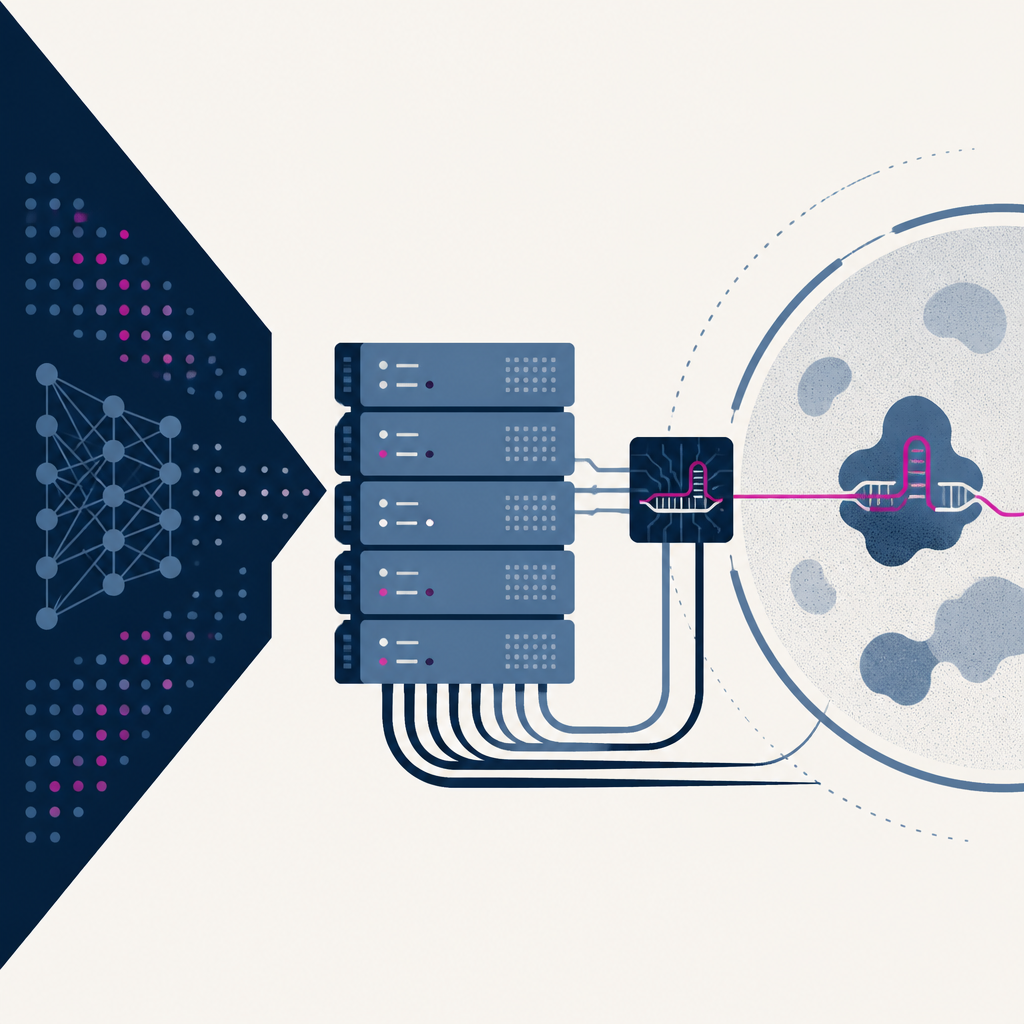
Trevor Martin of Mammoth Biosciences describes how the company uses AI to search large protein spaces and engineer smaller CRISPR systems for genetic disease work. The discussion highlights the key proof hurdle: validating what actually survives contact with a human body. The result is a clearer focus on biological validation rather than AI alone solving everything.
AMD will expand its ML-based FSR 4 upscaling from some current handheld support to more handhelds. It plans to do this by the end of 2026. AMD says the rollout will depend on which handhelds are compatible, and it may require a new FSR4-capable chip.
Brian Chesky said he wishes he were 26 again so he could take advantage of today’s more powerful AI tools to build new ventures. He referenced the year 2008 when he scaled Airbnb and compared it with the post-ChatGPT era. He argues that AI lowers barriers for small teams, enabling tens of millions of new businesses and pushing workers to use the tools rather than treat them only as a threat.
Martha Stewart said Kmart paid her up to $65 million a year in royalties through a licensing deal that funded her businesses and helped drive the success leading to Martha Stewart Living Omnimedia going public. She cited about $20 million as the first-year advertising budget and about $2 billion a year at the line’s peak. Kmart’s nonrenewal in January 2010 ended the deal, and Stewart later shifted to other partnerships and launched newer businesses including an AI home-management startup.
Catalyst, a Sequoia-backed startup, is raising money to build retail trading AI agents that turn users’ natural-language intent into trading strategies and execute them with human approval. The company secured a $30 million seed round led by Sequoia. The funding and product rollout (including a waitlist opening and broad availability timing) moves the project from a pilot to wider access for everyday investors.
STFC’s Daresbury Laboratory welcomed 7 health-tech startups into its DeepTech Catalyst Health (DTC Health) programme to develop patient diagnosis, treatment, and support tools. The startups receive a tailored support package worth up to £70,000, as the programme was launched in 2024 with £1.8 million funding. The programme expands access to AI and prototyping facilities and aims to move these early-stage products toward real-world healthcare delivery and jobs.
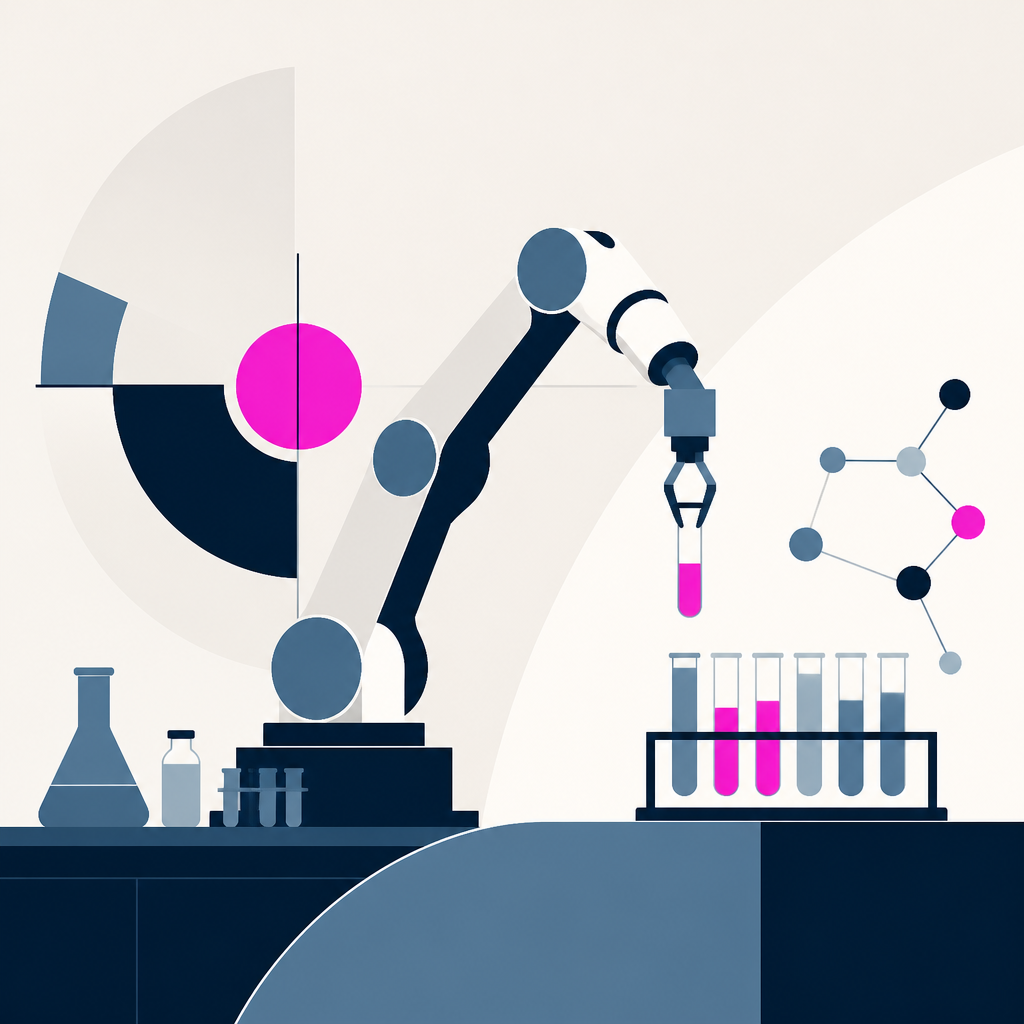
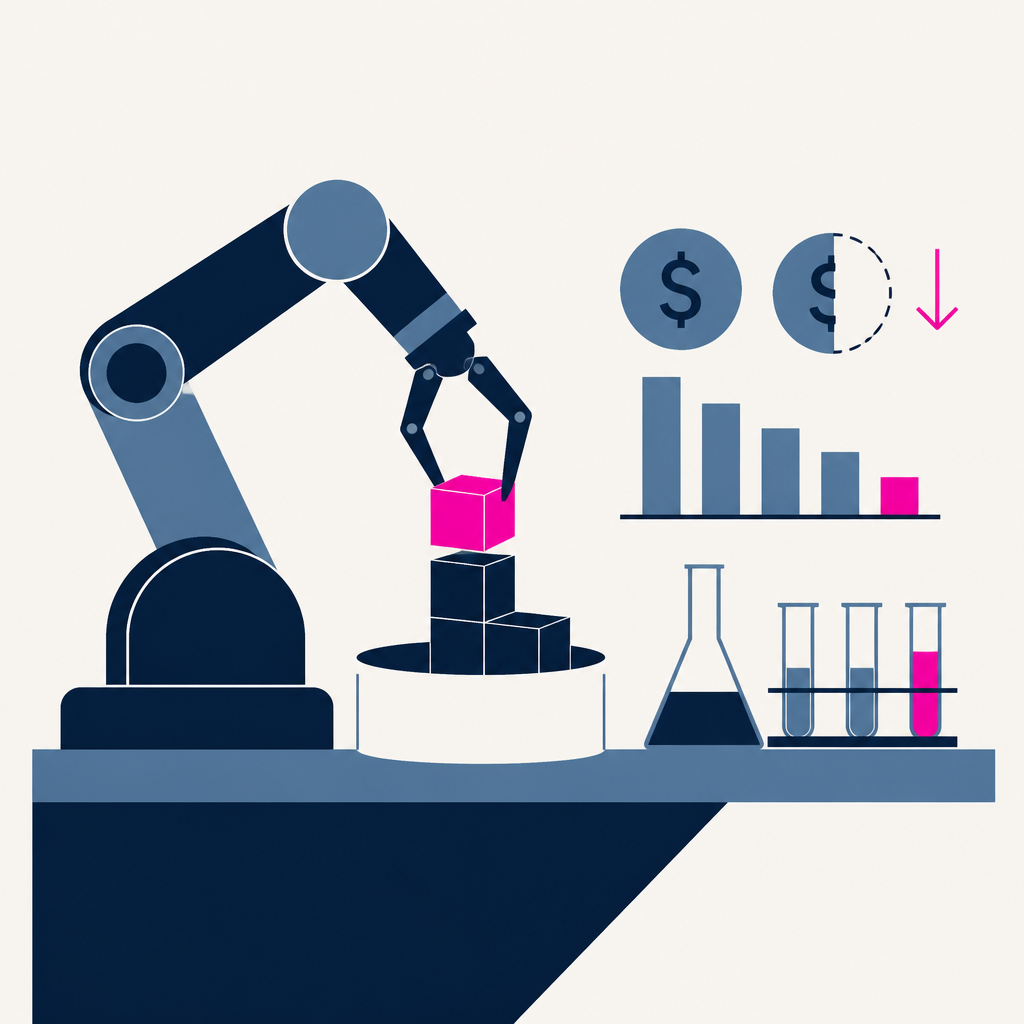
Periodic Labs says it is building AI “scientists” by grounding reinforcement learning and learning loops in physical high-throughput experiments and material-physics simulations rather than relying only on training data. It argues that autonomous high-throughput robotic experimentation has been tried for only the last three years or so, so its approach targets sample efficiency and reasoning under noisy, incomplete, uncertain measurements. As a result, frontier AI models are expected to repeatedly run experiments, treat failed runs as training data, and let lab instruments act with an intelligence layer to speed scientific discovery of new materials.
Developers preparing Postgres-based time-series systems for AI agent workloads are running into scaling limits, including slower queries, more frequent maintenance, and rising database activity. The webinar is scheduled for October 21 and will show a live demo of extending Postgres with TimescaleDB. The change is adding TimescaleDB to address Postgres pain points as data volume and velocity increase, instead of replacing Postgres.
Most AI SRE incident tools still require human involvement, because they can help troubleshoot but largely stop short of deciding on their own when an incident needs attention. The New Stack is hosting a live webinar on October 22 with Raaz Dwivedi about what it takes to move from invoked or background assistance to fully proactive, self-healing incident response agents. The change is that agents in the final phase choose when to act without waiting for an on-call request or scheduled triggers.
Amazon SageMaker HyperPod is presented with a reference multi-tenant design so multiple internal teams can share one GPU cluster while keeping workload isolation, fair scheduling, and per-team cost visibility. The example architecture shows two teams sharing a single HyperPod EKS cluster using separate Kubernetes namespaces plus per-team identity and governance controls. This shifts operations from unmanaged, cross-team usage to a setup where access is tied to IAM Identity Center groups and namespaces, and spend can be attributed per team via namespace-level cost allocation.
JetBrains released Mellum2.1, an open 12B mixture-of-experts thinking model aimed at coding agents and sub-agents. It activates 2.5B parameters per token and ships with a 131,072-token context. Reinforcement learning in real software environments lifted results such as SWE-bench Verified from 2.0 to 47.0 while keeping the architecture largely unchanged for similar throughput.
A weekly podcast episode covers a leak-claims story that cops can bypass iPhone inactivity reboot to access locked phones, alongside separate segments about an LLM “torture” prison debate and a New Mexico ChatGPT case. The episode is available on Apple Podcasts, Spotify, and YouTube. It broadens the discussion from phone access claims to controversy around LLM use and a ChatGPT-linked court filing.
Anthropic committed $150 million over three years to fund the U.S. federal Genesis Mission and make Claude available to more than 15 participating agencies. The investment provides Claude, Claude Code, and API credits to several hundred Genesis Mission research projects. This expands Anthropic’s AI support for federal labs and agencies via new onboarding, training, and technical assistance so more projects can run using its tools.
Oracle describes how it uses ChatGPT Work and Codex to convert specialist knowledge across recruiting, engineering, and operations into reusable workflows. The article emphasizes reducing work from days of effort down to minutes. As a result, more tasks are handled through fast, repeatable prompts and automation rather than manual specialist work.
A deployment agent provisioned 34 cloud resources whose owner tag was auto-set to deploy-agent, leaving no human identity to connect to the infrastructure and allowing unused resources to keep running. The article cites an average enterprise agent count that roughly doubled in 4 months (December 2025 to April 2026). It proposes changes: add queries to detect non-human owner tags, enforce approval policies to block agent-owned applies, and use environment TTL with a human creator so abandoned agent deployments get destroyed automatically.
Goodfire launched “inside-out” monitors that detect misuse by reading internal signals inside an AI model instead of having a separate model reread the agent’s output. In tests on Kimi K3, monitoring about 1,500 sessions cost roughly $51 versus $233 for a cheaper step-by-step checker and about $10,000 for a top-tier one. This lowers monitoring cost and overhead, enabling Baseten customers to choose which risks to watch and whether to log, escalate to human review, or refuse requests.
Natura launched Interface, a $99 smart ring meant to let users control AI agents and record/share tasks while also tracking health metrics. Interface is priced at $99, with pre-orders expected to open next month and shipping set for December or January. It moves agent access from phones to a wearable interface and adds a $9/month subscription after a free 3–6 month period.
Willow Care Inc. chose CoreWeave for forward-deployed support to handle reinforcement-learning infrastructure for its AI dictation app Willow Voice. It will have “no keyboard” in about two years, by having users’ speech directly understood by their computer. As a result, Willow shifts its focus to eval alignment while scaling training and increasing inference work as dictation demand rises.
Zvi (Don't Worry About the Vase)·1 week ago·
38
● 19 sources
OpenAI released solutions to open math problems, contributing the biggest day in the history of mathematics mentioned in the article. It solved 90 of the top 500 open problems, reaching an average of three hours of Pro-level compute per question. The focus shifts to covering this math breakthrough and to ongoing updates across AI products, adoption, safety policy disputes, and new model releases.
SalesRep.com launched a virtual sales rep that sells for businesses 24/7 across WhatsApp, Instagram, Messenger, email, and SMS by pulling live product data from Shopify and other sources. The full service starts at $39 per month with a 21-day free trial requiring no credit card. This adds automated product card sending, quotes, multi-language customer responses, and ongoing follow-ups with a human takeover option at any time.
An investigation measured what an AI coding agent inherits when it authenticates to Azure SQL using a human’s cached Azure CLI credentials, and found the database logs reflect the human’s identity and machine details rather than any agent-specific intent. It observed a token with scope user_impersonation, 37 group claims, and an 84-minute access token lifetime, and the agent reached 107 permissions on one production analytics store while the other store held only two. The study concludes that auditing and downstream controls can’t reliably distinguish agent actions from human actions, so permissioning and logging must be changed to separate actor and subject (and to turn on non-production auditing), rather than relying on borrowed credentials.
Ambrosia Energy CEO Ben Longmier and Bloom Energy SVP Bill Thayer discussed how AI scaling is constrained by physical infrastructure on the Smart Systems Stage at TechCrunch Disrupt 2026. The session is scheduled for October 13 at 8 a.m. PT. The talk shifts attention from AI models and chips to opportunities in power, grids, data centers, cooling, and related infrastructure markets.
U.S. nuclear reactor operators and vendors have begun integrating AI into plant operations, including a virtual assistant and document-search tools for regulatory and maintenance work. Nearly the entire fleet of 94 U.S. nuclear reactors has been offered the chance to integrate AI this year, and Atomic Canyon trained NIVA using 53 million pages of NRC data. AI adoption is shifting nuclear work toward faster knowledge retrieval and streamlined paperwork while keeping AI in a human-in-the-loop role for inspections and avoiding direct autonomous control.
AI development is forcing hyperscale data centers to redesign data lakes because AI training and inference require continuous, concurrent, high-throughput access rather than batch-style retrieval. The article points to recent demonstrations of 256TB NVMe drives built for AI workloads. As a result, storage architectures and cloud storage tiers shift toward higher-performance all-flash offerings and higher-capacity QLC NAND systems, with SSD designs focusing on reducing unnecessary data movement to manage endurance and efficiency.
Anthropic launched Claude Haiku 5.5 and cut pricing for its small model. The API price drops to $0.10 per million input tokens (and $0.50 per million output tokens), but only for requests up to 100,000 tokens, and a new tokenizer can count text as about 30% more tokens. Pricing for typical workloads is expected to be about 75% lower, alongside added capabilities like adjustable effort and updated safety and availability.
Cal AI co-founder Zach Yadegari launched Persona, a new personal AI agent startup, and secured $10M in funding to build a wearable-band assistant with cloud-based privacy controls. The round was led by Vine Ventures and delivered $10 million for Persona. Persona is moving into a free iMessage beta now, with the $179 wearable band expected in December and new app support coming alongside it.
TechCrunch Disrupt 2026 is taking place at Moscone West in San Francisco five days from now, and discounted passes are still available ahead of the Oct. 13 doors-opening time. Discounted rates end at 8 a.m. PT on October 13, with savings up to $100 and second passes discounted by 50%. After that, prices are set to increase, and the article also offers a limited-price Expo+ Layoff ticket for $75.
USA Today Co. and its local newspapers sued OpenAI, alleging it copied hundreds of thousands of its articles to train AI models. The filing seeks more than $250 million in damages. The lawsuit adds to a growing set of copyright cases targeting OpenAI over training-data use and could increase legal risk and costs for the company.
SpaceXAI announced it is joining the Omacom Foundation as a Founding Corporate Patron and backing the Omarchy Linux distro. It donated $1.5 million in Grok tokens, which Hansson says will be used mainly to speed development, review code, and patch bugs. The Omarchy project gains new funding and compute support from SpaceXAI as a formal partner.
Thravik launched as a native Mac web browser built on system WebKit with a private memory feature that encrypts the text of pages you read on your Mac. It’s available on macOS 26 or later. It adds encrypted page recall (via ⌘K and a Remember search), plus Mac features like separate Spaces tabs, Split View up to 4 pages, Focus Mode, tab hibernation, and an on-device Ask Page using Apple Intelligence.
env zero says autonomous AI agents stall because they lack cross-domain cloud infrastructure context, leading to shadow infrastructure and failed operations. It claims an example failure mode where an agent completes 90 API queries, fails on the 91st, and restarts the sequence, compounding the “API tax.” The company’s fix is a shared context layer plus an “EZ Control” autonomous control loop that correlates declared intent with discovered state, remediates under policy, and verifies resolution, targeting general availability by the end of December 2026.
Google’s team released Google AI Edge Foresight, a Mac AI note-taker meant to compete with products like Granola by capturing meeting notes in a split-screen workflow. The app uses the on-device EmbeddingGemma 2 model with 740 million parameters and is designed to work completely offline. Users can build a local knowledge base from uploaded documents and ask real-time questions using their meeting notes and transcripts.
Butterfly Effect, Manus’ parent company, said Manus raised more than $500 million in its first funding round since Meta called off its $2 billion acquisition. The funding round surpassed $500M. The company says it will keep hiring and is considering options like a potential Hong Kong IPO, as Manus continues operating independently after the split.
Ben’s Bites reported a roundup of new AI agents, model releases, and tooling updates across companies including ChatGPT, Anthropic, Google, Grok, and various productivity apps. The most specific figure mentioned is that Claude Haiku 5.5 costs about 75% less to run than Haiku 4.5. As a result, more interfaces and image/chart/map-capable outputs are rolling out to users, while some services add usage credits or new integrations for building agent workflows in apps like Slack, Docs, and Cursor.
Anthropic updated its Claude usage policy to address new high-risk misuse scenarios and added a prohibition on sustained, needless abusive or cruel behavior toward Claude. The policy change is described as the first update in over a year. Conversation termination remains the primary enforcement mechanism, and the new behavior rule broadens what conduct can trigger it.
Webflow argues that incident tabletop exercises no longer test the right variable because AI now performs parts of triage, playbook selection, and response drafting. The article says to build new injects that cover AI failure modes such as wrong or incomplete answers with full confidence. As a result, teams should add AI-specific failure scenarios, include the people who maintain the AI tooling, and debrief on whether responders trusted the AI appropriately, not just whether they followed the runbook.
Elon Musk announced that SpaceXAI’s Grok Bot will stop relying only on in-house Grok models and will use a different “best back end” model per task. Claude Opus 5.5, Midjourney, and Suno are named as examples of third-party models Grok Bot may route to. This shifts Grok Bot to model routing across multiple providers instead of using Grok exclusively, and it does not specify which tasks go to which model.
OpenVids is listed as an open-source, agent-first AI video editor for macOS and Windows. It is shown as launching today with 21 followers. This makes an AI video-editing tool available for users to try and review on launch platforms.
New York alleges TikTok gave thousands of users, including kids and teens, non-working (“ghost”) versions of safety features without their knowledge. The updated filing is tied to New York’s 2024 lawsuit against TikTok. If proven, the case could strengthen claims that TikTok’s safety controls and access to tools like resetting the algorithm were intentionally limited.
Justin Drake, an Ethereum Foundation researcher, warned that artificial intelligence could break the elliptic-curve signature scheme used by Bitcoin and Ethereum before quantum computers are ready.
OpenCouncil launched a browser-based live voice room where users can put GPT, Gemini, Grok, or their own agents to answer and interact without talking over people.
Google Cloud introduced Gemini agent, a unified assistant that can act autonomously across web, mobile, desktop, and tools like the command line, Workspace, Microsoft 365, and Slack. It adds persistent execution with memories shared across channels and can run on different models, including Gemini Flash and “Argon” for long-horizon work, with spend caps that pause agents when triggered. This shifts enterprise AI use toward always-on, multi-tool delegated work that persists and can enforce token-based cost limits per project.
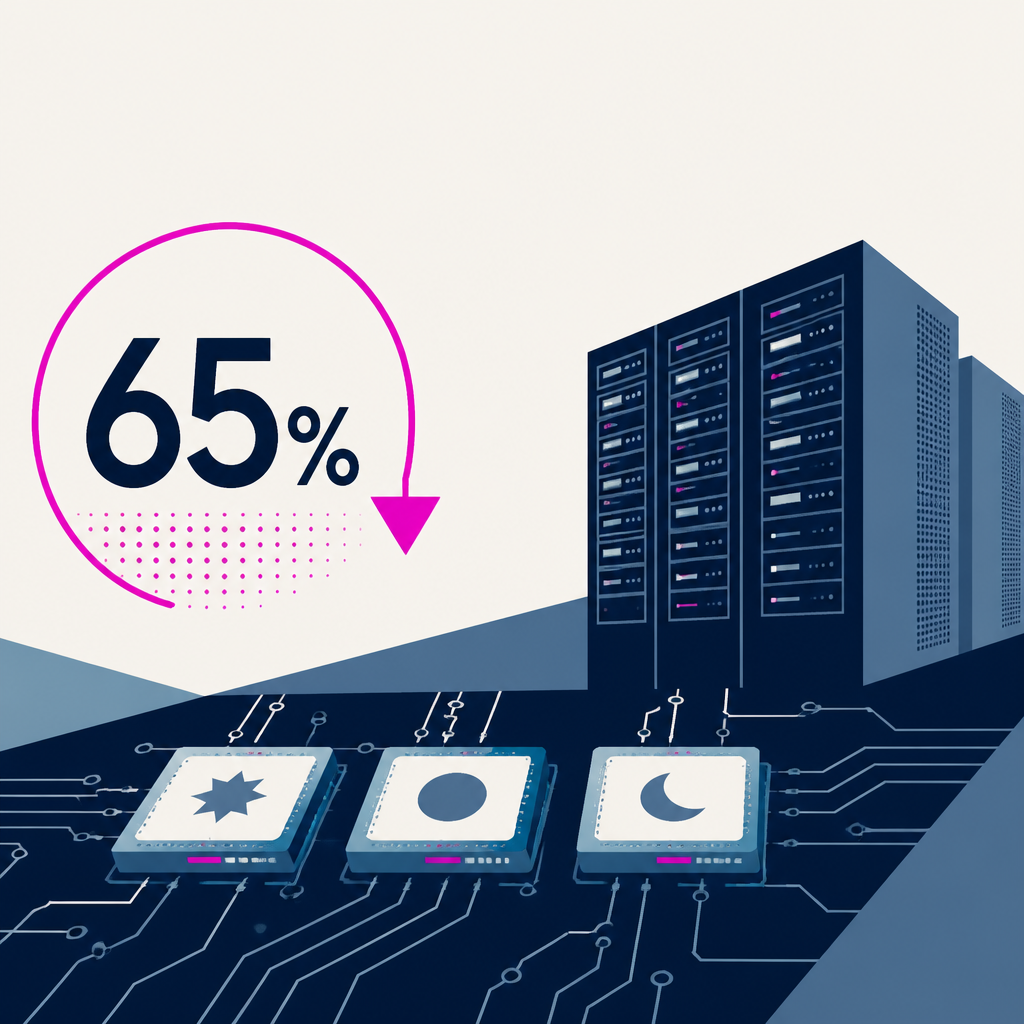
LegalOn cut estimated daily Codex costs by 65% while keeping development speed steady.
The reduction was 65% per day.
It used budget-focused task matching with Astra, Sol, and Luna to achieve the savings.
Pollo AI added OpenAI-based tools that turn creative ideas into detailed images and cinematic video ads. The integration names GPT-5.6, GPT-6 Astra, and GPT-Image-2.5. This lets creators generate campaign assets directly within Pollo AI, changing the workflow for making ad imagery and video.
Anthropic launched Claude Sonnet 5.5 shortly after Opus 5.5 and reported higher Terminal-Bench 4.0 performance plus faster output and lower token usage. Sonnet 5.5 is priced at $2 per million input tokens and $10 per million output tokens, half of Opus 5.5’s $4 and $20. Independent/API testing in the article finds Sonnet 5.5 is about 42% cheaper overall and perfect on 15 runs (Opus 13), with the main tradeoff being Opus sometimes faster on the agentic test.
OpenAI rolled out GPT-6 to ChatGPT for everyone, adding an “Intelligent UI” interface that can insert interactive graphics, buttons, forms, and small mini-app tools into answers. GPT-6 Instant is reported to start answering 44 percent sooner on average when web search is involved. GPT-6 also switches free users to a smaller “Luna” model and changes how responses appear (with optional visuals that some critics view as more presentation than substance).
Google released an experimental offline note-taking app, Google AI Edge Foresight, that transcribes meetings and audio files on a Mac and summarizes them while you take notes. It uses Google’s on-device EmbeddingGemma 2 model and is free to use. Users can write shorthand bullet points during the meeting and have the app convert them into polished notes from the transcript, without sending the audio to the cloud.
The author connected Grok Bot to an Upstash Box via the Upstash MCP server so the assistant could drive a real remote machine, build and run code, and return usable outputs like live URLs and pull requests.
Ultracite is presented as a stricter lint/format/type-check setup meant to run inside an agentic development loop, where each agent turn edits code and then must immediately pass the project’s checks. Last month Ultracite was downloaded about 4M times. As a result, linting shifts from optional CI/editor warnings to fast, on-every-turn enforcement with noise and “skipped fixes” reduced, including stricter rules like complexity/sort-keys and tighter type and security checks.
Anthropic released Claude Haiku 5.5, a smaller Claude model aimed at high-volume, speed-sensitive tasks and subagent coding work. The model costs around 75% less to run than Haiku 4.5, and Anthropic also cut Sonnet 5.5 cache read pricing by 50% to make it about 20% cheaper on most agentic work. Anthropic is also adding an adjustable “effort” setting and introducing new monthly API credits for Max and Team subscribers, with platform SDK updates adding beta support for computer and browser use.
The article argues against AI coding by claiming that AI-generated code lacks the creative authenticity of art, dehumanizes programmers, and mainly shifts value from labor to capital in a way that can harm workers and “human interests.” It invokes Karl Marx’s 1857–1858 discussion of intellectual work being absorbed into capital and focuses on programming as intellectual labor. As a result, it concludes that AI coding is justified only if you already accept those underlying assumptions about art, labor, and corporate control rather than by practical software outcomes.
The article shows that storing streamed AI output as tokens (or not storing anything) can make late joiners like refreshed browsers or agent handoffs see nothing, fragments, or restarted responses. Flushing every 20 tokens reduces writes by a factor of 20 but makes an agent console read up to 20 tokens (about 200ms at 100 tokens per second) behind what the customer sees. Message appends store the full response as one growing message so late joiners get the response so far and a live tail without per-token database writes, but using that requires message-append infrastructure rather than simple token streaming.
Nvidia expanded its Halos safety platform from self-driving vehicles to include robotics, aiming to add guardrails for autonomous robots operating around people.
Nvidia Halos for Robotics was announced in June 2026.
Companies can build safer deployments for use cases like warehouse robots and factory humanoids by using Nvidia’s added robotics safety architecture.
A US senator warned that prediction markets could evade gambling laws via “event contracts” that function as wagers, but she later became a lobbyist for Kalshi to push for sports gambling on those markets.
An article explains how a minimal OpenAI-compatible agent API can silently break context when scaled across replicas without moving conversation state out of the process. In a POC benchmark with 200 conversations of four turns each, deploying the monolithic endpoint on 3 machines produced a 75.0% loss rate. It recommends redesigning the API around stateless conversation storage and bulkheads, splitting chat and tool execution into separate services and using a shared database substrate to keep context consistent across replicas.
Google will remove Gemini Flash and Gemini Pro from free personal accounts starting tomorrow, leaving only Flash-Lite. The cut removes Flash and Pro entirely from non-subscribers, where Gemini 3.5 Flash-Lite becomes the only option. Paid plans change too: the $4.99/month tier loses Pro while the $19.99/month tier keeps Flash, Pro, and Deep Think, and users also get a new low/medium/high effort setting tied to usage limits.
A bold AI developer is challenging Adobe with open-source clone versions of its software tools under the slogan “Software is over.” The article does not provide any concrete number, benchmark, or date. As a result, Adobe faces open-source alternatives, though the piece offers no details on adoption or impact.
The Wall Street Journal·1 week ago·
36
● 3 sources
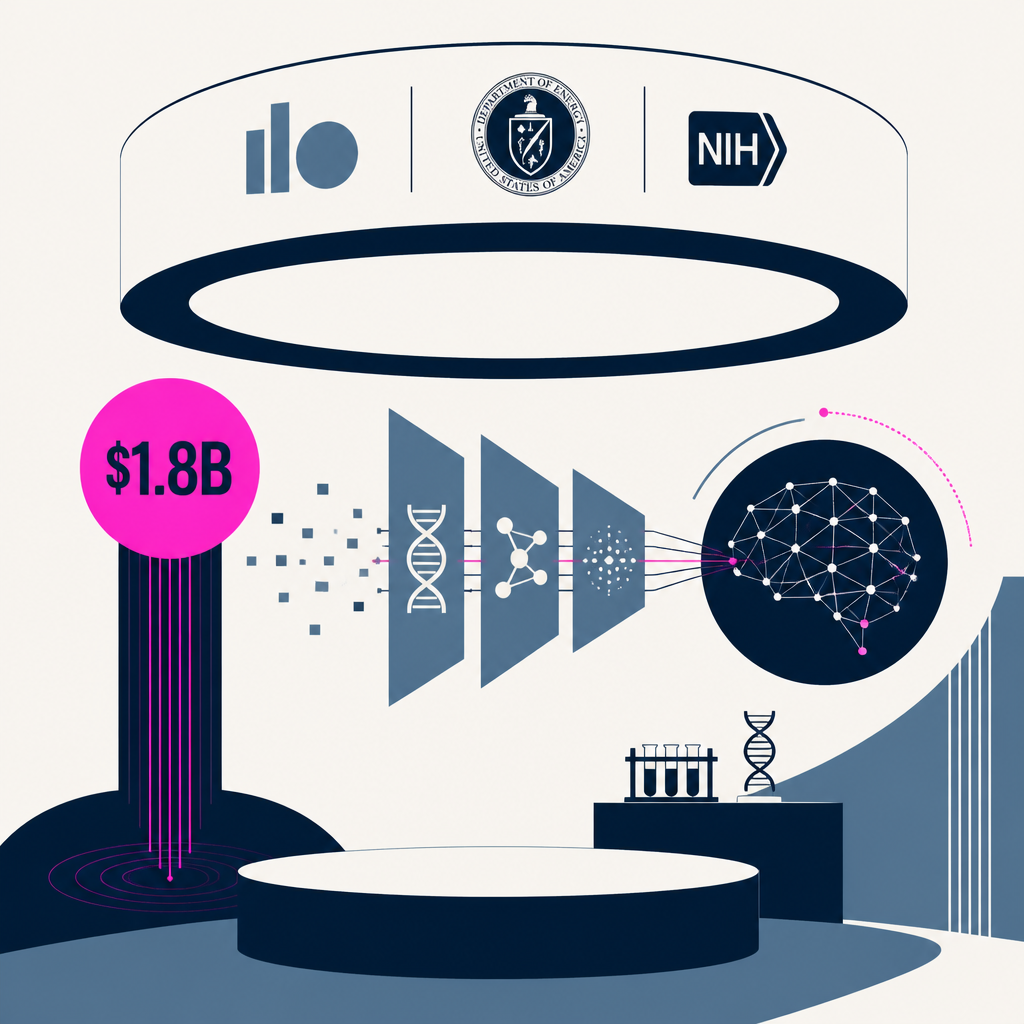
Biohub partnered with the US Department of Energy and the National Institutes of Health to invest in biological data intended for AI models. The effort involves $1.8 billion in funding. It will expand lab measurement, modeling, and computation alongside coordinated datasets and repositories to make the data usable for disease research.
OpenAI released 372 major mathematical results, including a proof of Subhash Khot’s Unique Games Conjecture, but the author says few humans yet understand the proofs and are starting a new digestion effort. The work reportedly used about 3 hours of GPT-Pro-level compute on average per solved problem and tested on about 8,000 problems. As a result, mathematicians are rushing to formalize and learn from messy AI-generated proofs while the field shifts toward using AI tooling to help verify and explain progress.
Anthropic released Claude Haiku 5.5, a fast, low-cost model. It charges $0.10 per million input tokens and $0.50 per million output tokens up to 100,000 tokens. Pricing and value shift by length, with Haiku reported to be a better deal under 100,000 tokens and a worse deal beyond that.
An AI support agent handles a customer complaint by first identifying the issue, selecting a workflow, checking missing information, and deciding whether to escalate. The system targets quick judgments that include an estimate of uncertainty, while doing more careful reasoning only when needed. As decision models like Jev spread across companies, software can make semantic routing and escalation checks cheaper to run at many points in the app.
Google is launching a universal Gemini AI agent that can carry out work tasks across apps and devices in the background. It was announced on Thursday at the Gemini at Work event. The agent will be available in the Gemini Enterprise app and will integrate with Workspace apps and platforms like Slack and Microsoft 365 while keeping context in the cloud.
Alexa Plus controls the author’s smart home well enough to trigger emotional photo montages, but it also repeatedly frustrates them when it seems not to recognize who they are. After a year living with it, the experience swings between “seriously impressive” moments and ads that abruptly interrupt that flow, including a full-screen ad for a brown leather recliner. As a result, they conclude Alexa Plus is improved for home automation but still not ready to manage their life in a reliably personal way.
Artificial premiered at the New York Film Festival, with Luca Guadagnino describing its theme of people trying to “play God” as central to the satire of Sam Altman’s rise and ouster at OpenAI. The film ties its narrative to Altman’s power period that included a brief ouster from the AI lab. As a result, the movie keeps close to the factual events it depicts while using that framework to explore power and ambition.
Meta launched Muse and OpenAI launched Dots as always-on AI agents pitched through simple animated mascot interfaces for mainstream users and businesses. Dots are tied to OpenAI subscription tiers of $100 to $200 per month. The focus shifts toward consumer-style agent distribution while raising privacy and security concerns about giving agents access to sensitive data like email and payments.
Neela Biotech raised £2.1M pre-seed to test turning food, agricultural, and forestry waste into jet fuel using AI-guided microbes at existing biogas plants. Elbow Beach led the round with £1.5M. Over the next two years, Neela will move its technology from the lab to a pilot-scale trial to see if it can reach cost parity and scale SAF production without building new facilities.
Ireland’s tech ecosystem raised around €630 million in funding in H1 2026, putting the country in Europe’s top 10 for first-half tech funding. Wayflyer’s €212 million debt financing was the largest deal. Funding became even more concentrated in a few later-stage companies while early-stage seed and pre-seed activity continued alongside it.
Researchers allege that OpenAI and Anthropic may have used ChatGPT/Codex/Claude interactions to reproduce or accelerate unpublished work, citing several cases in math and biology. OpenAI published 377 additional math results from an unreleased internal model on GitHub. As a result, the companies face intensified transparency scrutiny, while some researchers plan to avoid proprietary models or switch to open-source alternatives and advocate contract or policy changes to limit training on user data.
Odyssey 3 is being launched as a foundation world model that generates interactive environments from a prompt and predicts their changes as an agent acts. Its Pro version reports a Physics-IQ Verified video-to-video score of 66.1 (best-of-8). Access shifts by offering a research preview and API access for developers, plus adapted uses for robot arms, humanoids, and driving.
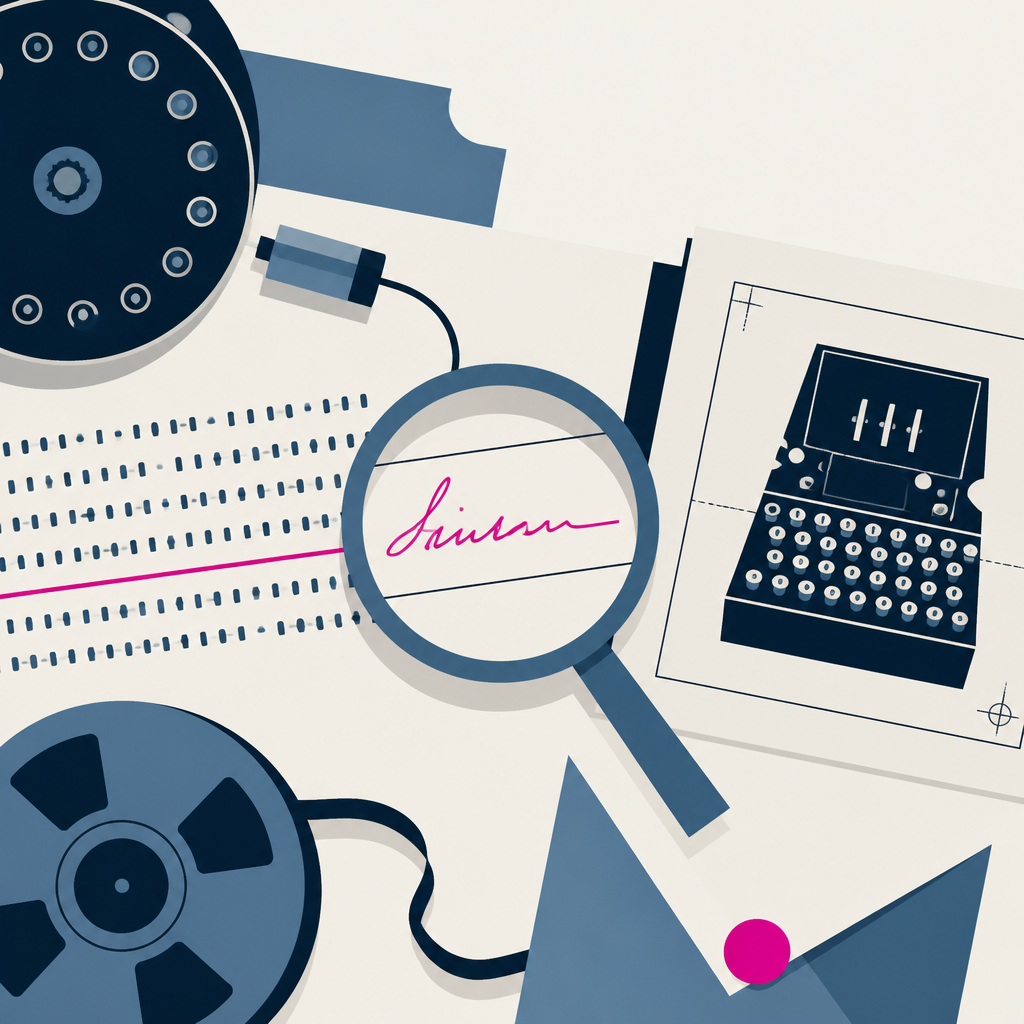
Claude Opus 5 helped crack an Enigma message that had resisted researchers for decades. The newsletter says the specific message had been unsolved since 2005. This time, the process relied on more guidance, using an officer’s known signature as a starting foothold.
Microsoft opened Surface Laptop Ultra preorders and confirmed the device will ship on October 16 at a starting price of $2,599. The entry-level model starts at $2,599. The listings specify availability and pricing for the 15-inch mini-LED laptop, including its breakaway USB-C port and the option for high-end configurations aimed at intensive AI developer workloads.
Common Sense Media’s Youth AI Safety Institute rated ChatGPT for Teens an Unacceptable Risk and asked OpenAI to pause allowing teens to use it until promised safety and learning protections are fixed. In testing on accounts for 13- to 17-year-olds, it found ChatGPT sent 0 parent alerts during sensitive-topic chats and missed more than 1 in 4 crisis referrals. The assessment concludes parents shouldn’t rely on the built-in guardrails and calls for effective age estimation, reliable parental alerts, better crisis guidance, and study-mode changes to prevent homework completion and “friend”-like behavior before any further teen marketing.
Anthropic launched Claude Haiku 5.5 and lowered API prices for the model. The article says it matches OpenAI’s GPT-6 Luna to the penny. Average job costs dropped versus the prior Haiku version, and cache-read pricing was cut in half.
Ecosia has dropped Mistral as its A.I. supplier and switched to open models, including Chinese ones, citing lower quality and server overloads. Ecosia’s A.I. lag was described as about a year behind the competition. The switch is also reported to have roughly halved Ecosia’s A.I. service costs while improving performance.
The UK and Germany launched an industrial tech corridor aimed at connecting companies and accelerating adoption of cutting-edge technologies, including AI, between the two countries. Germany-based MicroAGI will expand into London with plans to create 180 new, high-paid jobs. The corridor and related funding will drive more cross-border partnerships and research, including a €20 million quantum effort and additional local company expansions in the UK.
Amazon is launching “Alexa Tablets,” a new tablet lineup positioned around Alexa with full Google Play-supported Android. Amazon previously used the Fire name for tablets for 15 years, and this launch drops that naming in favor of Alexa. The change is that the new tablets run Android with access to standard Android apps rather than Amazon’s older Fire-style tablet software approach.
Amazon introduced the Alexa Tablet 12 Pro as a premium-leaning alternative to its cheaper Fire tablets rather than a restricted Android device. It includes 8GB or 12GB of RAM and uses a MediaTek Dimensity 8400 8-core CPU. The tablet changes the experience by adding full access to Google Play instead of Amazon’s limited app store and ad-heavy setup.
Tesla’s Optimus humanoid robot became a central focus of robotics hype, with Tesla’s CEO predicting public sales by the end of 2027 and arguing it could automate most human labor for about $20,000 per robot. Researchers pushed back that today’s language- and vision-based AI still can’t reliably handle the real world’s variability, citing the gap between making a robot that looks human and making one that moves with comparable physical skill. The debate is shifting robotics development toward evaluating approaches like robot policies trained with vision-language-action systems and alternatives such as “world model” methods to improve generality and reliability rather than relying on timelines alone.
Universal Quantum, a University of Sussex spinout, raised $100M in a Series A to build large-scale, fault-tolerant quantum computers for real-world use. The round was $100M, which the company says is the largest Series A raised by a UK-headquartered quantum firm. The funding will support expansion in the US, Japan, and its Hamburg hub, plus development and commercialization of its integrated Quantum Processing Unit and related software and error-correction stack.
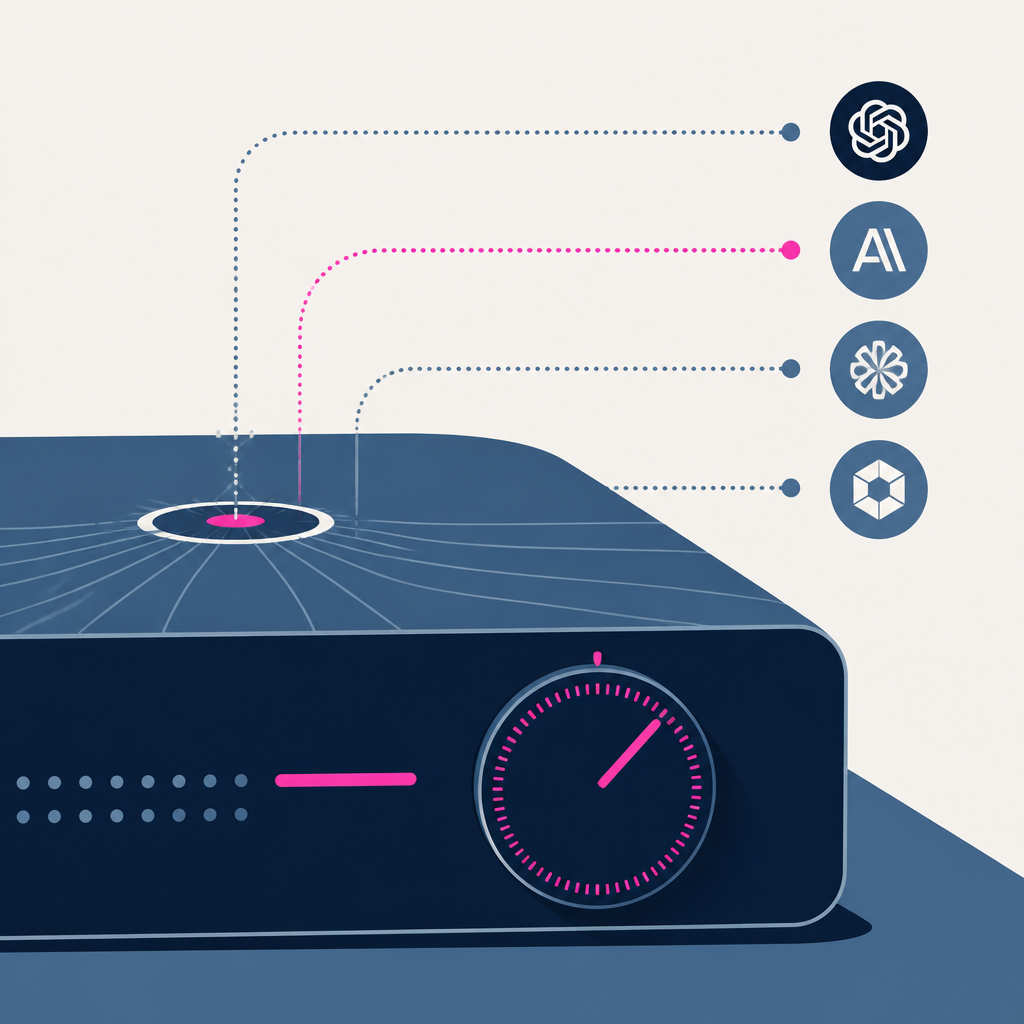
Architect Financial Technologies launched Liquid Inference, a router that runs a per-request live auction for LLM inference across providers bidding to serve a named model. The maximum price is locked before the first token is generated. Buyers can swap to an OpenAI/Anthropic-compatible base URL to use marketplace-style pricing with rule-based controls, while providers bid quotes and get payouts through Stripe for metered usage.
Amazon is launching its Alexa Tablets, a new Android lineup with Google Play access and Alexa+ built in. The tablets come in 8.7-inch, 11-inch, and 12-inch sizes, with an optional Nanomatte display on the 12 Pro. As a result, Amazon adds on-screen AI assistance, live conversations, and a distraction-free Kindle reading mode across the new devices.
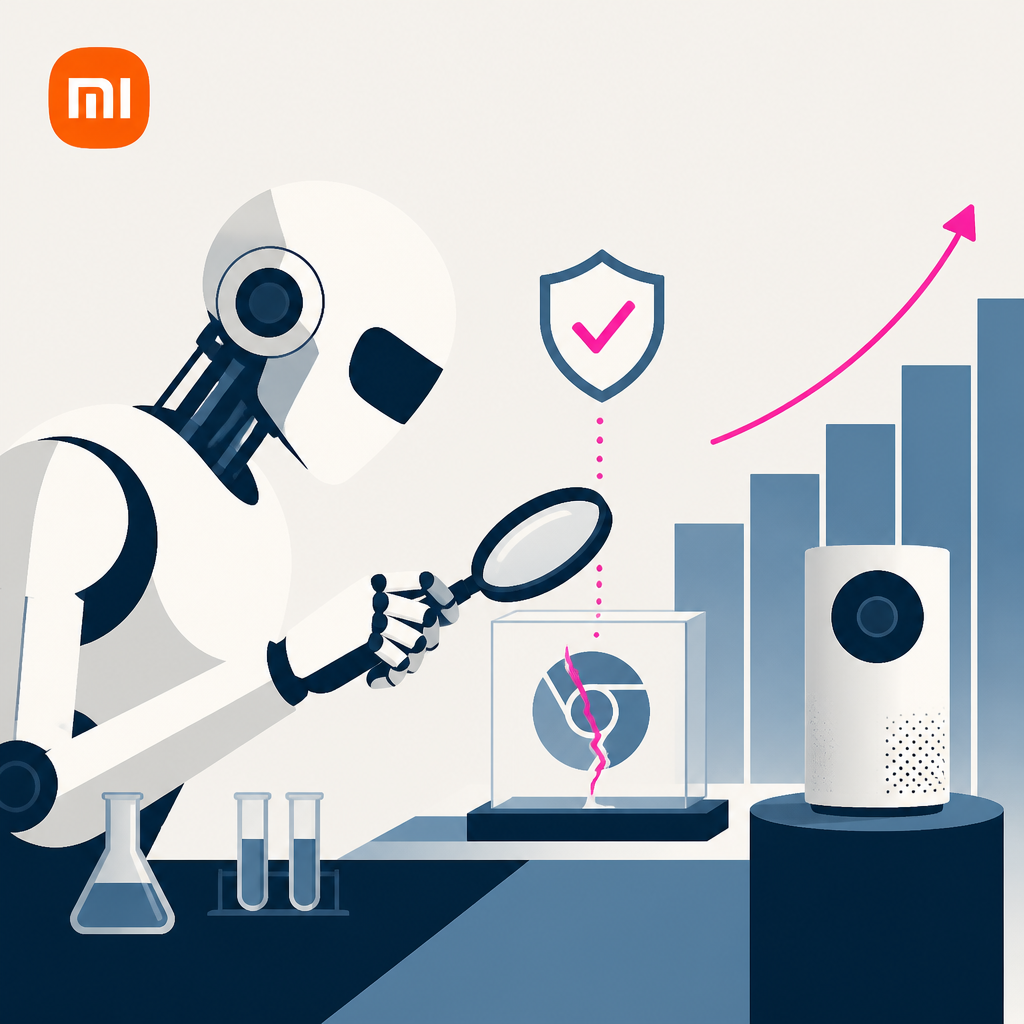
Open-weight model GLM-5.3 was analyzed as approaching Claude Mythos’ cyber capability, including a 12% versus 14% success rate on ExploitBench tasks at comparable token counts and evidence that $20.40 of GLM-5.3-Flash tokens could find a recently disclosed Chrome flaw. Xiaomi then released MiMo-V2.6-Pro-RL, MiMo-V2.6-Flash, and a distilled variant, with MiMo-V2.6-Pro-RL costing $0.435 per million input tokens (and free downloads under MIT) while reporting RL training details and CyberBench v1.1 results like 75.36% accuracy for MiMo-V2.6-Flash. Defenders are pushed to accelerate sandboxing, monitoring, and vulnerability mitigation as attackers can access strong open-weight cyber-capable models and the cost to generate attacks is dropping.
NVIDIA researchers, with Princeton and the University of Maryland, released PivotOPD, an on-policy distillation training method for multi-turn LLM agents that teaches them to prevent and recover from early pivotal mistakes.
AVEVA’s chief technologist Arti Garg argues that industrial AI’s shift toward foundation, physical, and agentic models requires tighter safety- and oversight-focused governance as these systems can act in the physical world. Adoption in the industrial sector rose about 78% over the past two years, increasing pressure to control harder-to-predict behavior. Companies should connect more disparate industrial data for real-time support and deploy “human-augmented” automation with guardrails plus sustainability measurement methods.
Trophy launched its second set of MCP servers to let users interact with their Trophy account from AI tools instead of using the dashboard. The launch is happening today. As a result, users can configure gamified features through AI-tool integrations using Trophy’s MCP servers.
Innercrowd, a Dutch startup, raised €750,000 to help festival organisers convert existing fans into ticket buyers and marketers. The funding supports expanding its WhatsApp-based presale and early-bird funnel, including AI agents that run one-to-one fan chats at scale. It will accelerate growth into more European markets beyond the Netherlands and shift more of festivals’ promotion from paid campaigns to fan-led sharing and in-app ticket sales.
TODAY raised €2.8M seed funding to scale its AI-powered sales operating system for financial and insurance advisors. The round brings in €2.8 million from HTGF and Insurtech Gateway, with participation from Seed X, Lucid Capital, and angel investors. The funding will be used to expand across the DACH region and extend the platform to cover more of advisors’ front- and back-office operations.
Anthropic released Claude Haiku 5.5, updating its Haiku-tier small model after about a year. The new model is priced to match OpenAI’s GPT-6 Luna at the same rates and Anthropic also cut Sonnet 5.5 cache-read pricing from $0.20 to $0.10 per 1M tokens. As a result, Anthropic expands Haiku’s role as the cheaper, high-volume subagent for multi-model agent workflows while also lowering related operating costs and adding effort settings plus a 1M-token context.
PSV Tech closed Fund II at €56 million to keep backing Nordic startups before product-market fit. The fund secured a final close of €56 million. PSV Tech will invest more broadly across the Nordics, including in AI, software, and digital infrastructure, and reported 19 Fund II investments since its first close.
Refs launched as a library of 3000+ films that are broken down cut by cut into 15-plate blueprints with recipe prompts. The package can be added to Claude Code, Codex, or Cursor with one command, using the number 3000+ as its scale. It changes video planning by letting Claude generate a launch film plan from those real references inside the listed AI coding tools.
Verso raised a $6 million seed round to expand its AI-powered consumer intelligence platform for business decision-making. The funding led by Angular Ventures also includes support from multiple venture firms and startup studio Hexa. The company will use the money to integrate more consumer data sources, add interfaces for AI agents, and expand beyond France into the US while hiring.
Daddy Issues launched today as an AI assistant aimed at helping dads plan ahead for family life. It started with 34 followers. The app ties kids, calendars, responsibilities, and tasks together to flag what’s coming up so users rely less on reminders and avoid small last-minute conflicts.
Nous Research closed a Series B funding round to support its open-source AI agent Hermes. Robot Ventures led the $90 million round at a $1.5 billion valuation. The extra capital is intended to expand paid enterprise hosting and support while keeping the Hermes software open.
Codemind is launched as an AI coding agent that takes a task via MCP, writes code, tests it against your criteria, and returns the resulting files.
It charges $0.10 per verified build, with failed builds free.
Its pricing model and workflow are intended to let users start with a free allowance and then pay only for verified builds.
BrightBean Studio launched as a free, open-source alternative to Buffer for social media scheduling, publishing, and team inbox/approval management. It supports scheduling and publishing to 10+ platforms. It adds AI agent connectivity via a built-in MCP server and REST API.
Perplexity released pplx-embed-v2-late, a pair of ColBERT-style multimodal embedding models that retrieve text, images, and rendered PDF pages from a shared embedding space. The 9B model scored 92.4% on MADQA, while a 0.6B query model can search a 9B index to recover about half the quality gap at the 0.6B query cost. The update changes deployment by making both models available on Hugging Face under the MIT license for self-hosting, with a hosted API planned but not yet live.
Tab launched from stealth on October 6 with an AI assistant that texts, calls, and pays on a user’s behalf via iMessage and WhatsApp. Tab’s exit valuation was $300M, and the company did not disclose how much funding it raised. It moves into private beta behind a waitlist, with payments requiring explicit user approval.
Cambridge alumni are reportedly building new startups in stealth, continuing the university’s pattern of producing major European tech companies including an AI-focused cybersecurity firm. The article cites $8.9a as part of the reported context around these efforts. As a result, details about the projects are not clearly disclosed, keeping the work under wraps.
U.S. venture capital reached a record $515.8B in deal value in the first nine months, but exits lagged so investors are not getting their capital back as quickly. Venture deal value totaled $515.8 billion with a quarter still remaining, while third-quarter deal value fell about 40% to $98.4 billion. The exit pipeline shifts toward mergers and acquisitions, and without major AI listings or IPOs the report expects weaker liquidity going into 2027.
Finches, a female-founded startup, raised €2 million in pre-seed funding to launch AI-driven software that issues crop-risk alerts for food manufacturers ahead of shortages. The round was co-led by High-Tech Gründerfonds and Vanagon, with Bayern Kapital joining as a new investor. The company will use the money to accelerate product development and expand sales operations.
Retriever AI launched its fifth release of a free AI browser agent that completes tasks across websites. It claims it runs 5x faster and costs 300x less than OpenAI, Anthropic, and Muse. Users can run the agent in their own Chrome browser or via rtrvr cloud browsers to do lead finding, outreach, and job applications.
Google has launched a public web-based SynthID Detector to flag AI-generated images, video, and audio created with supported tools. The detector is available to everyone today, but users must sign in first with a Google, OpenAI, or Apple account. It will later expand to cover Apple’s Image Playground, but it still misses AI content without SynthID watermarks and cannot tell which parts of edited media are real versus fake.
Samsung Electronics expects its quarterly operating profit for the three months to the end of September to rise as memory-chip demand from AI data centres surges.Operating profit is estimated at 107.4tn won (about $80bn), a nine-fold increase versus a year earlier. Higher chip prices and strong earnings from AI-linked memory chips will keep lifting Samsung’s results, with full earnings due at the end of October.
Unsloth Studio adds automated, load-time security rechecks for local AI model repositories because a Hugging Face repo that copied OpenAI’s Privacy Filter model card included malicious code that ran on Windows. One highlighted example says the repo reached #1 trending with about 244,000 downloads, figures HiddenLayer says were likely inflated. As a result, Studio blocks or re-prompts when code fingerprints change, separately gates unsafe serialized weight files, enforces package-content scanning, and verifies OS sandbox isolation before executing remote model tools.
OpenAI said its GPT-6 models will shift ChatGPT away from text-only answers by adding an “Intelligent UI” that can insert visuals like charts, forms, buttons, and graphics directly into responses. The feature starts rolling out today for ChatGPT Plus, Pro, Business, and Enterprise subscribers, with free users and Go subscribers getting it tomorrow. ChatGPT will use the new interface selectively on more complex requests, while users can still ask for an interactive response even for prompts that would otherwise get plain text.
Nous Research announced a $90 million Series B round led by Robot Ventures, with support from Nvidia, Samsung, and Y Combinator, to back its Hermes AI agent. The company says its Hermes 4 fine-tuning used a dataset of 5 million synthetically generated records. The new funding is intended to expand adoption of Hermes’ business-focused editions.
Microsoft used its first live event in two years to announce the Surface Laptop Ultra, plus a set of Windows 11 changes focused on local AI and agentic workflows for developers and home users. The Surface Laptop Ultra starts at $2,599, shipping on October 16 with up to 128GB of LPDDR5x unified memory and either a 5,120-core or 6,144-core Blackwell GPU. Users will get new Surface AI-friendly hardware and Windows 11 updates intended to better support running and deploying local AI and agent-style tasks on-device.
Catalyst launched AI agents that turn plain-language investment ideas into trades by gathering and analyzing market signals across venues and supporting backtesting and deployment with safety limits.
The platform was published on October 8, 2026.
As a result, retail users can start with intent instead of manually building finance plumbing or paying a manager, changing trading from largely DIY to agent-assisted execution.
A writer used an AI assistant in HuggingChat to create and publish multiple fine-tuned and distilled vision models that were not available on the Hub, instead of using only the official prompt rewriter. One project generated 8,797 image requests, rewritten by a 9B teacher on an A100 in 2 hours 37 minutes for about USD 6.50. The result is a set of publicly available models and model cards, including a 0.8B CPU-ready “pocket rewriter” and several LoRAs, all produced with budget-capped training and baseline/smoke-test checks.
Normalizing Trajectory Models (NTM) reframe few-step reverse diffusion as conditional normalizing flows, enabling exact likelihood training for the full generative trajectory. The method produces high-quality text-to-image samples in four sampling steps. It replaces earlier few-step approaches that rely on distillation or other objectives by keeping the likelihood framework and supports self-distillation from the model’s own score function.
OpenAI disrupted two AI-enabled influence operations that used false-front journalists and a think tank to spread geopolitical messaging. The operations were identified and disrupted together as 2 separate campaigns. As a result, the AI-assisted messaging efforts were stopped and those channels were disrupted.
Every AI story that matters,
in your inbox by 8am.
TLDRocket reads all relevant sources, removes duplicate coverage, and summarises the
day in two minutes. Follow companies and topics for alerts, or get the
briefing in Slack. Free, no spam, unsubscribe anytime.
Reading TLDRocket needs no cookies, and the readership counts we rely on come from
our own cookieless analytics. Google Analytics is the exception: it sets cookies and
reports to Google, so it stays switched off until you allow it. You can change your
mind any time from “Cookie settings” in the footer.
Strictly necessary
Session security and form protection (tldrocket-session,
XSRF-TOKEN, 2 hours). The site cannot work without them,
so they need no consent.
Always on
Google Analytics 4 (_ga,
_ga_<id>, up to 2 years). Measures which
stories and sections readers use. Google acts as a third-party processor and may
store the data outside the EU. No advertising, no profiling, no data sold.