
Unitree, famous for its dancing robots, surges by 460% on its trading debut, lifting valuation to $66 billion, far ahead of U.S. competitors
Fortune Nicholas Gordon ● Covered by 2 sources
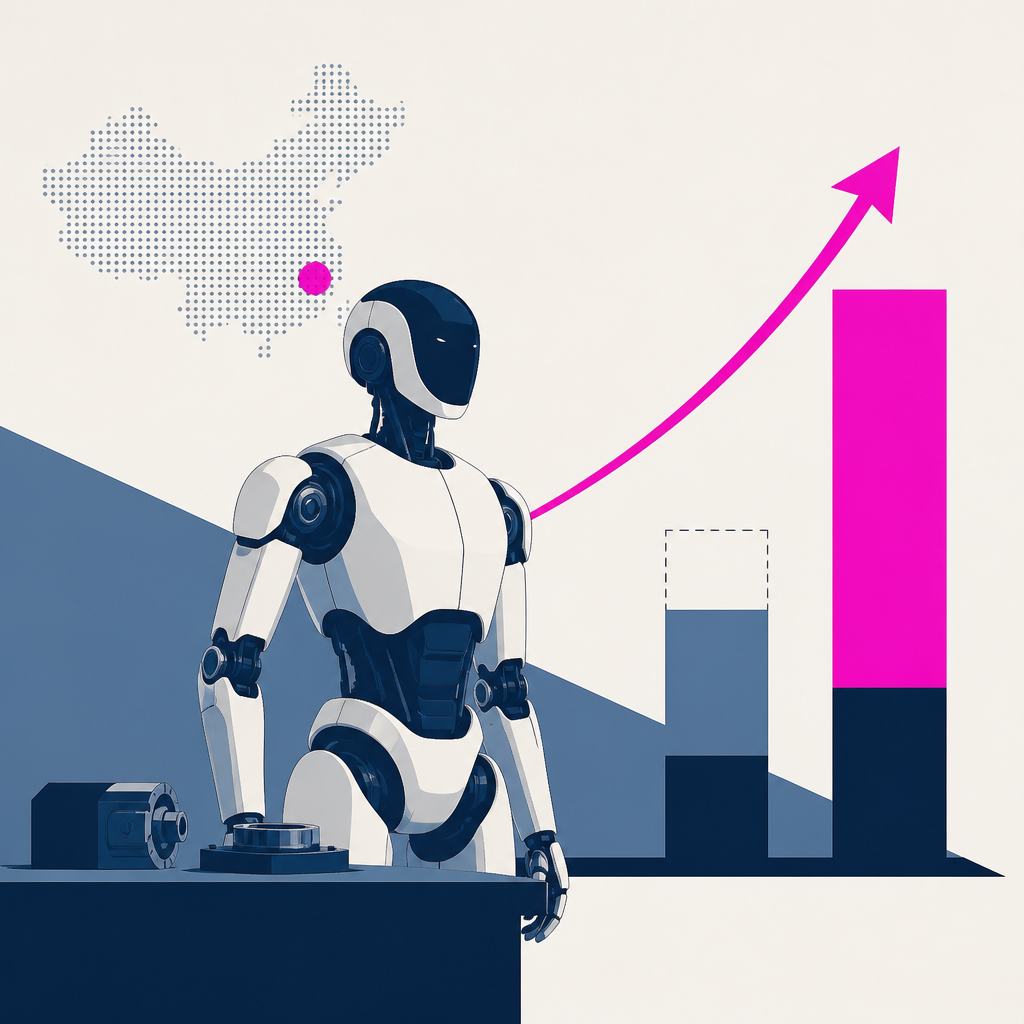
Unitree's robots stock rocketed 460% on its Shanghai debut, hitting a $66 billion valuation. That's more than Baidu, JD.com, and even top US rival Figure AI.
Based on reporting by Fortune, Nicholas Gordon — read the original for the full story.
Summary, retelling and take written by AI under human oversight; images are AI-generated illustrations. How we work · Report an error
Unitree closed its first day on Shanghai's STAR Market up more than 460%, turning a $9 billion IPO valuation into roughly $66 billion by the time trading ended. That number now puts the Hangzhou robotics maker ahead of established Chinese giants like Baidu and JD.com, and comfortably past Figure AI, the most valuable U.S. humanoid robot company, which was valued at $39 billion in a funding round this past September.
The hype has some grounding in actual numbers, even if modest ones next to the valuation. Unitree pulled in 1.7 billion yuan, about $252 million, in 2025 revenue, with almost 45% coming from customers outside China. Profit landed around 600 million yuan, or $89 million. Most of what Unitree sells still goes to research labs rather than factories, though a handful of Chinese state-owned enterprises and tech firms are starting to test humanoid robots in real operations. The company's backers read like a who's-who of Chinese tech: DeepSeek, Alibaba, Ant Group, Tencent, plus several state-linked funds.
Unitree's rise has been as much about spectacle as balance sheets. Its dancing robots are now a fixture of the CCTV Spring Festival Gala, watched by more people than almost anything else on Chinese television, and founder Wang Xingxing was invited to a meeting with President Xi Jinping this year alongside Jack Ma, BYD's Wang Chuanfu, and DeepSeek's Liang Wenfeng. Days before the IPO, the company showed off a robot it calls Superman, claiming it could outrun and outjump human records. Not everyone is buying the narrative, though. HSBC analysts warned in July that the current wave of humanoid robot orders could prove illusory without real gains in the AI models controlling them, predicting the shipment boom won't hold up over the next year or two.
Unitree's debut fits a wider pattern of Chinese tech and hardware companies rushing to list. Memory chipmaker ChangXin Memory Technologies saw an identical 460% first-day pop in July after raising over $8 billion, and its shares have kept climbing since, making it China's most valuable listed company ahead of Tencent. Rival humanoid maker UBTech already listed in Hong Kong back in 2023, and another competitor, Agibot, is preparing its own Hong Kong offering. Moonshot AI, DeepSeek, Yangtze Memory Technologies, Kunlunxin and Moore Threads are all reportedly weighing IPOs of their own.
The timing is awkward given a new U.S. ban on foreign-made robots, introduced in late July over national security concerns, which exempts machines already sold in the country but closes the door on new ones. That matters because the U.S. accounted for 18% of Unitree's revenue last year, and the Pentagon has separately listed the company among Chinese firms it believes has military ties. Morningstar's Kangyuxiao Li warned the lost access could slow Unitree's growth and cut off useful feedback from American buyers. But the restriction cuts both ways: without cheap Chinese robots and components, U.S. startups may find it harder to build affordable machines of their own, with some reportedly resorting to carrying components in their luggage just to get around the rules.
My take — AI-written commentary, not fact-checked reporting
A 460% pop on debut day tells you more about how Chinese regulators price IPOs to avoid embarrassing retail investors than it does about Unitree's actual worth, and treating that number as a verdict on the humanoid robot race is lazy. HSBC's skepticism about shipment numbers outpacing AI capability deserves more attention than the valuation headline, because dancing robots on state TV are marketing, not a business model. And Washington's ban is a gift to Beijing's national-champion strategy dressed up as a security measure — it hands Unitree a talking point while quietly making life harder for the American startups it was supposed to protect.
Read more about this at: Fortune