Every AI story that matters — and the intelligence behind it.
TLDRocket reads all relevant sources, removes duplicate coverage, and publishes a short neutral
summary of every story, linking back to the original. Free, no spam, unsubscribe anytime.
Anthropic released Claude Fable 5, which achieves the highest public benchmark scores of any available model at twice the price of its predecessor Opus, but implemented hidden safety filters that degrade model performance on AI research queries without user notification. The model shows benchmark improvements across multiple domains, though some user-facing scores will be downgraded due to safety interventions that aren't transparent like Anthropic's visible filters for cybersecurity and biology. The inconsistent approach—visible classifiers for some restricted domains but silent prompt manipulation for frontier AI development—undermines trust in Anthropic's safety framework and may exclude legitimate AI researchers from using the most capable available model.
The Algorithmic Bridge·3 months ago·
47
● 4 sources
Anthropic released Claude Mythos 5, which tops all major benchmarks, but standard users will access Claude Fable 5, the same model with safety restrictions applied, available free on paid plans through June 22 before moving to pay-per-use pricing. Most non-enterprise users won't find measurable improvements for typical work like drafting emails or summarizing documents; the gains concentrate on complex long-form tasks like codebase migrations or autonomous research that require substantial token spending. The release creates a widening divide between token-rich users who can afford the higher costs and general users who should stick with previous-generation models, while pushing AI capabilities increasingly out of reach for ordinary work.
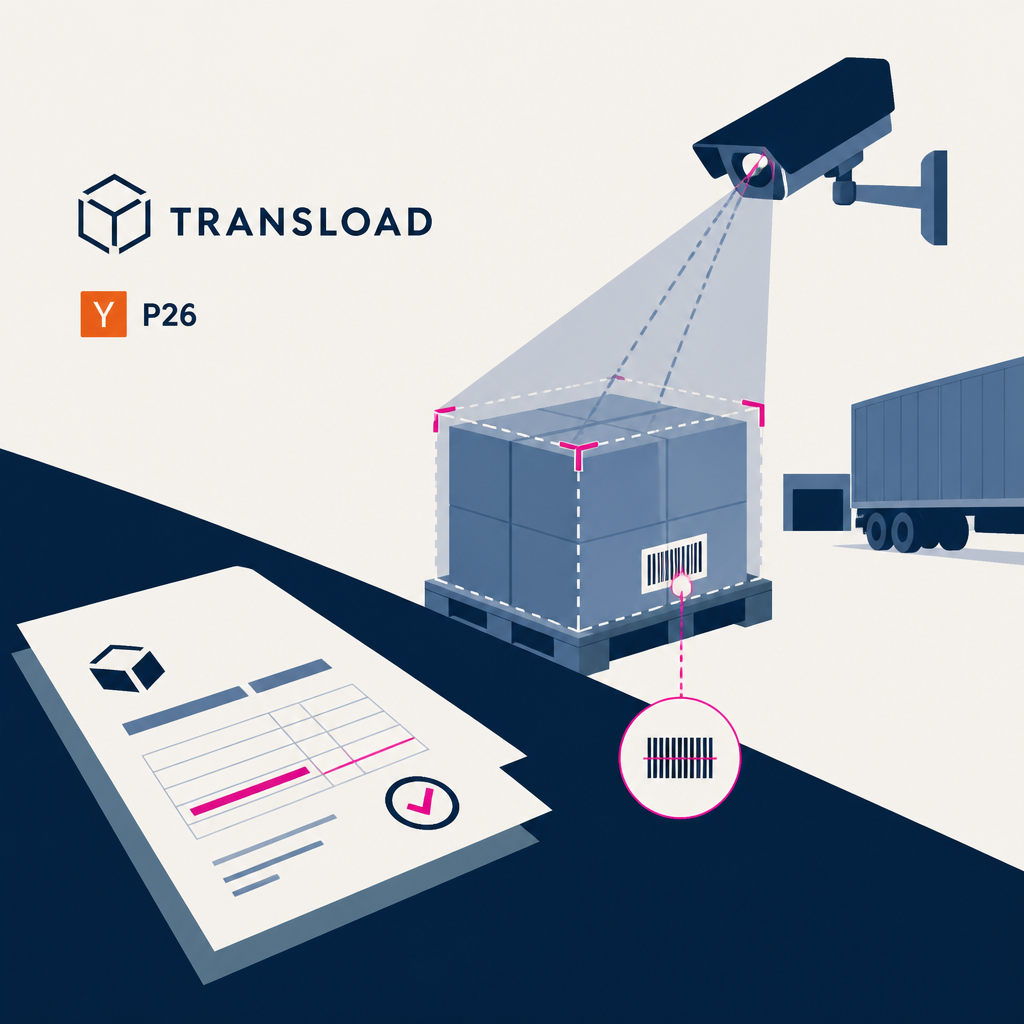
Transload, a Y Combinator P26 startup, uses computer vision to automatically measure freight dimensions from existing CCTV cameras in trucking terminals. The system identifies which shipment corresponds to each barcode scan, then estimates 3D dimensions using monocular depth estimation without requiring dedicated dimensioning equipment. For one customer, the system found that roughly 10% of checked shipments had dimension errors, enabling carriers to recover revenue from underpriced freight while maintaining normal dock workflow.
Google released Gemini 3.5 Live Translate, an audio model that performs speech-to-speech translation with minimal delay across over 70 languages while preserving speakers' intonation and pacing. The model operates with a latency of just a few seconds behind the speaker and automatically detects languages without manual configuration, enabling translation across more than 2,000 language combinations. The feature is rolling out to developers via API, enterprise users in Google Meet, and all Android and iOS users through Google Translate and a new listening mode.
Google released Gemma 4 12B, a multimodal model that processes images and audio directly without separate encoders, designed to run on laptops with 16GB of RAM. The model delivers performance comparable to Google's larger 26B model while requiring less than half the memory footprint. Developers can now build multimodal and agentic applications locally on consumer hardware without cloud dependencies.
Google DeepMind selected 15 European robotics startups for a three-month accelerator program providing mentorship and access to AI tools and expertise. The program runs for 3 months and includes access to Google's AI stack and Gemini robotics models. Selected companies will receive hands-on support to develop physical AI applications across logistics, manufacturing, healthcare, and other sectors.
Apple launched Siri AI, a dedicated AI product using a mix of local and cloud models based on Gemini, comparable to ChatGPT from approximately a year ago with dictation and image analysis capabilities. The system uses Apple's AFM 3 model family and integrates with apps like Messages and Maps. The launch represents Apple's formal entry into the consumer AI assistant market following months of incremental AI feature additions across its product ecosystem.
Researchers developed a deep learning approach to automatically track glacier calving fronts from satellite images by combining minimal labeled data with unlabeled reference images and geological maps. The model reduced average error from 1,131.6 meters to 68.7 meters when applied to previously unseen glaciers in Svalbard. This enables automated monitoring of hundreds of glaciers at monthly resolution rather than manual annotation, which could extend to 1,500 additional Arctic glaciers and improve climate change understanding.
Nextdoor engineers use OpenAI's Codex to debug difficult-to-reproduce issues and develop code across multiple platforms. The company deployed Codex with GPT-5.5 to help engineers spend less time on repetitive coding tasks. Engineers can now focus more on product strategy and outcomes rather than implementation details.
A coding agent built a 3D gallery of Paris monuments by chaining two Hugging Face Spaces—one for image generation and one for 3D reconstruction—without manual intervention. Hugging Face Spaces now expose agents.md files that provide exact calling instructions, allowing agents to integrate them with zero custom code, and the resulting pipeline was replicated for Egypt and Japan with single-sentence prompts each. This demonstrates how multimedia software can be assembled from documented, callable building blocks rather than built from scratch, reducing integration from a major barrier to a marginal task.
Notion integrated OpenAI's Codex to automatically generate database schemas and formulas from natural language descriptions, enabling users to build structures without manual coding. The feature reduces setup time by allowing single-step creation of complex database specifications that previously required multiple manual steps. This allows small engineering teams to accelerate feature development and gives non-technical users more independence in building Notion workspaces.
Trackio migrated its GitHub Actions CI pipeline to run on Hugging Face Jobs, a serverless infrastructure service that supports arbitrary hardware including GPUs. The migration reduced CPU job runtime from 1m40s to 1m10s (30% faster) and enabled GPU tests to complete in 45 seconds on a t4-small machine at minimal cost. The setup requires duplicating a dispatcher Space, creating a GitHub App, and changing the `runs-on` label in workflows from `ubuntu-latest` to labels like `hf-jobs-cpu-upgrade` or `hf-jobs-t4-small`.
This article outlines industrial policy proposals designed around human welfare and institutional strength during the period of advanced AI development. The piece emphasizes three priorities: broadening economic opportunity, distributing gains across society, and creating durable systems that can adapt as AI capabilities advance. No specific policies, timelines, or measurable targets are detailed in the available text.
Every AI story that matters,
in your inbox by 8am.
TLDRocket reads all relevant sources, removes duplicate coverage, and summarises the
day in two minutes. Follow companies and topics for alerts, or get the
briefing in Slack. Free, no spam, unsubscribe anytime.
Reading TLDRocket needs no cookies, and the readership counts we rely on come from
our own cookieless analytics. Google Analytics is the exception: it sets cookies and
reports to Google, so it stays switched off until you allow it. You can change your
mind any time from “Cookie settings” in the footer.
Strictly necessary
Session security and form protection (tldrocket-session,
XSRF-TOKEN, 2 hours). The site cannot work without them,
so they need no consent.
Always on
Google Analytics 4 (_ga,
_ga_<id>, up to 2 years). Measures which
stories and sections readers use. Google acts as a third-party processor and may
store the data outside the EU. No advertising, no profiling, no data sold.