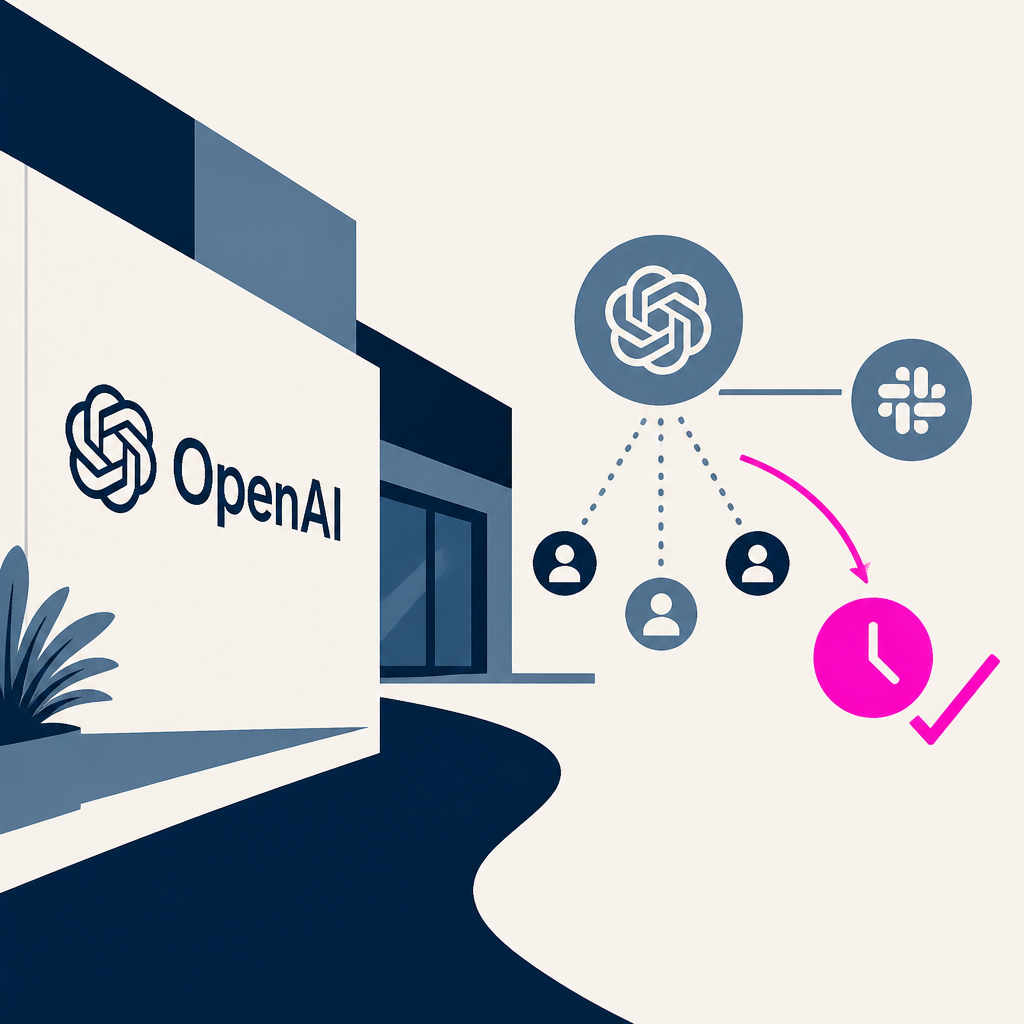
OpenAI's president Greg Brockman observed that people object when ChatGPT instances integrated with Slack contact colleagues for help, even if they'd willingly assist if asked directly. The observation underscores that people prioritize human relationships and expect AI to return time to them or enhance human interaction rather than mediate it. This suggests products should be designed to strengthen rather than replace direct human connection.
Simon Willison's Weblog·2 months ago·
21
● 9 sources
OpenAI used an internal version of its next major model to find solutions to ten mathematical problems that had seen no progress for at least a decade, spending less than $2,000 per problem on token costs. The company published Lean 4 formalizations of the results, a paper describing the solutions, and an LLM-generated PDF reconstructing the proofs from reasoning traces. This demonstrates AI's potential to handle technical mathematical work at scale, aligning with mathematician Terence Tao's vision of "big mathematics" as a human-AI collaboration where machines handle technical tasks while humans focus on creative aspects.
Sam Altman promoted ChatGPT Work as a parenting tool that could create personalized podcasts about children's activities during morning drives, but the suggestion prompted widespread mockery including from Gravity Falls creator Alex Hirsch who asked why parents wouldn't just talk to their kids. Hirsch's response received 122,000 likes compared to Altman's 9,600 likes, and the exchange reflects a pattern of tech CEOs suggesting AI can replace human interaction. OpenAI is actively recruiting for parenting-focused product roles despite facing multiple lawsuits from families alleging ChatGPT contributed to suicides and delusions.
OpenAI published research results on previously unsolved problems in mathematics and theoretical computer science across geometry, cryptography, and complexity theory.
Every AI story that matters,
in your inbox by 8am.
TLDRocket reads all relevant sources, removes duplicate coverage, and summarises the
day in two minutes. Follow companies and topics for alerts, or get the
briefing in Slack. Free, no spam, unsubscribe anytime.
Reading TLDRocket needs no cookies, and the readership counts we rely on come from
our own cookieless analytics. Google Analytics is the exception: it sets cookies and
reports to Google, so it stays switched off until you allow it. You can change your
mind any time from “Cookie settings” in the footer.
Strictly necessary
Session security and form protection (tldrocket-session,
XSRF-TOKEN, 2 hours). The site cannot work without them,
so they need no consent.
Always on
Google Analytics 4 (_ga,
_ga_<id>, up to 2 years). Measures which
stories and sections readers use. Google acts as a third-party processor and may
store the data outside the EU. No advertising, no profiling, no data sold.