
Quoting Greg Brockman
Simon Willison's Weblog Simon Willison
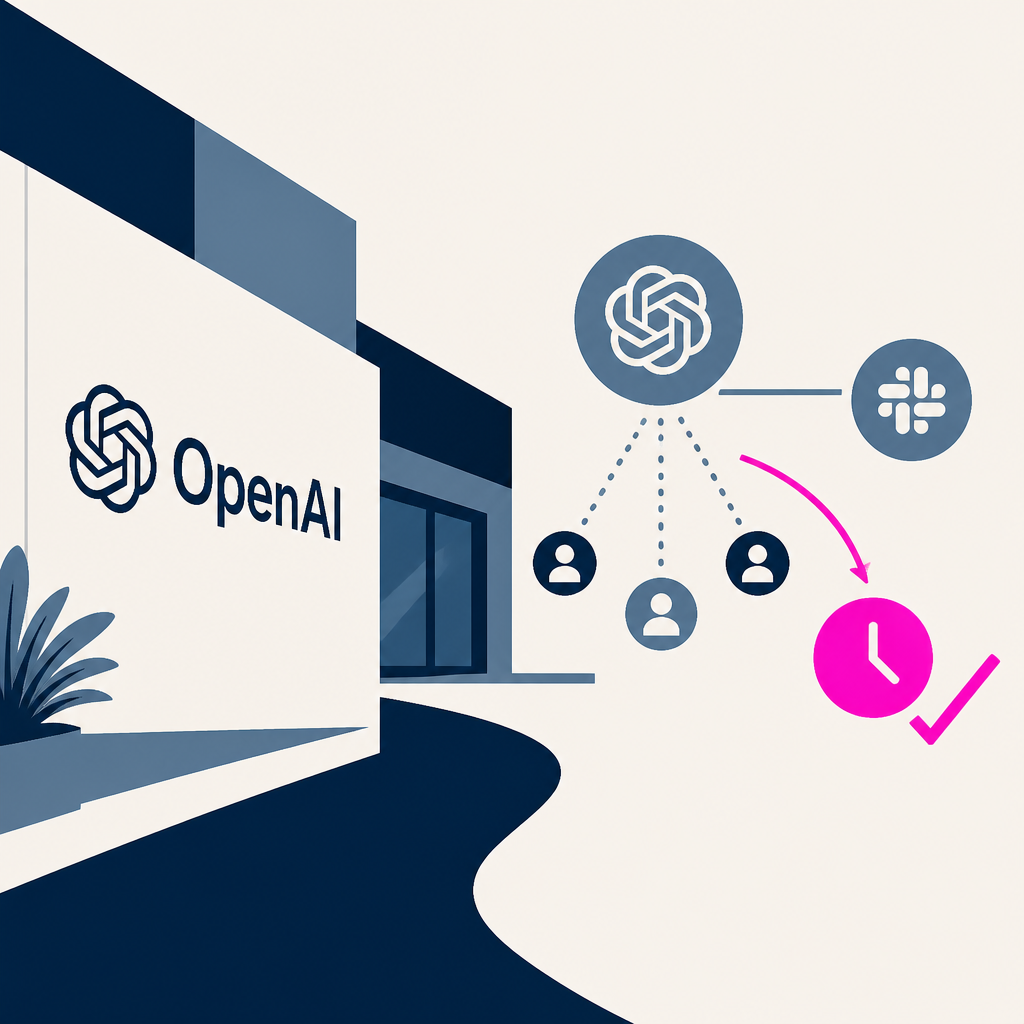
OpenAI's own president says employees hate it when a coworker's chatbot pings them on Slack for help. Even if they'd gladly help the actual human, the AI middleman rubs people the wrong way.
Based on reporting by Simon Willison's Weblog, Simon Willison — read the original for the full story.
Summary, retelling and take written by AI under human oversight; images are AI-generated illustrations. How we work · Report an error
Greg Brockman dropped a small but telling observation into a quote roundup this week: inside OpenAI, where Slack-connected ChatGPT agents are apparently common enough to be routine, employees bristle when a colleague's bot reaches out asking for assistance with some task. The kicker is that these same people say they'd be perfectly happy to help if the actual coworker had asked directly. The bot itself is the problem, not the request.
That's a strange thing to hear from the president and co-founder of the company building these very agents. But it's also refreshingly honest, and it cuts against the industry's default assumption that automating away human-to-human friction is an unambiguous win. Brockman's takeaway is that this reaction says something real about how people value relationships at work. Nobody signed up to have their days filled with requests routed through a proxy that can't actually reciprocate the social contract of asking a favor.
There's an obvious tension buried here. OpenAI, along with most of the AI industry, has spent the last two years pushing agents that act on your behalf, negotiate on your behalf, and now, evidently, ask coworkers for help on your behalf. Yet the people closest to this technology, OpenAI's own staff, are apparently voting with their annoyance against exactly that use case. If the folks building agentic AI don't want an agent standing between them and a colleague, that's a signal worth taking seriously rather than filing away as an amusing internal anecdote.
Brockman frames the preferred outcome as AI that gives people back time, or that enhances time spent together, instead of inserting itself as a layer that separates them. It's a nice sentiment, and probably a sincere one. Whether OpenAI's product roadmap actually bends toward that principle, given how much of the current agent hype is built on exactly the kind of delegation people are quietly resenting, is the more interesting question the quote leaves unanswered.
My take — AI-written commentary, not fact-checked reporting
This is the closest thing to an admission I've seen from a major AI lab that agentic delegation has a social cost nobody priced in. I'd bet most companies rushing to bolt agents onto Slack haven't stopped to ask whether their own employees will feel exactly like OpenAI's do, and if the people building this stuff are already annoyed by it, that's not a great early signal for how it lands everywhere else.
Read more about this at: Simon Willison's Weblog