OpenAI's strategic head argued the US should regulate open-weight AI models to protect frontier labs' business models, sparking debate over whether the Trump administration should ban advanced Chinese models like Kimi K3. Chinese lab Moonshot's Kimi K3 is the largest open-weight large language model currently available. Restricting open models would concentrate AI power among a few US companies and potentially harm US innovation leadership, while chip export controls could more effectively slow Chinese AI development without limiting open-source access.
Simon Willison's Weblog·3 months ago·
12
● 75 sources
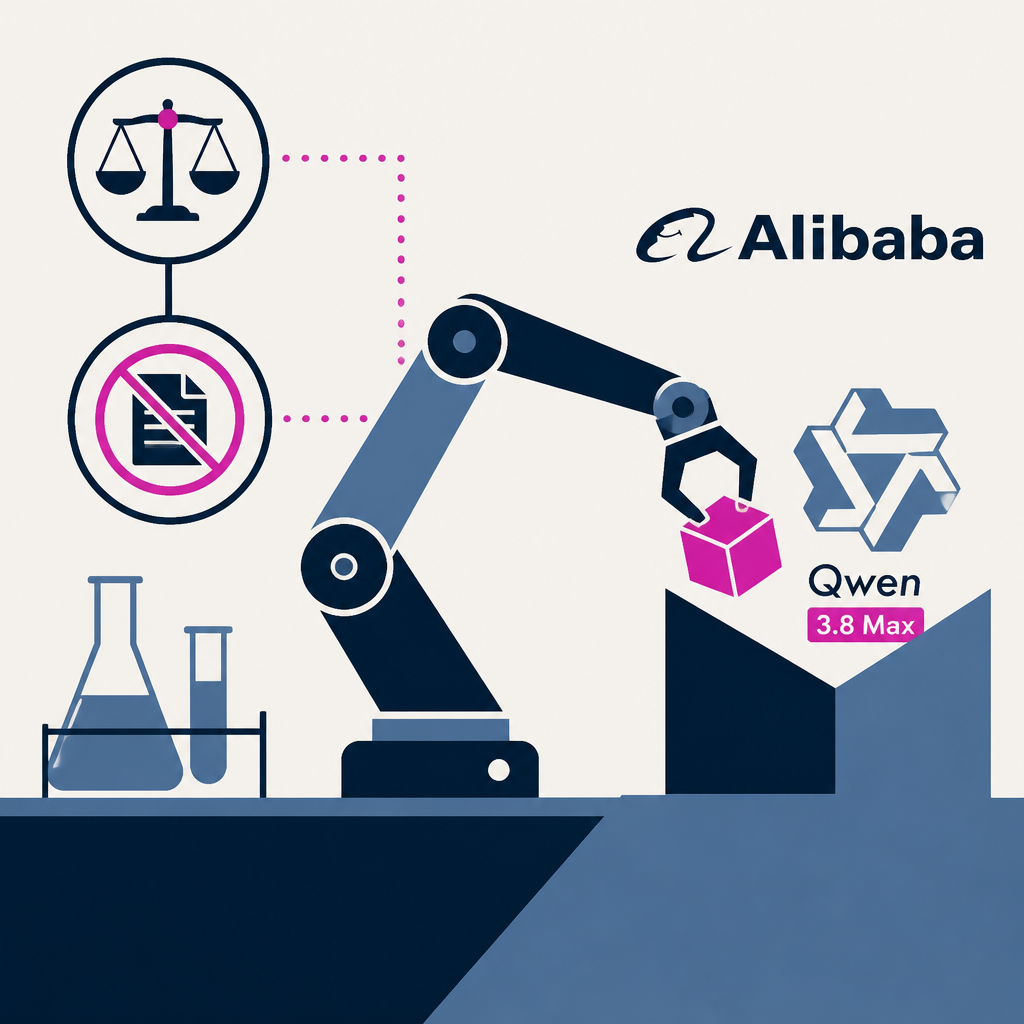
Ben Thompson proposes US legislation to establish data collection for model training as fair use and ban terms of service prohibiting model distillation, allowing open-source models to compete with Chinese alternatives. Alibaba released Qwen 3.8 Max as open weights after keeping Qwen 3.7 Max closed in May, possibly following Xi Jinping's recent remarks encouraging open-source development. The policy would indemnify AI labs while enabling wider innovation from collected training data and shift competitive dynamics in the global AI market.
Moonshot AI released Kimi K3, a 2.8 trillion parameter open-weight model on July 27th that ranks among the best-performing AI systems globally, demonstrating that Chinese labs can achieve frontier performance through superior execution rather than distillation from American models. The model achieved top rankings on multiple benchmarks including #2 on Vals AI index and #1 on Frontend Code Arena, with architectural improvements yielding 2.5× better scaling efficiency compared to its predecessor. This release, combined with Xi Jinping's public commitment to open-source AI development, signals that China views frontier model releases as economically viable and not a significant risk, while intensifying competition and potentially slowing frontier lab profitability but accelerating broader AI adoption across industries.
Zvi (Don't Worry About the Vase)·3 months ago·
42
● 33 sources
Kimi K3 is a 2.8 trillion parameter open-weight model from Moonshot AI with strong benchmarks, though it remains several months behind leading closed models like Claude Opus and Mythos. The model achieves its performance gains partly through size and distillation from Claude, with estimated capability gaps of 4–6 months when accounting for benchmark overperformance versus real-world use. Kimi K3 will be useful in specific workflows but is unlikely to displace smaller cheaper open models or top closed models, and Moonshot plans an IPO in Hong Kong within six months following the release.
Alibaba announced a preview of its Qwen3.8-Max model, which contains 2.4 trillion parameters and will be released as open-weight. The model represents a significant scale increase in Alibaba's Qwen lineup, positioning it as a major open-source AI model comparable to frontier closed models. The open release could expand access to large language models and increase competition in the open-source AI market.
Every AI story that matters,
in your inbox by 8am.
TLDRocket reads all relevant sources, removes duplicate coverage, and summarises the
day in two minutes. Follow companies and topics for alerts, or get the
briefing in Slack. Free, no spam, unsubscribe anytime.
Reading TLDRocket needs no cookies, and the readership counts we rely on come from
our own cookieless analytics. Google Analytics is the exception: it sets cookies and
reports to Google, so it stays switched off until you allow it. You can change your
mind any time from “Cookie settings” in the footer.
Strictly necessary
Session security and form protection (tldrocket-session,
XSRF-TOKEN, 2 hours). The site cannot work without them,
so they need no consent.
Always on
Google Analytics 4 (_ga,
_ga_<id>, up to 2 years). Measures which
stories and sections readers use. Google acts as a third-party processor and may
store the data outside the EU. No advertising, no profiling, no data sold.