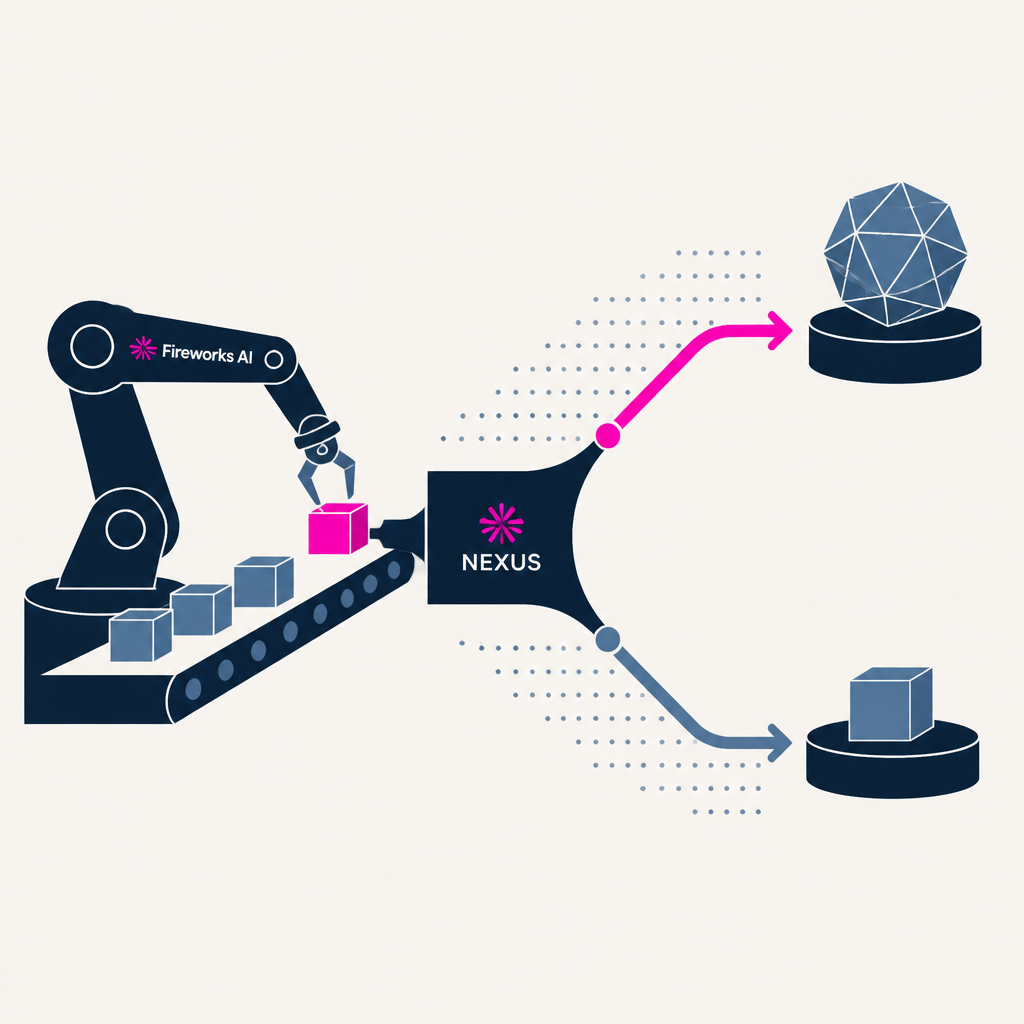
Fireworks AI released Nexus, a routing platform that directs routine coding tasks to cheaper open-weight models while escalating difficult requests to frontier models like Claude Opus. Independent evaluations from Faros AI and Arize showed routing strategies achieved similar quality outcomes at 50–75% of the cost of using frontier models exclusively. Organizations can now reduce AI coding costs while maintaining developer workflow continuity through a one-line plugin install.
NVIDIA publishes open-source AI models across multiple domains—reasoning, robotics, autonomous vehicles, drug discovery, and climate forecasting—making it the largest publisher of open models on Hugging Face. The company uses hybrid Transformer-Mamba architectures combined with mixture-of-experts layers and 4-bit precision training to build models that are both fast and capable. By open-sourcing these models that run on NVIDIA GPUs, the company accelerates AI development across industries while driving adoption of its hardware ecosystem.
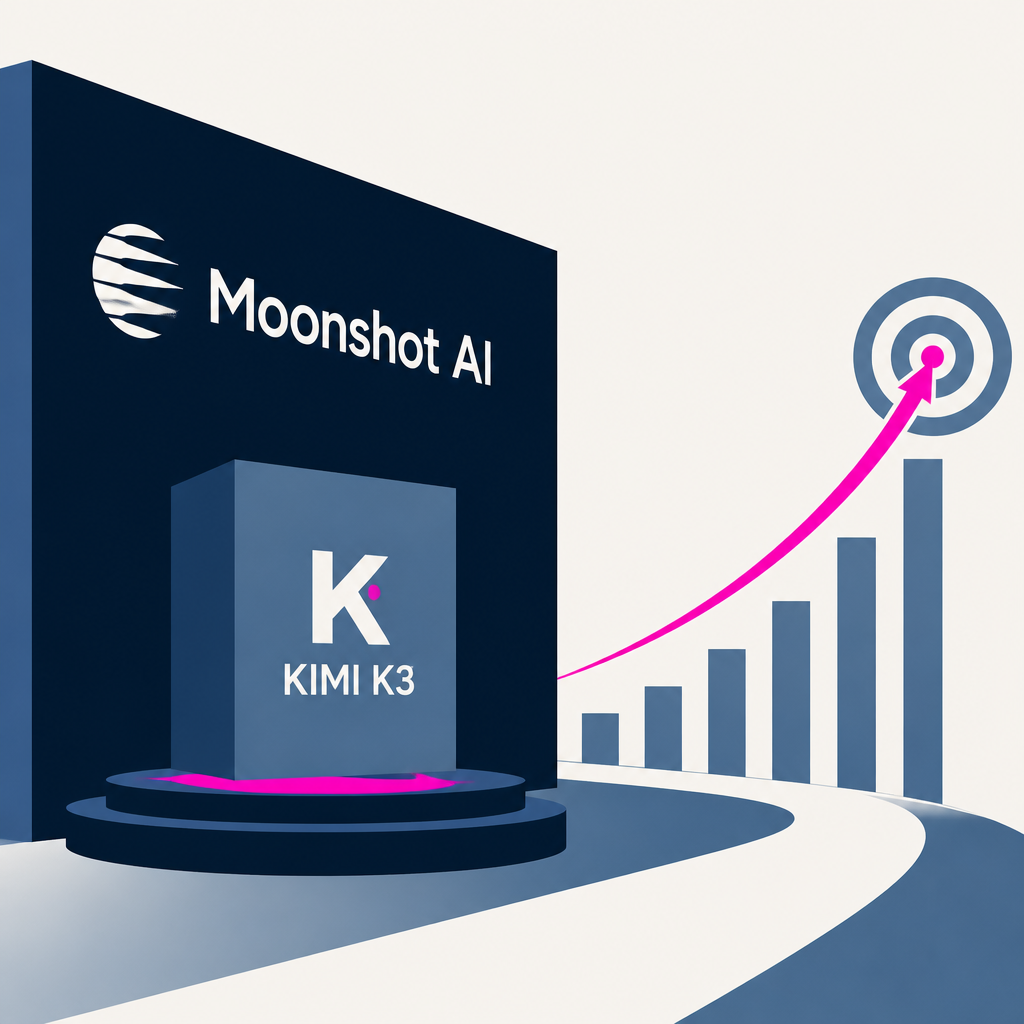
Moonshot released Kimi K3, a 2.8-trillion-parameter open-weight multimodal model with a 1-million-token context window, available on Hugging Face. The model uses a Mixture-of-Experts architecture that activates 16 out of 896 experts, achieving approximately 2.5 times better scaling efficiency than its predecessor Kimi K2. The open release enables researchers and developers to build and deploy frontier AI systems for coding, knowledge work, and reasoning tasks.
Moonshot AI released Kimi K3, a 2.8-trillion-parameter open-weights model with 104B active parameters, which independent benchmarks show outperforms Claude Opus 4.8 and ranks first among open models on agent benchmarks. The release included supporting infrastructure (FlashKDA kernels, MoE libraries, distributed agent environments) and uses source-available rather than permissive open-source licensing, with commercial restrictions on hosting providers over $20M/year revenue and products over 100M users. Meanwhile, NVIDIA launched an Open Secure AI Alliance arguing that defenders need access to both open and closed models for security, while Anthropic clarified it does not oppose open-weights models but supports chip controls and safety testing instead.
Anthropic refused to sign an industry letter opposing US restrictions on Chinese open-weights models, instead publishing its own position arguing that chip export controls and mandatory safety testing are better tools than model bans. CEO Dario Amodei stated that open models without dangerous capabilities are a public good, but acknowledged elevated risks from powerful open models for cyber and biological attacks. Anthropic's stance differs from 50+ other tech companies and puts it in a smaller group advocating for export controls and pre-release safety testing rather than open-model restrictions.
Anthropic CEO Dario Amodei clarified that his company does not support bans on open-weight AI models generally, while expressing concerns that authoritarian governments like China could develop superior AI systems for military advantage or repression. His specific worry centers on open-weight models enabling biological attacks and being difficult to safeguard, though he distinguished this from concerns about Chinese AI companies using open-weight models themselves. Amodei proposes alternative measures including chip export restrictions, enforcement against model distillation, and a global safety testing framework that would include China to prevent dangerous AI capabilities.
Anthropic CEO Dario Amodei proposed mandatory safety testing for sufficiently capable AI models before release, rather than bans on open-weight models, as OpenAI and Google backed an open-weights letter signed by 50 companies. The proposal includes three parts: tighter export controls on advanced chips, crackdowns on model distillation, and safety evaluations for models above an undefined capability threshold. The critical unresolved question is who defines the capability threshold and who conducts the tests, since this determination would effectively control release timing for all open-weight model developers.
Every AI story that matters,
in your inbox by 8am.
TLDRocket reads all relevant sources, removes duplicate coverage, and summarises the
day in two minutes. Follow companies and topics for alerts, or get the
briefing in Slack. Free, no spam, unsubscribe anytime.
Reading TLDRocket needs no cookies, and the readership counts we rely on come from
our own cookieless analytics. Google Analytics is the exception: it sets cookies and
reports to Google, so it stays switched off until you allow it. You can change your
mind any time from “Cookie settings” in the footer.
Strictly necessary
Session security and form protection (tldrocket-session,
XSRF-TOKEN, 2 hours). The site cannot work without them,
so they need no consent.
Always on
Google Analytics 4 (_ga,
_ga_<id>, up to 2 years). Measures which
stories and sections readers use. Google acts as a third-party processor and may
store the data outside the EU. No advertising, no profiling, no data sold.