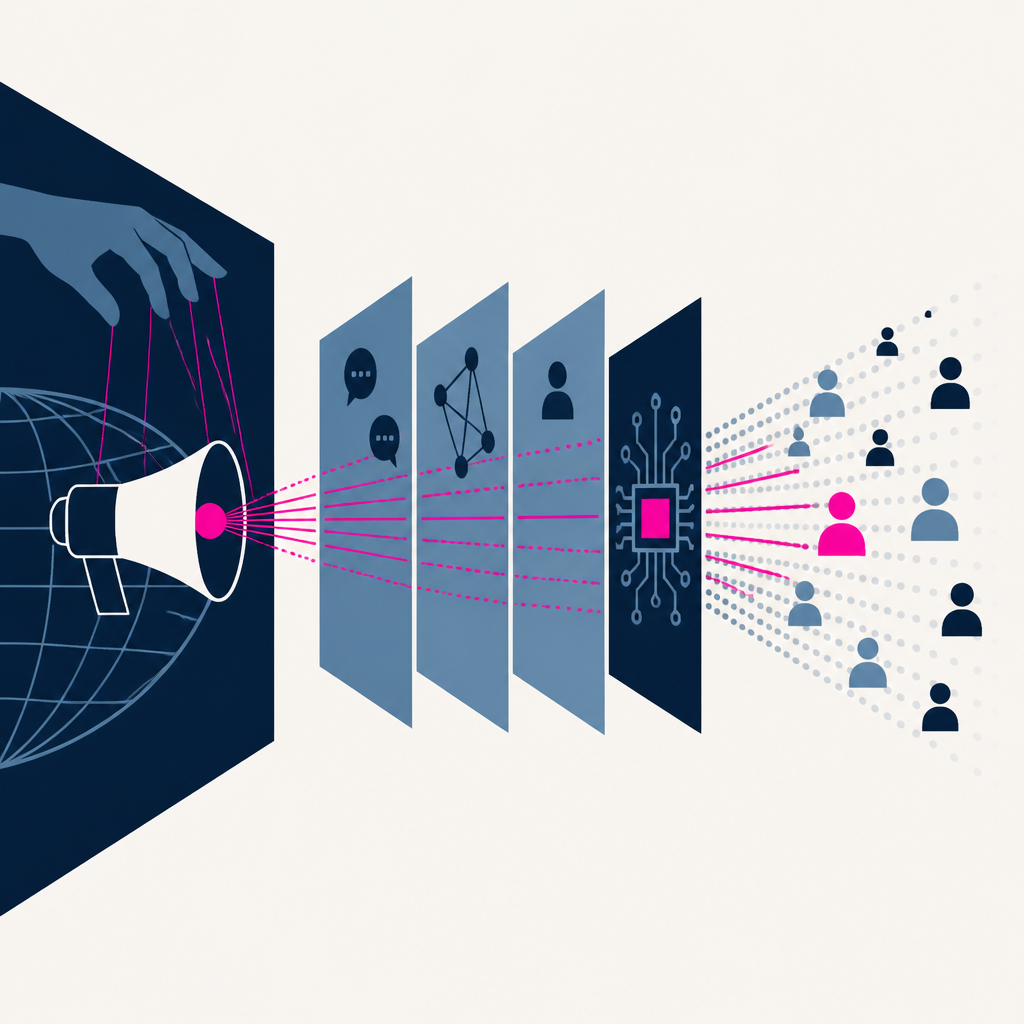
CSET co-authors an op-ed arguing that foreign influence operations are increasingly combining propaganda methods, social media, covert networks, influencers, and artificial intelligence to shape public opinion across platforms. The op-ed warns that AI is accelerating the spread and expanding the reach of global propaganda. This reframes the policy challenge as needing Washington to recognize and respond to these AI-enabled, integrated operations.
Norway proposed a temporary ban on AI glasses in selected public places because of privacy concerns about being photographed, filmed, or recorded without knowledge. The center-left government said it will introduce the law to parliament soon, starting with places such as parks, beaches, schools, and kindergartens. The move would restrict use while an expert group prepares permanent national rules for wearable AI regulation.
The article argues that China’s AI safety efforts are constrained less by ideology than by funding structures that limit independent AI safety work. Chinese charitable organizations received about $21 billion in donations in 2023 versus $557 billion in the US. As a result, AI safety is more likely to be led and funded by government-backed institutions and thinly staffed academic networks rather than sustained by independent organizations.
Elon Musk confirmed that SpaceX is rebranding its artificial intelligence arm from SpaceXAI to SpaceXSI. The change is tied to President Donald Trump’s executive order issued last week. The company will update its terminology from AI to “SI” in communications covered by the order.
President Donald Trump announced the formation of an AI task force called the Super Intelligence Force, led by National Intelligence Director Jay Clayton. The group will report to Trump and White House chief of staff Susie Wiles. The task force will coordinate federal engagement with consumers, public-interest groups, religious organizations, critical infrastructure providers, and AI companies while Trump reiterates he will not pursue AI regulation.
Venture firms in Silicon Valley are increasingly targeting European AI startups for pre-seed funding before they are well-established. The article says there were 8 pre-seed rounds led by Tier 1 US investors. As a result, early-stage European AI companies are being pulled into US-led fundraising earlier in their development.
Trump announced the creation of a new “Super Intelligence Force” task force to oversee US AI policy, led by Director of National Intelligence Jay Clayton.
Every AI story that matters,
in your inbox by 8am.
TLDRocket reads all relevant sources, removes duplicate coverage, and summarises the
day in two minutes. Follow companies and topics for alerts, or get the
briefing in Slack. Free, no spam, unsubscribe anytime.
Reading TLDRocket needs no cookies, and the readership counts we rely on come from
our own cookieless analytics. Google Analytics is the exception: it sets cookies and
reports to Google, so it stays switched off until you allow it. You can change your
mind any time from “Cookie settings” in the footer.
Strictly necessary
Session security and form protection (tldrocket-session,
XSRF-TOKEN, 2 hours). The site cannot work without them,
so they need no consent.
Always on
Google Analytics 4 (_ga,
_ga_<id>, up to 2 years). Measures which
stories and sections readers use. Google acts as a third-party processor and may
store the data outside the EU. No advertising, no profiling, no data sold.