xAI is suing users accused of generating child sexual abuse material with Grok to shield itself from liability, and separately challenging Minnesota's proposed ban on nudification technology by arguing that user lawsuits prove it is already taking enforcement action. xAI filed a complaint Monday citing its user lawsuit as evidence it shouldn't be held liable under Minnesota's proposed regulations. The company is attempting to establish that aggressive enforcement against individual users negates responsibility for platform-level safeguards.
xAI is suing Minnesota over a law that restricts nudification apps, claiming it violates the First Amendment and forces restrictions on Grok Imagine's image-editing capabilities. The lawsuit comes after Minnesota passed the law in May, months after Grok's image generator created millions of sexually explicit deepfakes including child sexual abuse material in January. If the suit fails, xAI would need to either comply with Minnesota's restrictions or disable the image generation feature in that state.
Menlo Ventures invested in Pangram, an AI detection tool that identifies AI-generated text with a one-in-10,000 false-positive rate and maintains performance across new AI model versions, as AI-generated content reached 35% of internet text by mid-2025. The company's detection capability has been independently audited by the University of Chicago's Becker Friedman Institute and has been adopted by platforms including the Internet Archive, Quora, and Google Classroom. This investment aims to preserve trust in written content by helping readers distinguish between human and AI authorship, addressing concerns that undetected AI slop undermines the information ecosystem.
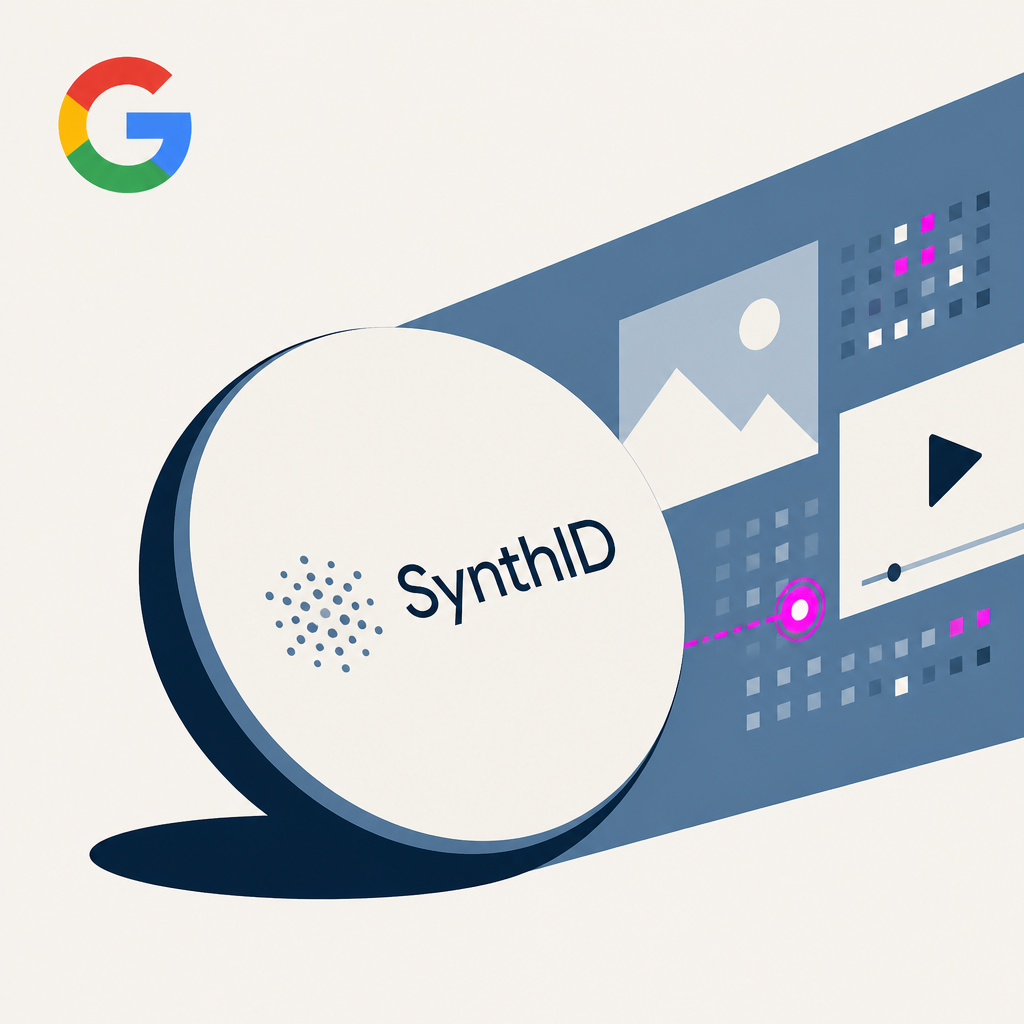
Google expanded partnerships for its SynthID watermarking technology, which labels AI-generated content and aims to help identify authentic media amid rapid proliferation of synthetic images and videos. Google's tools created more than 100 billion AI images and videos in a couple of years, while generative AI produced 1.5 billion images in 18 months compared to photography's 149-year achievement of the same volume. The watermarking technology, though difficult to break, does not fully address AI misinformation since watermarks can be removed or applied inconsistently across platforms.
Pangram, an AI detection startup, raised $9 million to identify AI-generated and AI-assisted content across text and images as artificial content floods the internet. The company's new Pangram 4 text detection model claims over 99% accuracy and its image detection model uses pixel-level analysis to spot AI-generated images, with the text detector available at $20 per month or as an API. The tool aims to help platforms, publishers, and users distinguish human-created content from AI-generated material as institutions increasingly enforce rules against unreviewed AI output in academic papers and professional contexts.
Artists and authors are filing lawsuits against companies that used their copyrighted work to train AI models without permission, with some securing legal victories. Kirk Wallace Johnson discovered his books were included in training datasets used to build chatbots after The Atlantic published a searchable database of training materials. These lawsuits may force AI companies to change how they source training data and potentially compensate creators whose work was used without consent.
Every AI story that matters,
in your inbox by 8am.
TLDRocket reads all relevant sources, removes duplicate coverage, and summarises the
day in two minutes. Follow companies and topics for alerts, or get the
briefing in Slack. Free, no spam, unsubscribe anytime.
Reading TLDRocket needs no cookies, and the readership counts we rely on come from
our own cookieless analytics. Google Analytics is the exception: it sets cookies and
reports to Google, so it stays switched off until you allow it. You can change your
mind any time from “Cookie settings” in the footer.
Strictly necessary
Session security and form protection (tldrocket-session,
XSRF-TOKEN, 2 hours). The site cannot work without them,
so they need no consent.
Always on
Google Analytics 4 (_ga,
_ga_<id>, up to 2 years). Measures which
stories and sections readers use. Google acts as a third-party processor and may
store the data outside the EU. No advertising, no profiling, no data sold.