Tonefold launched as a free, open-source AI music composer for macOS and Windows. It generates editable piano-roll parts including chords, melody, bass, and drums from a song description to Claude. You can then export MIDI, WAV, and stems.
Anthropic expanded its Claude Cyber Verification Program by adding three tiered access levels and moving Project Glasswing into the least restricted tier. Under the Defense Access tier, Anthropic’s tests found Claude Opus 5.5 blocked 46 of 50 offensive-security benchmark trials, leaving only 4 to succeed. As a result, defenders may get broader access overall, but many will still face tighter safeguards unless they qualify for the less restricted tiers and reviews.
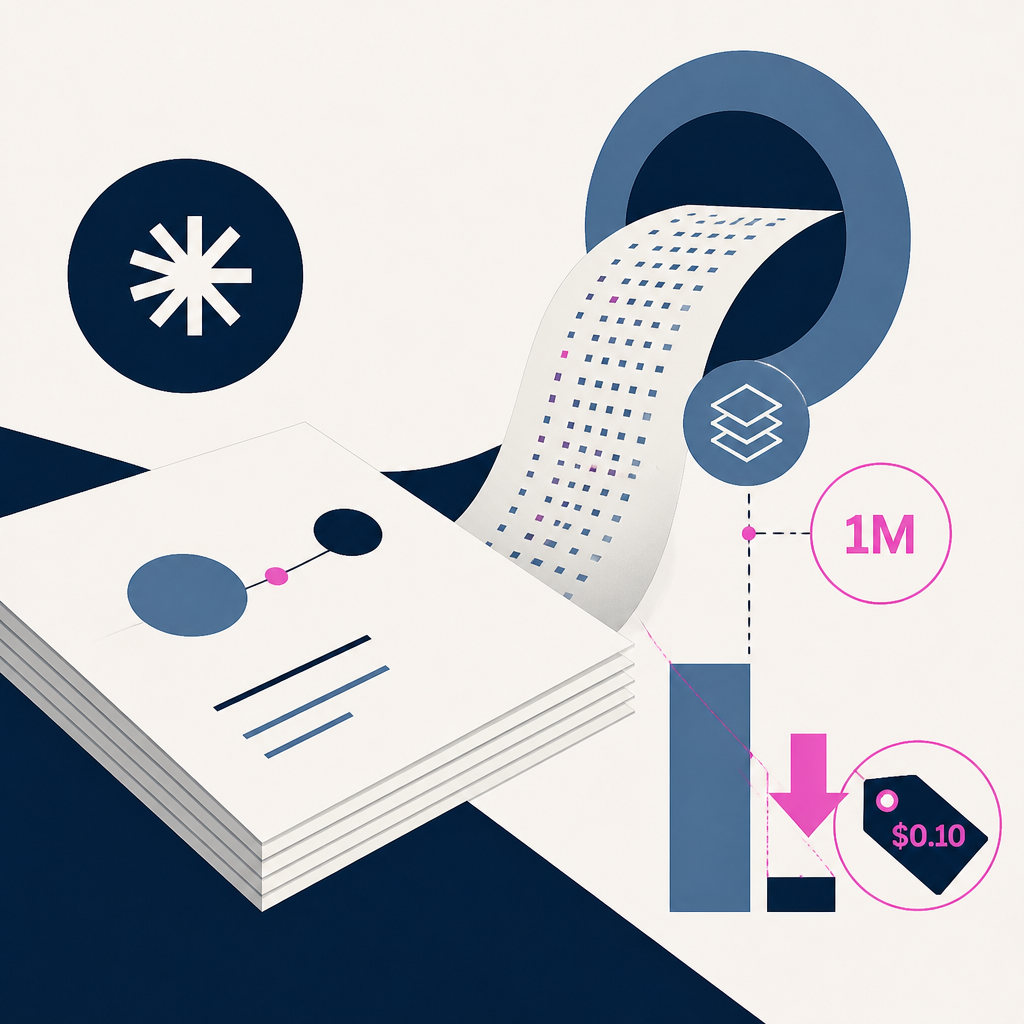
Anthropic released Claude Haiku 5.5, a small Claude model aimed at high-volume tasks and available via a hosted API. It offers a 1M token context window and input pricing of $0.10 per 1M tokens (with $0.50 per 1M output tokens). Compared with Haiku 4.5, it cuts prompt costs by 90% for prompts up to 100K tokens and adds an adjustable “effort” setting (with adaptive thinking on by default).
Claude Code predicts a likely follow-up and displays it in the prompt box for the user to accept or edit. The article says those interactions could supply preference data, framed as speculation rather than a confirmed Anthropic practice. As a result, it positions the feature as a potential source of user preferences while leaving its use unverified.
Anthropic launched Claude Haiku 5.5, its fastest and most capable small model for high-volume, cost-sensitive tasks. The release is effective today. It shifts Anthropic’s small-model lineup toward faster deployment for summarization, classification, coding subagents, customer support, and browser use, but provides no specific benchmarks in the text.
Every AI story that matters,
in your inbox by 8am.
TLDRocket reads all relevant sources, removes duplicate coverage, and summarises the
day in two minutes. Follow companies and topics for alerts, or get the
briefing in Slack. Free, no spam, unsubscribe anytime.
Reading TLDRocket needs no cookies, and the readership counts we rely on come from
our own cookieless analytics. Google Analytics is the exception: it sets cookies and
reports to Google, so it stays switched off until you allow it. You can change your
mind any time from “Cookie settings” in the footer.
Strictly necessary
Session security and form protection (tldrocket-session,
XSRF-TOKEN, 2 hours). The site cannot work without them,
so they need no consent.
Always on
Google Analytics 4 (_ga,
_ga_<id>, up to 2 years). Measures which
stories and sections readers use. Google acts as a third-party processor and may
store the data outside the EU. No advertising, no profiling, no data sold.