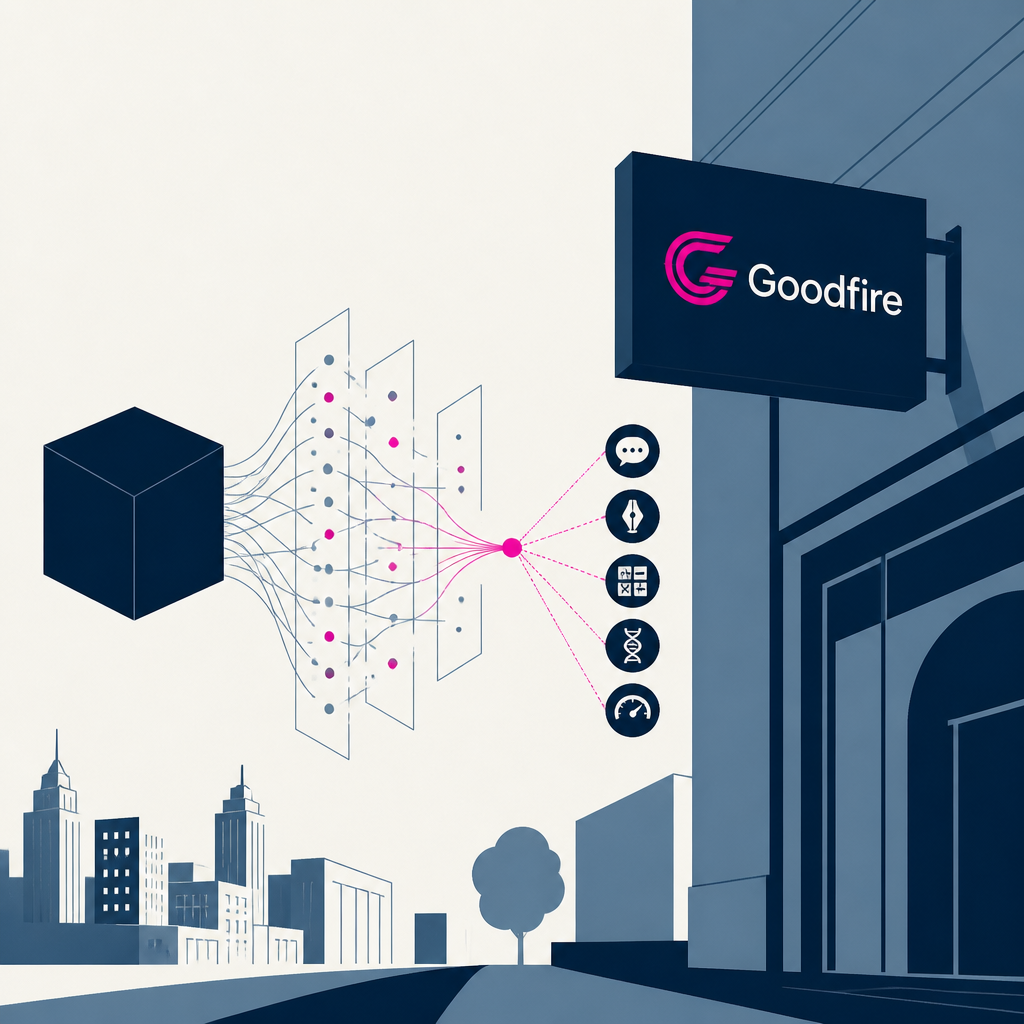
Goodfire, founded by Eric Ho, develops tools that use AI to interpret the internal structures and mechanisms of neural networks. The company's approach extracts and analyzes hidden representations related to language, style, arithmetic, biology, and model uncertainty. Better interpretability of neural networks could improve AI safety, reliability, and design processes.
Anthropic updated its Responsible Scaling Policy, a risk governance framework for frontier AI systems, to introduce more flexible capability thresholds and refined safeguard assessment processes. The updated policy defines two key capability thresholds requiring upgraded safeguards: autonomous AI research and development capabilities, and meaningful assistance with creating chemical, biological, radiological, or nuclear weapons. Models reaching these thresholds will require enhanced security standards (ASL-3 or ASL-4) including internal access controls, deployment monitoring, and pre-deployment red teaming.
Anthropic committed $10 million CAD to Canadian AI research institutions including Amii, Mila, Vector Institute, and several universities to fund work in AI safety, responsible applications, and domain-specific projects. The funding includes Claude API credits distributed across eight partnerships, with hundreds of Canadian startups receiving at least $5,000 USD each in credits through the Anthropic for Startups program. Canada ranks eighth globally in Claude.ai usage with per-capita adoption more than four times higher than its population would predict, indicating stronger integration of AI tools into Canadian professional work.
Every AI story that matters,
in your inbox by 8am.
TLDRocket reads all relevant sources, removes duplicate coverage, and summarises the
day in two minutes. Follow companies and topics for alerts, or get the
briefing in Slack. Free, no spam, unsubscribe anytime.
Reading TLDRocket needs no cookies, and the readership counts we rely on come from
our own cookieless analytics. Google Analytics is the exception: it sets cookies and
reports to Google, so it stays switched off until you allow it. You can change your
mind any time from “Cookie settings” in the footer.
Strictly necessary
Session security and form protection (tldrocket-session,
XSRF-TOKEN, 2 hours). The site cannot work without them,
so they need no consent.
Always on
Google Analytics 4 (_ga,
_ga_<id>, up to 2 years). Measures which
stories and sections readers use. Google acts as a third-party processor and may
store the data outside the EU. No advertising, no profiling, no data sold.