Opening AI's Black Box: Understanding Neural Networks Through Interpretability
YouTube ● Covered by 4 sources
A startup called Goodfire is building AI that reads the mind of other AI. Turns out neural networks aren't total mysteries anymore — just really weird ones.
Based on reporting by YouTube — read the original for the full story.
Summary, retelling and take written by AI under human oversight; images are AI-generated illustrations. How we work · Report an error
Eric Ho didn't set out to become a neuroscientist for machines, but that's basically what his company Goodfire does. In a recent conversation with Corey Noles and Grant Harvey, the Goodfire cofounder and CEO laid out a case for interpretability research that sounds less like academic curiosity and more like an engineering necessity nobody's fully solved yet.
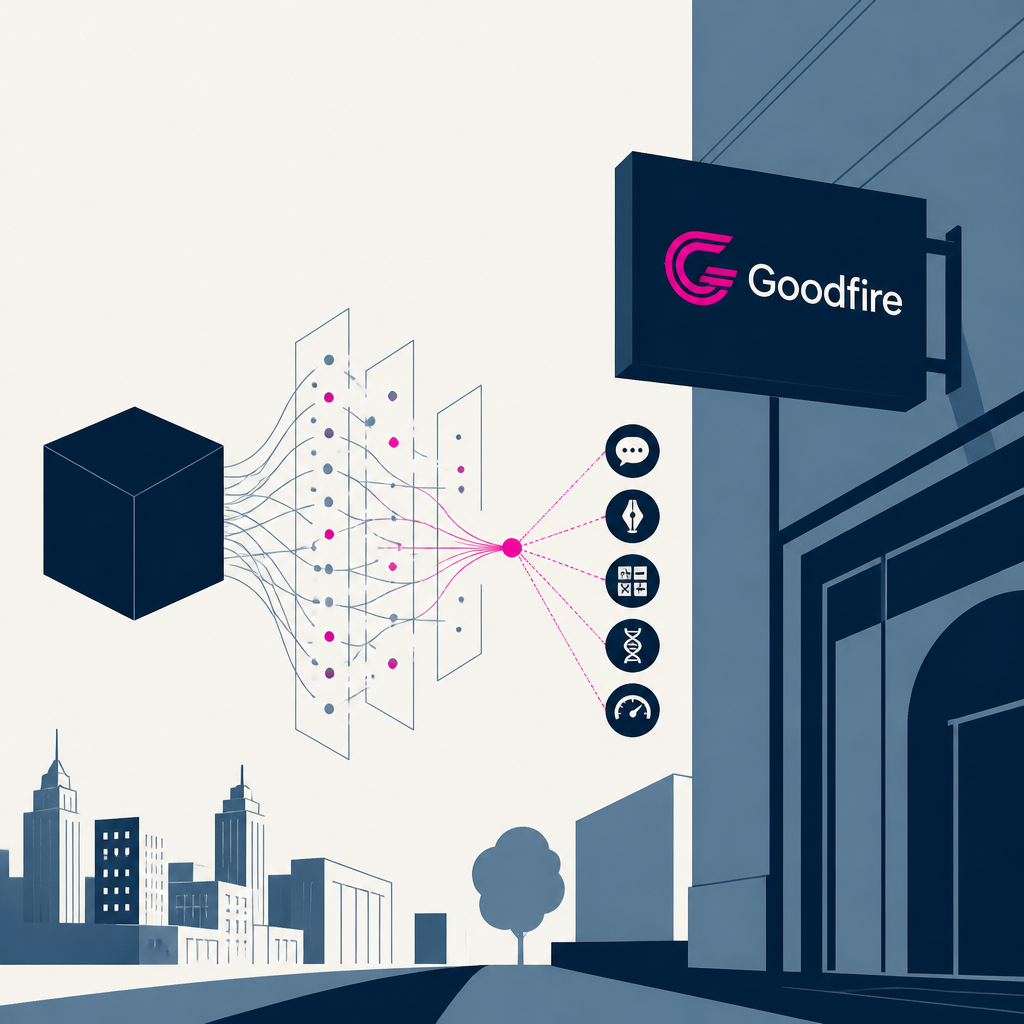
The core idea is deceptively simple: neural networks encode concepts — language patterns, arithmetic tricks, style choices, even something like confidence or doubt — inside massive tangles of numbers that no human can read directly. Goodfire's approach is to use AI itself to pull those tangles apart, extracting identifiable structures that correspond to real, nameable things a model has learned. Not metaphorically. Actual internal representations for biology concepts, actual internal representations for uncertainty.
Why bother? Because right now, most people building and deploying large models are flying blind on the inside. You can test outputs, you can red-team behavior, but you can't easily point to the specific circuit responsible for a hallucination or a bias. Ho's bet is that if you can find and label those internal structures, you can eventually edit them, audit them, or at least know when a model is quietly uncertain versus confidently wrong — which is a distinction that matters enormously once these systems start making decisions in medicine, finance, or anything with real stakes.
There's also a design angle here that gets less attention than the safety pitch. If researchers can see which internal parts of a model handle arithmetic versus which handle tone or style, that opens the door to building models more deliberately instead of just scaling parameters and hoping useful structure emerges on its own. It's a shift from treating neural networks as black boxes you poke from the outside to treating them as systems you can actually inspect, the way engineers inspect a circuit board rather than guessing from the smoke coming out of it.
None of this is finished science. Interpretability work is still early, and Goodfire is one of several outfits — alongside labs like Anthropic — racing to make sense of what's inside these models before they get even bigger and even harder to inspect. But the direction feels less like a niche research interest and more like infrastructure the entire industry is going to need.
My take — AI-written commentary, not fact-checked reporting
I'll take boring, legible AI over impressive, opaque AI every time — interpretability work like Goodfire's is the unglamorous plumbing that actually makes safety claims mean something instead of just marketing copy. The industry loves to talk about alignment while shipping models nobody can actually inspect, and that gap is going to bite someone hard if outfits like this don't get more funding and more attention than the next chatbot demo.
Read more about this at: YouTube