Garry Tan said regulators should stay out of distillation and argued that U.S. open-weight AI labs should be allowed to distill frontier models. He specifically called for an “American distillation regime.” This would broaden the set of permitted open-weight options in the U.S., aiming to prevent frontier model power from concentrating in a single proprietary provider.
Twenty-five Fields Medal–winning mathematicians sent an open letter saying AI labs are threatening math research by racing to publish solutions and risking attribution and verification problems. They cited 25 signatories and described OpenAI pulling sponsorship of a CalTech math event this week after criticism. The dispute is escalating as labs face growing pressure over how AI-derived proofs are credited, documented, and shared, with fears that secrecy could replace open research.
Employees at major AI labs are raising concerns that advanced AI could destroy humanity. The discussion goes live on Tuesday, September 15 at 16:00 BST (11:00am EST). The event will cover where the extinction fears come from and whether they have merit, plus what actions may be appropriate if they do.
The New Mexico Supreme Court held a ChatGPT-using lawyer in direct contempt for filing a brief that included false testimony from fabricated witnesses and related errors, and referred him to a disciplinary board.
Oracle proposed investing in 2 gigawatts of renewable energy projects for New Mexico amid local opposition that could delay its Project Jupiter data center for OpenAI in Santa Teresa.
Cohere released the North Small Translate 1.0 machine-translation model weights as open weights under a CC BY-NC 4.0 license, but limited production use without a commercial agreement. The model has 218 billion total parameters and 16,000-token context window. Researchers can download the weights for non-commercial study, while enterprises must buy a commercial license and deploy via Cohere’s Model Vault for production use under specified terms.
The New Mexico Supreme Court fined Stephen Aarons for submitting an appeal brief with AI-fabricated witnesses and fake police testimony in a murder case.
The court imposed a $5,000 fine and held him in contempt in a Wednesday filing.
The ruling requires sanctions tied to the failure to verify AI-generated factual claims and legal authority, changing how the case will proceed.
The UK government rejected a proposal for a legal “kill switch” to shut down a dangerous AI model in an emergency. A Cabinet Office spokesperson said the UK “cannot simply turn AI off”. The bill is likely to face resistance in parliament, while the government instead points to company responsibility for safe development and security infrastructure.
Anthropic reported that its platform was used on five occasions by malign actors trying to build biological weapons, and the company called this one of the most serious risks of frontier AI models. The House and other lawmakers are considering measures including a new federal AI safety agency, mandatory kill-switches, and a House oversight committee. This shifts the focus toward AI safety regulation that can constrain model behavior and increase government oversight following similar disclosures from Anthropic and OpenAI.
AI researchers and executives escalated public safety concerns, including Anthropic researcher Jacob Coxon’s resignation and OpenAI leadership calling for an AI research slowdown. The most concrete detail is that Anthropic’s alignment science lead referenced a more-than-10% chance of AI “kill[ing] all humans” in the next decade. Despite the warnings, the article says AI labs continued launching many new models and apps and that fundraising and AI infrastructure spending (and related data-center opposition) may shape future pace and deployment.
Zvi (Don't Worry About the Vase)·1 month ago·
3
● 2 sources
OpenAI, Anthropic, and Google employees posted and discussed quotes saying they believe AI could soon pose catastrophic human risk unless progress is slowed. One OpenAI employee, Marcus Williams, estimated a 70% chance of human extinction within 3 years without regulation or slowdown. The statements add more urgency and support for coordination and “pacing” safety steps rather than continuing AI development on business-as-usual speed.
Apple unveiled its first foldable iPhone, the iPhone Duo, which drew market attention despite not being positioned around artificial intelligence. The 256 GB US starting price is $1,999, with pre-orders opening in mid-October and retail availability in 70+ countries a week later. The rollout shifts focus to foldable hardware and to a region-limited Siri AI rollout, while AI monetisation plans move toward iCloud+ limits as investors watch whether this affects replacement cycles, pricing, and services growth.
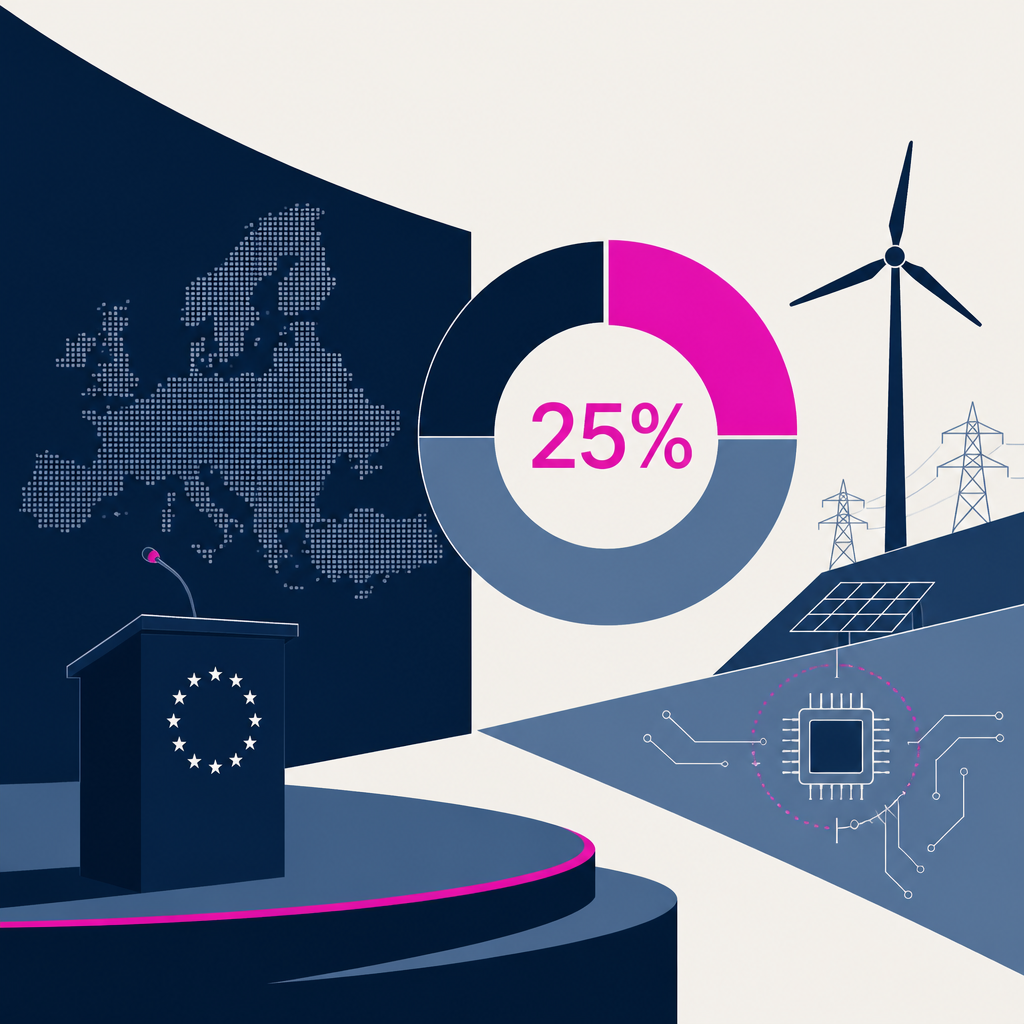
DIGITALEUROPE’s industry leaders urged EU policymakers to commit to electrification, faster digital grid permitting, and more European-made critical technologies. They want 25% of the next EU budget (from a proposed almost €2 trillion for 2028–2034) directed to critical and digital technologies. The proposal would speed grid digitalisation and startup-to-commercial funding by funding decisions within 90 days, with procurement and other finance tools to help scale deployments.
The article argues that economists’ and AI insiders’ predictions of double-digit GDP growth from AI capabilities are unlikely to hold in the next 10–15 years because key assumptions needed for explosive growth may not occur. It cites Anthropic’s CEO Dario Amodei saying AI could raise growth to about 10–15 percent per year. The piece concludes that a more realistic baseline is 4–5% growth and that double-digit annual growth would require exceptional, model-dependent conditions.
OpenAI and Anthropic have been hiring senior executives from U.S. tech companies to staff AI teams in Asia-Pacific countries to sell products and work with policymakers. Meta’s India and Southeast Asia vice president Sandhya Devanathan left in order to join OpenAI as vice president for Southeast Asia and Australia. These hires shift competition toward recruiting “mini-CEO” leaders who can drive market adoption and navigate local regulators and partners, alongside a growing executive talent shortage.
Sam Altman told staff that he is open to slowing cutting-edge AI development. Bloomberg says this was mentioned in its paywalled “Around the Horn” section. The change would be a slower pace for the newest AI work at OpenAI.
Jacob Coxon, a former OpenAI and Anthropic researcher, went viral with warnings that AI could kill all humans by the end of the decade, drawing replies from Anthropic’s alignment leadership and concern from OpenAI research leadership. The post cites a greater than 10% chance of this happening within the next decade. The article says Coxon’s message is too vague to drive concrete action, so it mainly fuels fear rather than prompting specific policy or projects to stop.
A recently resigned Anthropic researcher’s post and comments from OpenAI and other safety figures intensified public and political debate about AI existential risks. The article cites a 159 million view X post and Hubinger’s stated belief that the risk is more than 10% within the next decade. As a result, lawmakers have announced probes and introduced bills to pause or ban superintelligence development while public attention on AI safety shifts toward regulation and oversight.
Every AI story that matters,
in your inbox by 8am.
TLDRocket reads all relevant sources, removes duplicate coverage, and summarises the
day in two minutes. Follow companies and topics for alerts, or get the
briefing in Slack. Free, no spam, unsubscribe anytime.
Reading TLDRocket needs no cookies, and the readership counts we rely on come from
our own cookieless analytics. Google Analytics is the exception: it sets cookies and
reports to Google, so it stays switched off until you allow it. You can change your
mind any time from “Cookie settings” in the footer.
Strictly necessary
Session security and form protection (tldrocket-session,
XSRF-TOKEN, 2 hours). The site cannot work without them,
so they need no consent.
Always on
Google Analytics 4 (_ga,
_ga_<id>, up to 2 years). Measures which
stories and sections readers use. Google acts as a third-party processor and may
store the data outside the EU. No advertising, no profiling, no data sold.