Wikipedia’s editors formed the WikiProject AI Cleanup to find and remove AI-generated content that violates site guidelines. In late 2025, Pangram flagged about 20 percent of new Wikipedia articles and drafts as AI-generated, dropping to 15–16 percent in early 2026. The project is now building tools like AI source verification and Paste Check detection while evaluating whether new rules banning LLM-written articles are reducing AI posts and how Wikipedia’s “human-written” identity may shift with AI assistance.
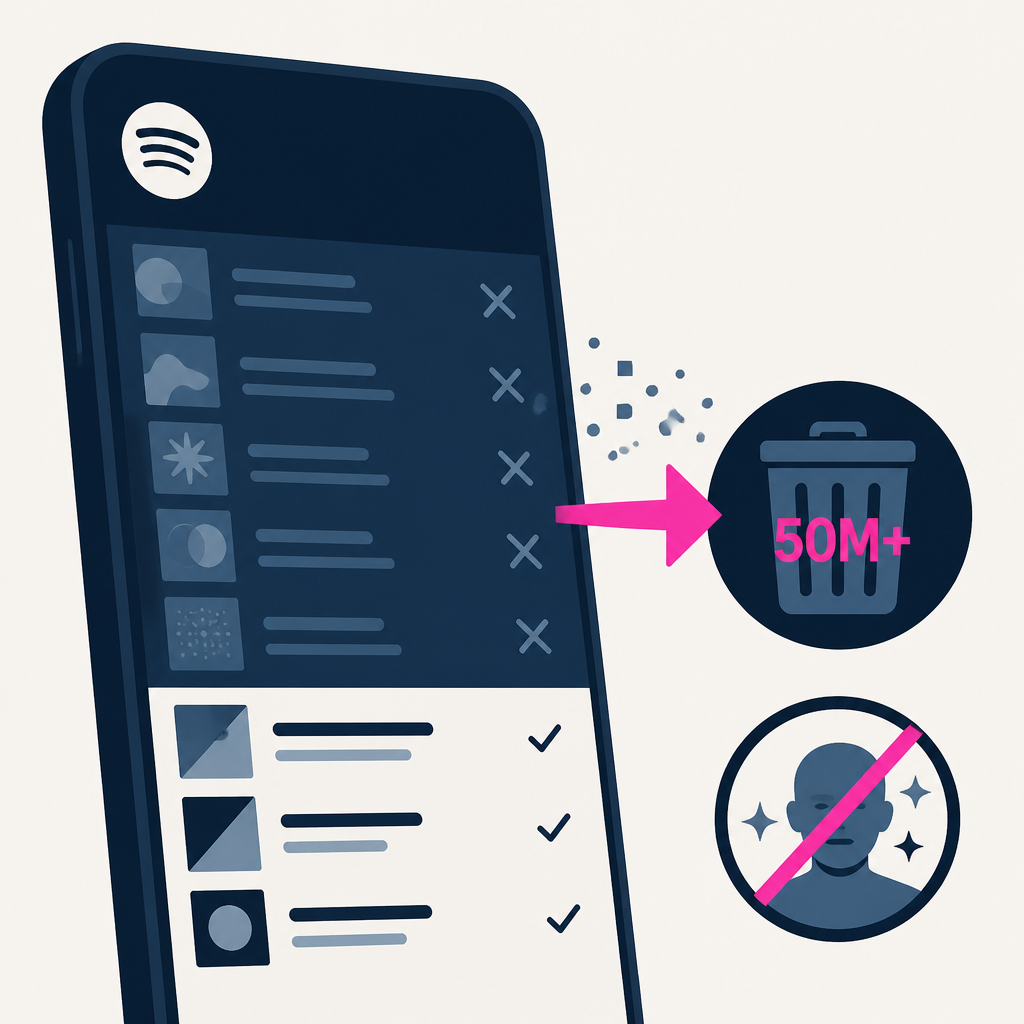
Spotify removed 50M+ low-quality “slop” and spam tracks from recommendations and tightened filtering for badge-labeled AI-persona artists. The single concrete change is that it removed 50M+ tracks. Discovery will show fewer spammy tracks and will exclude AI-persona artists from recommendations by default.
Campaigns have dramatically increased spending on AI-made political ads for the 2026 midterm cycle, according to a Wesleyan Media Project report. The report found more than $137 million spent on 220 AI-influenced campaign videos through Oct. 11, versus less than $50,000 on AI-generated ads in 2024. Over 70% of AI campaign videos lacked AI disclosures, shifting campaign work toward handling misinformation and potentially affecting how voters interpret and trust election information.
Researchers reported that an AI-agent attacker began on Sept. 25 and used autonomous agents to attempt breaches of 1,200+ websites, succeeding against about 100 companies. The activity cost roughly $5,000 in tokens, or about $50 per successful breach, according to the reporting. As models improved and became more agentic, autonomous AI-driven hacking became cheaper and more frequent, with debate growing over whether open AI model distribution should be restricted for safety.
Every AI story that matters,
in your inbox by 8am.
TLDRocket reads all relevant sources, removes duplicate coverage, and summarises the
day in two minutes. Follow companies and topics for alerts, or get the
briefing in Slack. Free, no spam, unsubscribe anytime.
Reading TLDRocket needs no cookies, and the readership counts we rely on come from
our own cookieless analytics. Google Analytics is the exception: it sets cookies and
reports to Google, so it stays switched off until you allow it. You can change your
mind any time from “Cookie settings” in the footer.
Strictly necessary
Session security and form protection (tldrocket-session,
XSRF-TOKEN, 2 hours). The site cannot work without them,
so they need no consent.
Always on
Google Analytics 4 (_ga,
_ga_<id>, up to 2 years). Measures which
stories and sections readers use. Google acts as a third-party processor and may
store the data outside the EU. No advertising, no profiling, no data sold.