
Political campaigns have poured $137 million on AI-made ads ahead of a crucial midterm—after spending virtually nothing last election cycle
Fortune Sasha Rogelberg
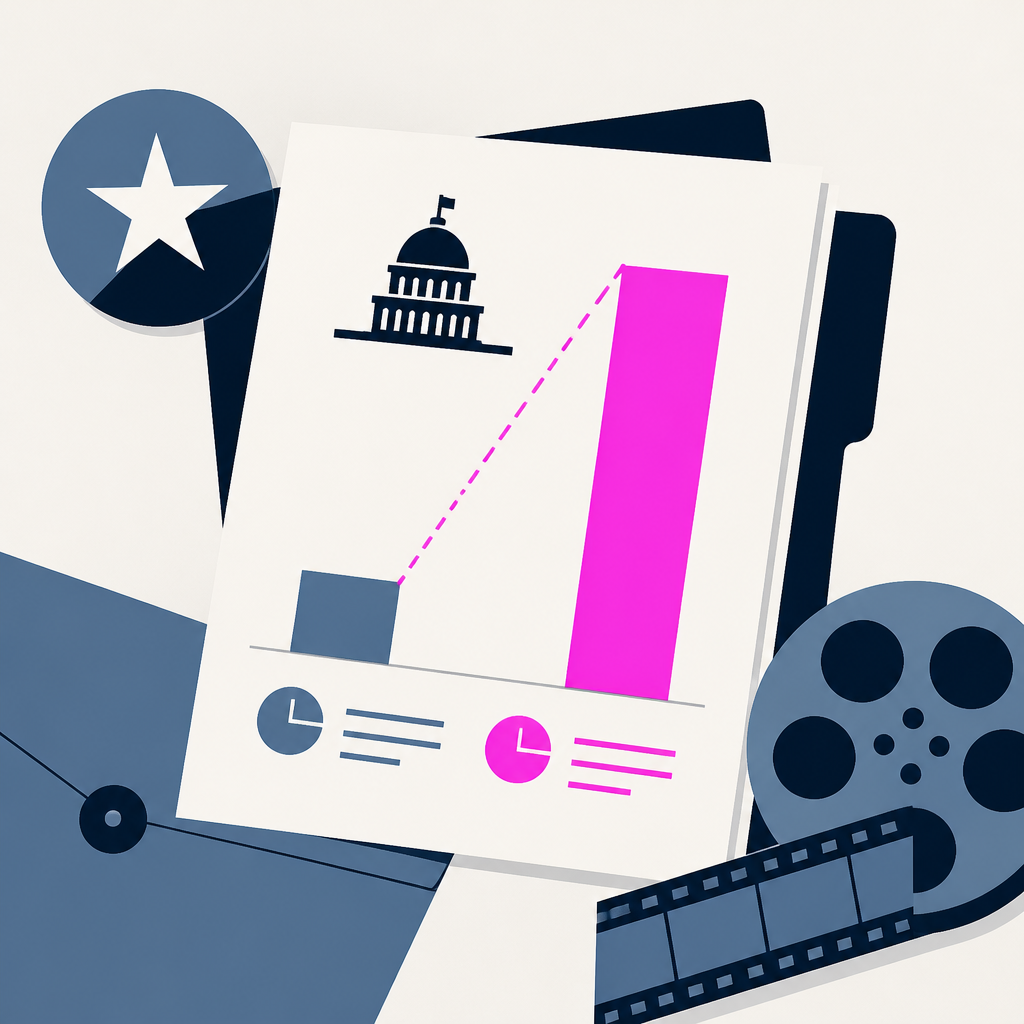
Campaigns have spent $137 million on AI-made ads for the 2026 midterms. Most of those spots don’t even say they’re AI, which is the bad part.
Based on reporting by Fortune, Sasha Rogelberg — read the original for the full story.
Summary, retelling and take written by AI under human oversight; images are AI-generated illustrations. How we work · Report an error
AI in political ads went from nearly invisible to a nine-figure line item in just one election cycle. A new report from the Wesleyan Media Project says campaigns had already spent more than $137 million on 220 videos made at least partly with AI by Oct. 11, heading into the 2026 midterms. Two years earlier, the group found less than $50,000 in AI-ad spending in the 2024 race. Travis Ridout, who co-directs the project, said that jump is what stands out most: the country went from basically nothing to a serious budget category in a hurry.
That money is showing up in some of the nastiest races in the country. In Texas, Democrat James Talarico and Republican Ken Paxton are already fighting over an AI-made Paxton ad that showed an AI version of Talarico writing in a Bible with a crayon and delivering a fake monologue about God and gender. Talarico says he has pushed to ban deepfakes because they mislead voters, which is a pretty clean way to put it.
The bigger problem is how often these videos come without a warning label. More than 70% of the AI campaign videos in the report had no disclaimer saying they were generated by or contained AI. That matters because the tech is being used for everything from fake-looking stock footage to candidate likenesses, and Ridout says the effect goes beyond one bad ad here and there. Candidates may end up spending more time swatting down lies than talking about what they’d actually do.
Republicans are driving most of the spending. According to the report, GOP campaigns and political action committees accounted for 81% of the ads and 88% of the money. Ridout ties that to a more favorable view of AI among Republican voters and leaders, including President Donald Trump’s public support for building out AI infrastructure. But even that support seems squishier than it looks; a Gallup poll cited in the report found most Americans oppose data center construction in their area, including majorities of Democrats and Republicans. And in Pennsylvania, local protests over data centers have cut across party lines.
There’s also a practical reason campaigns are leaning on the tech. Ridout says AI can replace the need for on-location shoots and B-roll, which makes it easier for candidates with smaller budgets to get video out at all. Not every ad makes elegant sense, though. One Pennsylvania Republican governor ad used AI to mock Democratic Gov. Josh Shapiro for supporting AI data centers, even while disclosing that it was made with AI. Everyone’s still trying to sort out the rules while the machines keep rolling.
My take — AI-written commentary, not fact-checked reporting
This is the classic campaign move: adopt the shiny thing first, ask whether it should exist later. The disclosure problem is the real story here, because politics without clear labels is just cheap deceit with better graphics. Campaigns love freedom until they have to be honest about the tools.
Read more about this at: Fortune
Related stories
 Researchers tracked $80 million in political ads using AI—and Republicans were behind 83% of them
Fortune ·
46
We Looked at 78 Election Deepfakes. Political Misinformation is not an AI Problem.
AI as Normal Technology · 1 year ago ·
19
 Anthropic is launching a 'presidential engagement' effort to advise candidates on AI policy ahead of the 2028 election
Fortune ·
12