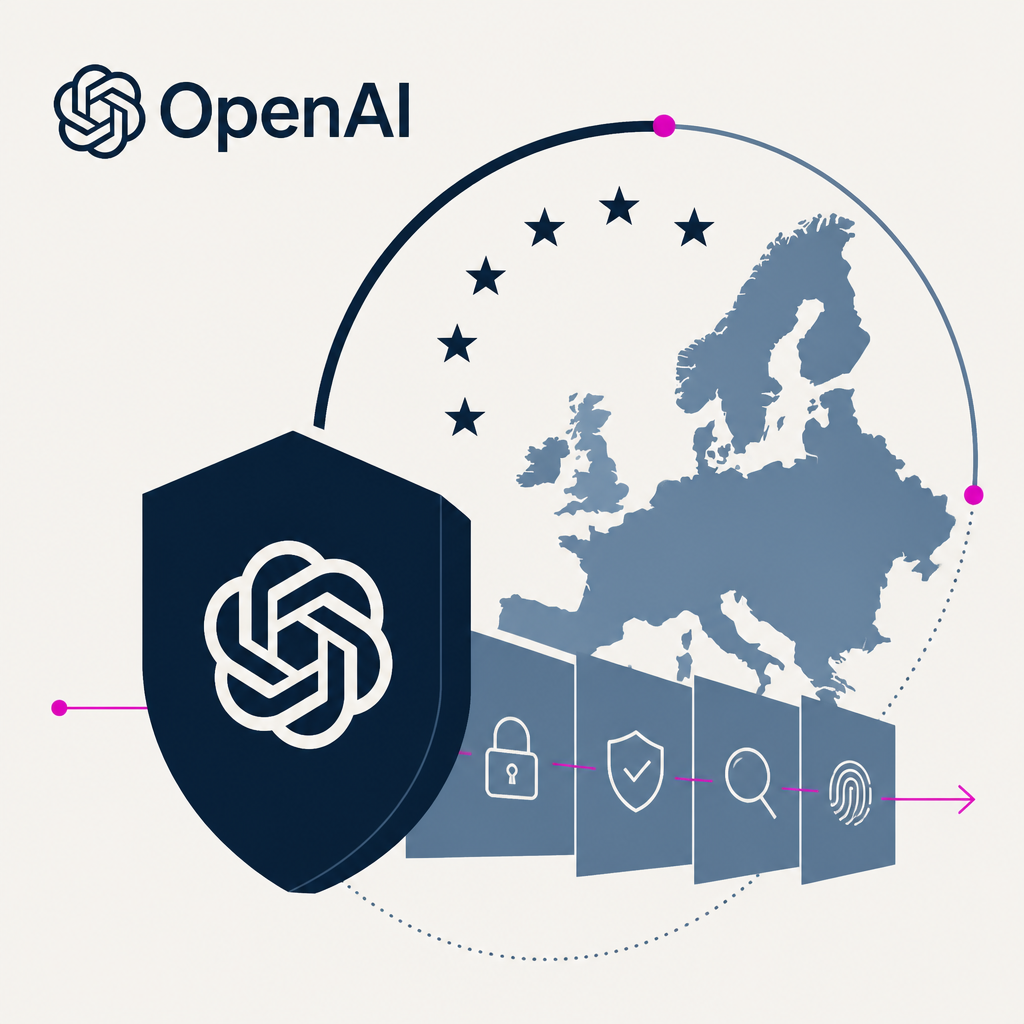
OpenAI published details about its safety, security, transparency, and provenance practices to support compliance with European AI governance requirements. The company's documentation aligns with the EU AI Act framework as it continues to develop. OpenAI aims to demonstrate how its operational practices can meet regulatory standards across Europe.
Zvi (Don't Worry About the Vase)·2 months ago·
38
● 50 sources
US lawmakers introduced two bills to regulate AI development: the FRONTIER Act, which establishes federal oversight of frontier AI models through Commerce Department authority with testing and incident reporting requirements, and the AI Kill Switch Act, which requires large AI companies to be able to shut down model inference during crises. The Kill Switch Act sets maximum fines of $20 million per day for non-compliance and applies only to covered entities above certain revenue thresholds, while explicitly exempting open-weight models from shutdown requirements. These legislative efforts represent attempts to balance catastrophic risk management with open-source development, though enforcement mechanisms and definitional thresholds remain contested among policymakers, industry, and advocates.
A Harvard Kennedy School professor proposes a framework for deciding when to use AI for a task by distinguishing between "work" (where the outcome matters but the process doesn't) and "gym" (where the process and skill-building are essential). The author argues that using AI for gym tasks like student writing assignments is counterproductive because the struggle of writing, drafting, and editing develops critical thinking skills that atrophy without practice. This framework has implications for creative professionals and society's future relationship with AI-generated content and work.
Every AI story that matters,
in your inbox by 8am.
TLDRocket reads all relevant sources, removes duplicate coverage, and summarises the
day in two minutes. Follow companies and topics for alerts, or get the
briefing in Slack. Free, no spam, unsubscribe anytime.
Reading TLDRocket needs no cookies, and the readership counts we rely on come from
our own cookieless analytics. Google Analytics is the exception: it sets cookies and
reports to Google, so it stays switched off until you allow it. You can change your
mind any time from “Cookie settings” in the footer.
Strictly necessary
Session security and form protection (tldrocket-session,
XSRF-TOKEN, 2 hours). The site cannot work without them,
so they need no consent.
Always on
Google Analytics 4 (_ga,
_ga_<id>, up to 2 years). Measures which
stories and sections readers use. Google acts as a third-party processor and may
store the data outside the EU. No advertising, no profiling, no data sold.