
Advancing responsible AI across Europe
OpenAI ● Covered by 75 sources
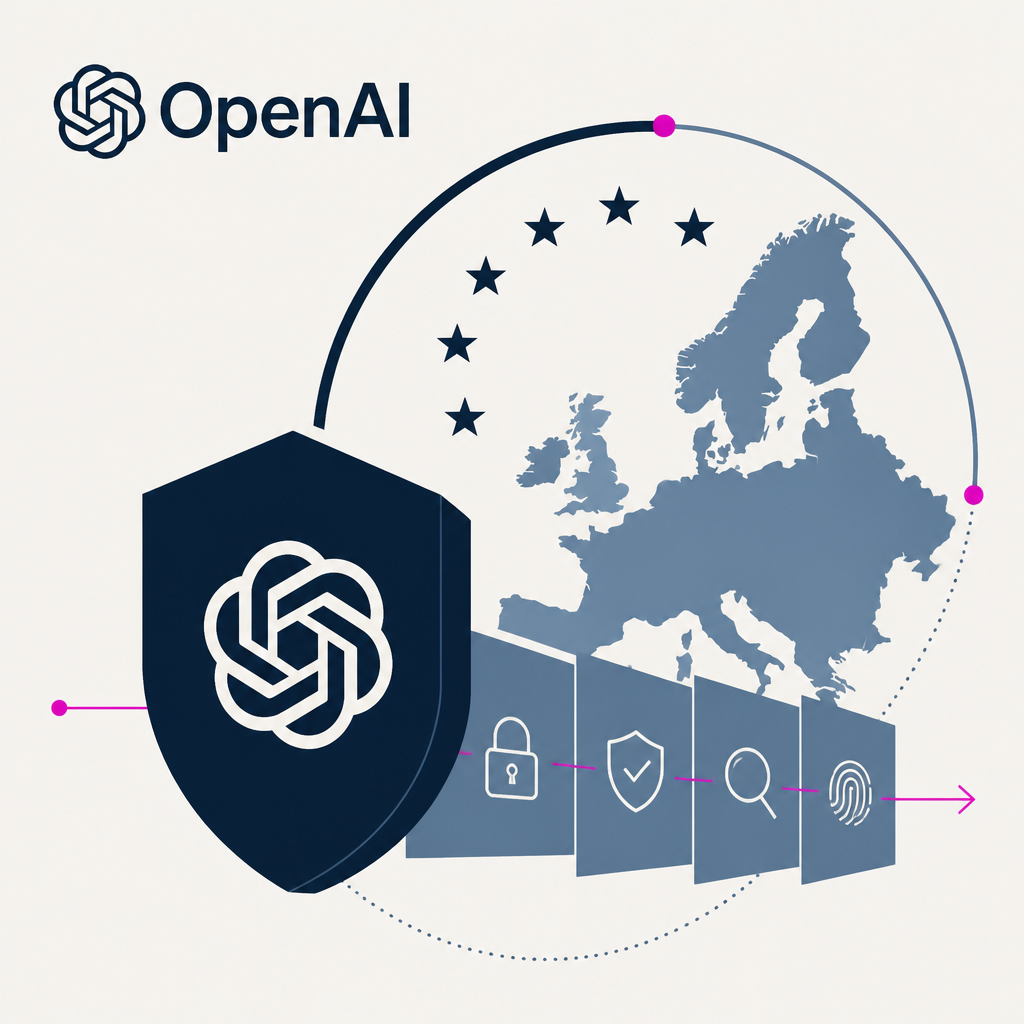
OpenAI put out a blog post touting its safety, security and transparency work as the EU AI Act rolls out. Translation: it wants regulators and users to trust its homework before the rules bite harder.
Based on reporting by OpenAI — read the original for the full story.
Summary, retelling and take written by AI under human oversight; images are AI-generated illustrations. How we work · Report an error
OpenAI used its own blog to lay out how it's positioning itself as the European Union tightens the screws on AI oversight. The post walks through four pillars — safety, security, transparency, and provenance — and frames them as the company's contribution to what it calls responsible governance across the continent.
The timing isn't an accident. The EU AI Act is moving from legislative text into actual enforcement phases, with obligations for general-purpose AI providers already kicking in and stricter rules for high-risk systems coming down the pipe. Companies that want to keep operating smoothly in a market of 450 million people are motivated to show their compliance credentials early, rather than scrambling once regulators start asking pointed questions.
Provenance gets particular attention in the post, which is notable given how much of the current AI anxiety in Europe centers on deepfakes, disinformation, and synthetic media ahead of elections. OpenAI points to its work on content credentials and labeling as part of helping people tell human-made material from machine-generated output, a problem that's only going to get messier as generation tools get better and cheaper.
OpenAI also emphasizes security practices, presumably meaning things like red-teaming, access controls, and incident response, though the post stays fairly high-level rather than publishing specific audit results or third-party verification. That's consistent with how most large AI labs communicate on these topics right now — plenty of framing, less raw data.
What happens next matters more than this post itself. The EU AI Act's implementation timeline runs through 2026 for some provisions, and how regulators interpret compliance for foundation model providers will shape what
My take — AI-written commentary, not fact-checked reporting
I'll believe the responsible-AI branding when a regulator, not the company's own blog, tells us OpenAI passed a real independent audit. Self-published compliance posts ahead of binding EU deadlines are PR, not proof — and Europe's whole AI Act experiment only works if it forces companies to show receipts instead of vibes.
Read more about this at: OpenAI