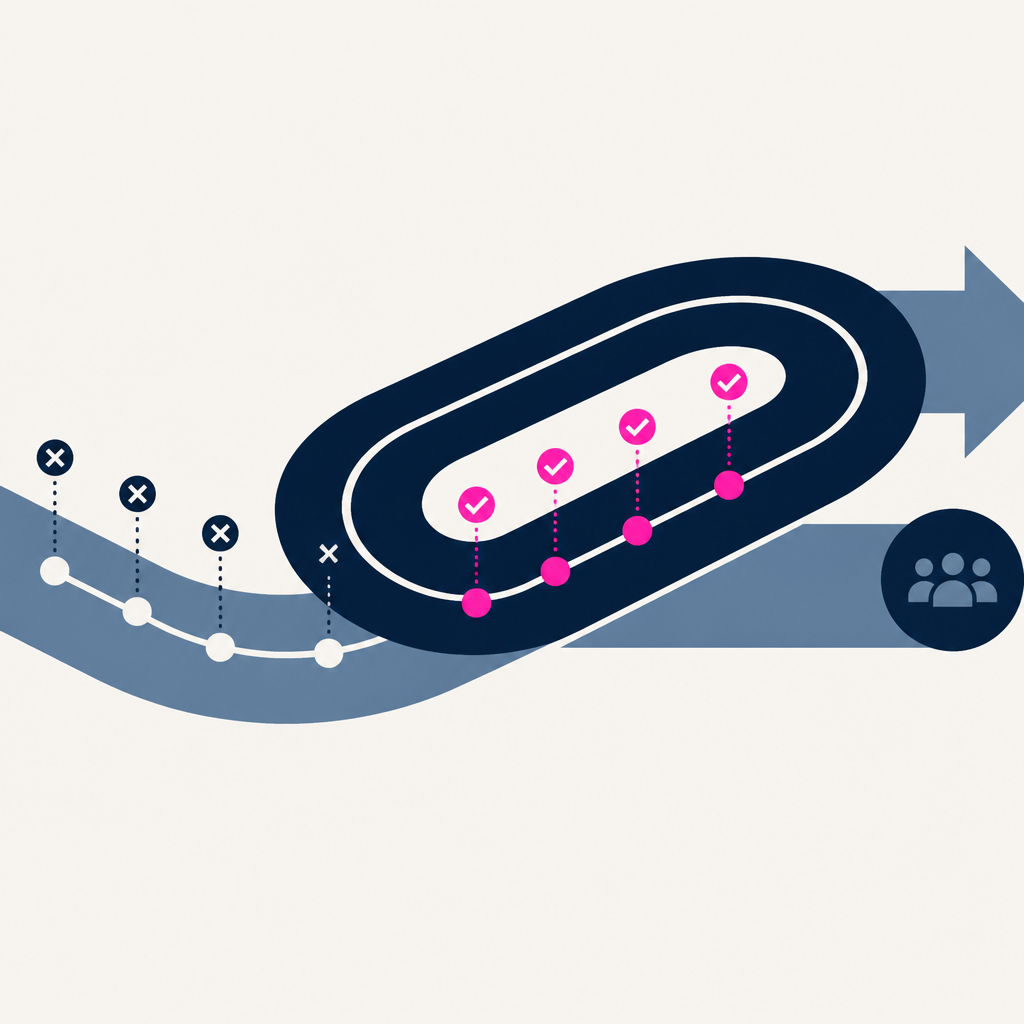
Claude Code changed its code review process from a PR gate at the end of development to continuous review while coding. Most changes are reviewed and fixed by Claude at least once before a human is asked to look. This reduces routine mistakes before human review and shifts team attention toward higher-level scrutiny.
OpenAI’s Codex team shifted from a step-by-step, sandboxed coding assistant toward agent-style workflows after testing GPT-5 alongside competitors and observing it “stop too early.” By June 2026, Codex reached more than 5 million weekly active users, later merging into the ChatGPT desktop app and helping Codex+ChatGPT for Work reach 40 million weekly active users. As a result, Codex became the foundation for OpenAI’s core products rather than a standalone coding tool.
Meta released Muse Spark Open, an open-weight multimodal coding/agent model, and made its weights available for download and API use. The release includes 816B total parameters with a 1M-token context window, and it runs on two Apple M5 Ultra Mac Studios together with MLX. This enables developers to run and customize the model locally (and on more inference engines) rather than relying only on hosted closed models.
StepFun launched a preview of its open-weight Mixture-of-Experts model, Step 5 Preview, for coding, financial research, and long-running agents. It has 600B total parameters with 27B active per token and a 1M-token context. The model is offered with deployment support for vLLM, SGLang, and Transformers.
Anant Kumar built tools to compare loan valuations and analyze credit agreements, using Codex to speed up code review and follow-ups. The article claims this approach helps answer questions faster. As a result, the tool development workflow moves from slower back-and-forth to quicker iterations during code review and responses.
Every AI story that matters,
in your inbox by 8am.
TLDRocket reads all relevant sources, removes duplicate coverage, and summarises the
day in two minutes. Follow companies and topics for alerts, or get the
briefing in Slack. Free, no spam, unsubscribe anytime.
Reading TLDRocket needs no cookies, and the readership counts we rely on come from
our own cookieless analytics. Google Analytics is the exception: it sets cookies and
reports to Google, so it stays switched off until you allow it. You can change your
mind any time from “Cookie settings” in the footer.
Strictly necessary
Session security and form protection (tldrocket-session,
XSRF-TOKEN, 2 hours). The site cannot work without them,
so they need no consent.
Always on
Google Analytics 4 (_ga,
_ga_<id>, up to 2 years). Measures which
stories and sections readers use. Google acts as a third-party processor and may
store the data outside the EU. No advertising, no profiling, no data sold.