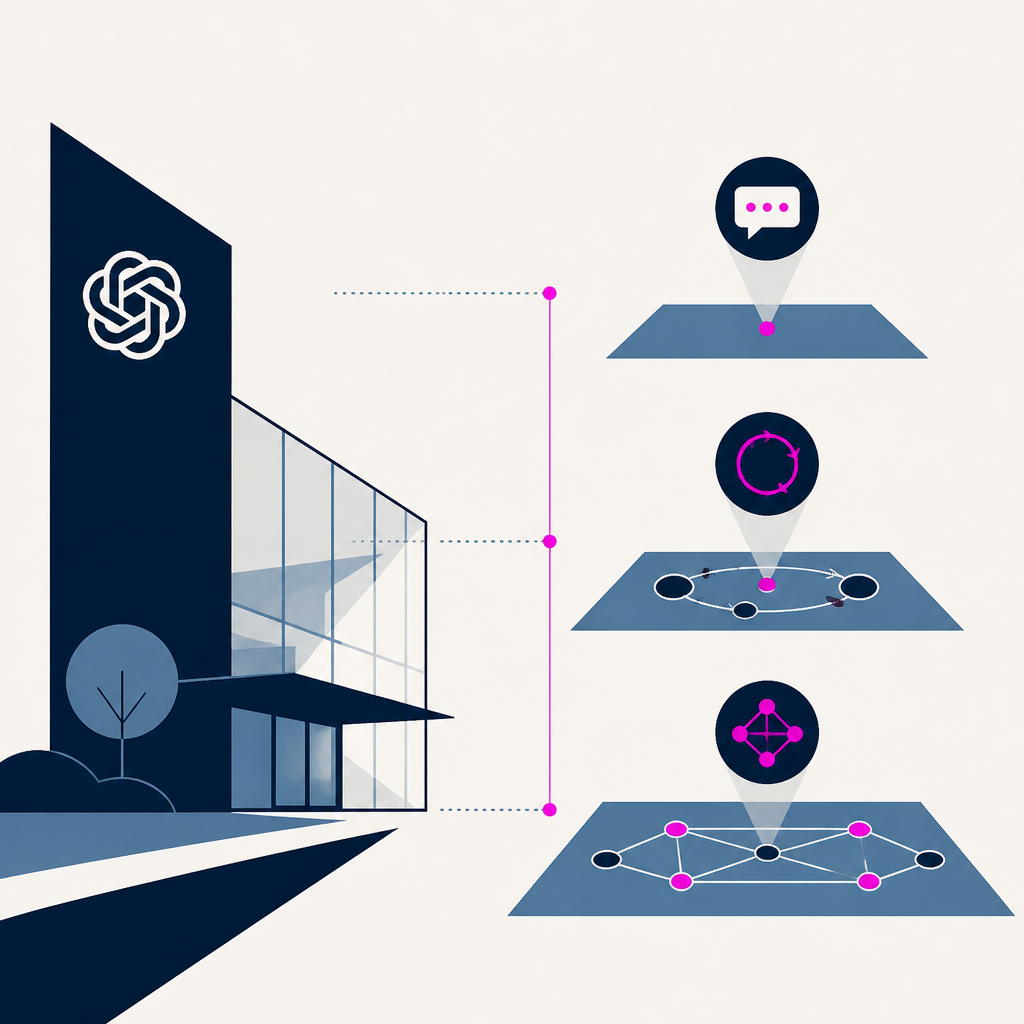
Three engineering disciplines—prompt, loop, and graph engineering—organize AI system control at different scales: prompts direct single model responses, loops automate an agent's repeated decision cycles, and graphs coordinate multiple agents in parallel. The progression emerged in practice starting with prompt engineering around 2023, loop engineering terminology in late 2025, and graph engineering roughly six weeks after that. As work moves up the stack, humans shift from executing tasks directly to reviewing outcomes, with each layer preserving the ones beneath it rather than replacing them.
Organizations investing in AI for developer productivity often focus on code generation, which accounts for only 21% of developer time, leaving 79% of workflow untouched and limiting throughput gains to 5-10%. The real value comes from AI that reduces friction across the entire software development lifecycle—requirements translation, code review, testing, and deployment—integrated into mature CI/CD pipelines with strong governance. Traditional companies like banks and telecoms that already have rigorous engineering practices and governance frameworks see the most measurable returns because AI amplifies existing maturity rather than creating it from scratch.
Legora acquired Wexler, a London-based legal AI startup that extracts and verifies facts from large document sets, marking Legora's fifth acquisition in 2026. Wexler's platform processes over 1,000,000 documents per case and has achieved 400 percent net revenue retention with an 18-person team. Wexler's fact-verification engine will become a core component of Legora's agentic operating system, with Wexler's engineering team forming the foundation of Legora's new London hub.
Adomate is a platform that aggregates competitor ads and marketing data to automatically generate ad concepts for performance teams. The system pulls data from Meta Ad Library, Meta Ad Manager, and review sites like Trustpilot, then uses configurable workflows to turn data points into ad-creative concepts that users can review and publish directly to Meta. Users gain a scalable creative research process that reduces manual work and allows more time for strategic creative decisions.
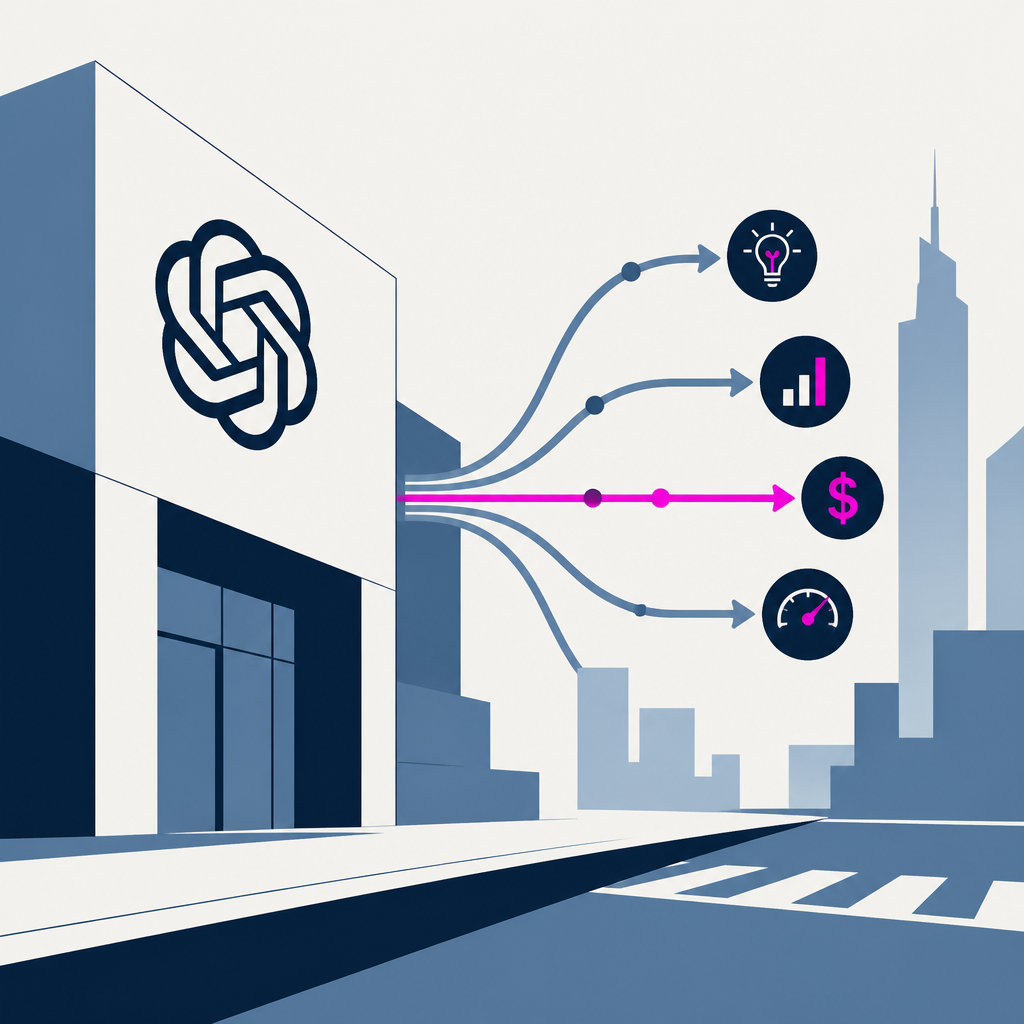
OpenAI released GPT-5.6, which improves efficiency across AI models, inference, and agentic workflows by delivering more useful intelligence per dollar. The model achieves better performance-to-cost ratios compared to prior versions across multiple operational dimensions. This efficiency gain makes advanced AI capabilities more accessible and economical for organizations running large-scale deployments.
Every AI story that matters,
in your inbox by 8am.
TLDRocket reads all relevant sources, removes duplicate coverage, and summarises the
day in two minutes. Follow companies and topics for alerts, or get the
briefing in Slack. Free, no spam, unsubscribe anytime.
Reading TLDRocket needs no cookies, and the readership counts we rely on come from
our own cookieless analytics. Google Analytics is the exception: it sets cookies and
reports to Google, so it stays switched off until you allow it. You can change your
mind any time from “Cookie settings” in the footer.
Strictly necessary
Session security and form protection (tldrocket-session,
XSRF-TOKEN, 2 hours). The site cannot work without them,
so they need no consent.
Always on
Google Analytics 4 (_ga,
_ga_<id>, up to 2 years). Measures which
stories and sections readers use. Google acts as a third-party processor and may
store the data outside the EU. No advertising, no profiling, no data sold.