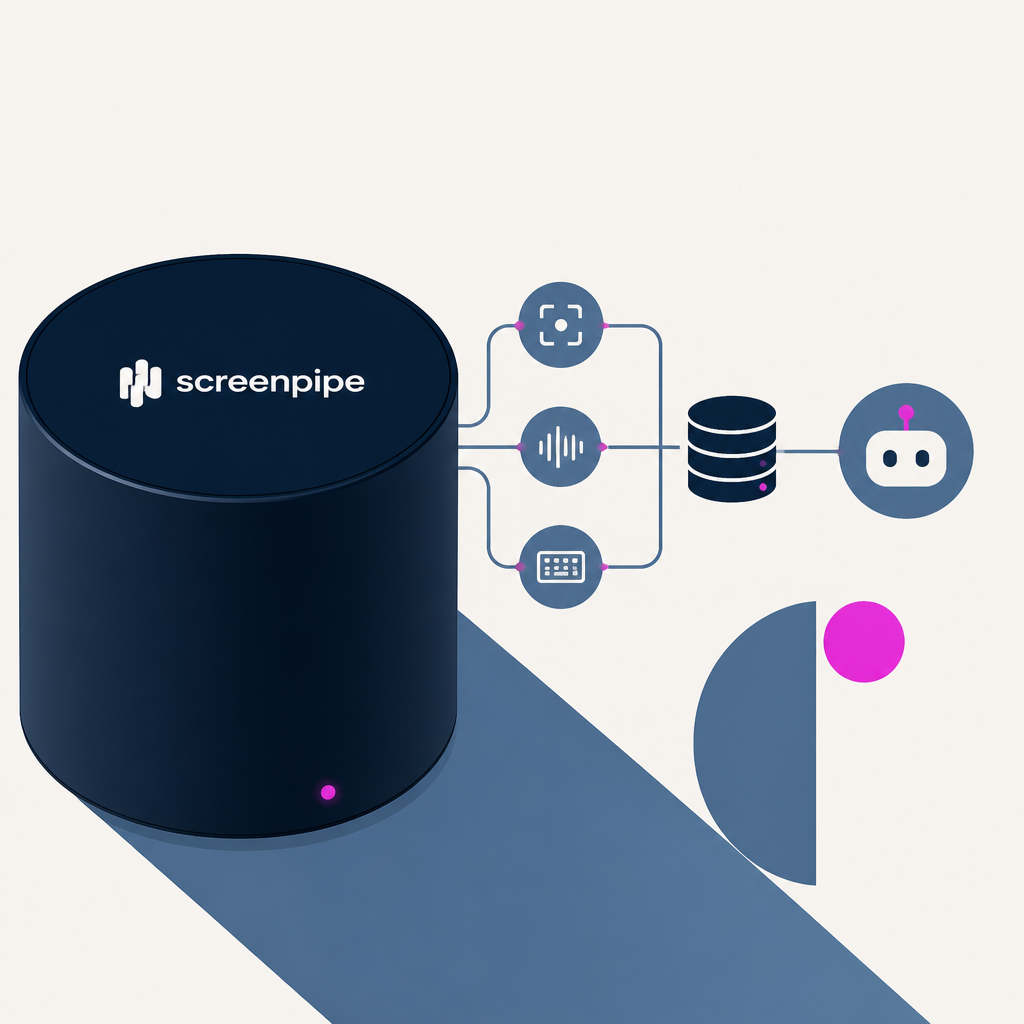
Screenpipe records screen and audio locally to create a searchable memory for AI agents, enabling automation of repetitive tasks and building persistent knowledge bases. The app captures OS events paired with screenshots and transcribed audio into a local SQLite database, with an API on port 3030 for agents to query and act on the data. Users can now retrieve work history, auto-update CRMs, maintain personal wikis, and identify automation opportunities without sending raw video or audio to the cloud.
Amazon Bedrock AgentCore optimization provides observability tools to detect behavioral failures in deployed AI agents, including silent failures that don't generate error signals—such as skipped steps or incorrect outputs that pass system health checks. The system analyzes session traces against 11 behavioral failure categories, clusters failures by root cause, and ranks them by proportion of affected traffic, helping developers distinguish systematic issues from edge cases. This shifts agent monitoring from reactive trace inspection to proactive pattern detection, enabling teams to prioritize and fix the failures that affect the most users.
Cloudflare Durable Objects combine serverless V8 isolates with paired SQLite storage and automatic request routing by ID, making them well-suited for building agents and stateful applications. The author has built multi-agent workloads for roughly $10 per month on Durable Objects compared to $100–500 monthly on AWS, and highlights benefits including native WebSocket support, single-threaded concurrency, minimal local development setup, and token efficiency for AI coding agents. However, Durable Objects present tradeoffs including complexity around blocking concurrent requests, limited language support beyond TypeScript, missing Node.js APIs like HTTP/2, schema migration challenges, and inability to run on customer clouds, pushing some developers toward alternatives like Restate or Rivet.
Every AI story that matters,
in your inbox by 8am.
TLDRocket reads all relevant sources, removes duplicate coverage, and summarises the
day in two minutes. Follow companies and topics for alerts, or get the
briefing in Slack. Free, no spam, unsubscribe anytime.
Reading TLDRocket needs no cookies, and the readership counts we rely on come from
our own cookieless analytics. Google Analytics is the exception: it sets cookies and
reports to Google, so it stays switched off until you allow it. You can change your
mind any time from “Cookie settings” in the footer.
Strictly necessary
Session security and form protection (tldrocket-session,
XSRF-TOKEN, 2 hours). The site cannot work without them,
so they need no consent.
Always on
Google Analytics 4 (_ga,
_ga_<id>, up to 2 years). Measures which
stories and sections readers use. Google acts as a third-party processor and may
store the data outside the EU. No advertising, no profiling, no data sold.