World humanoid robot games show runners breaking records, bursting into flames
Ars Technica Jeremy Hsu ● Covered by 3 sources
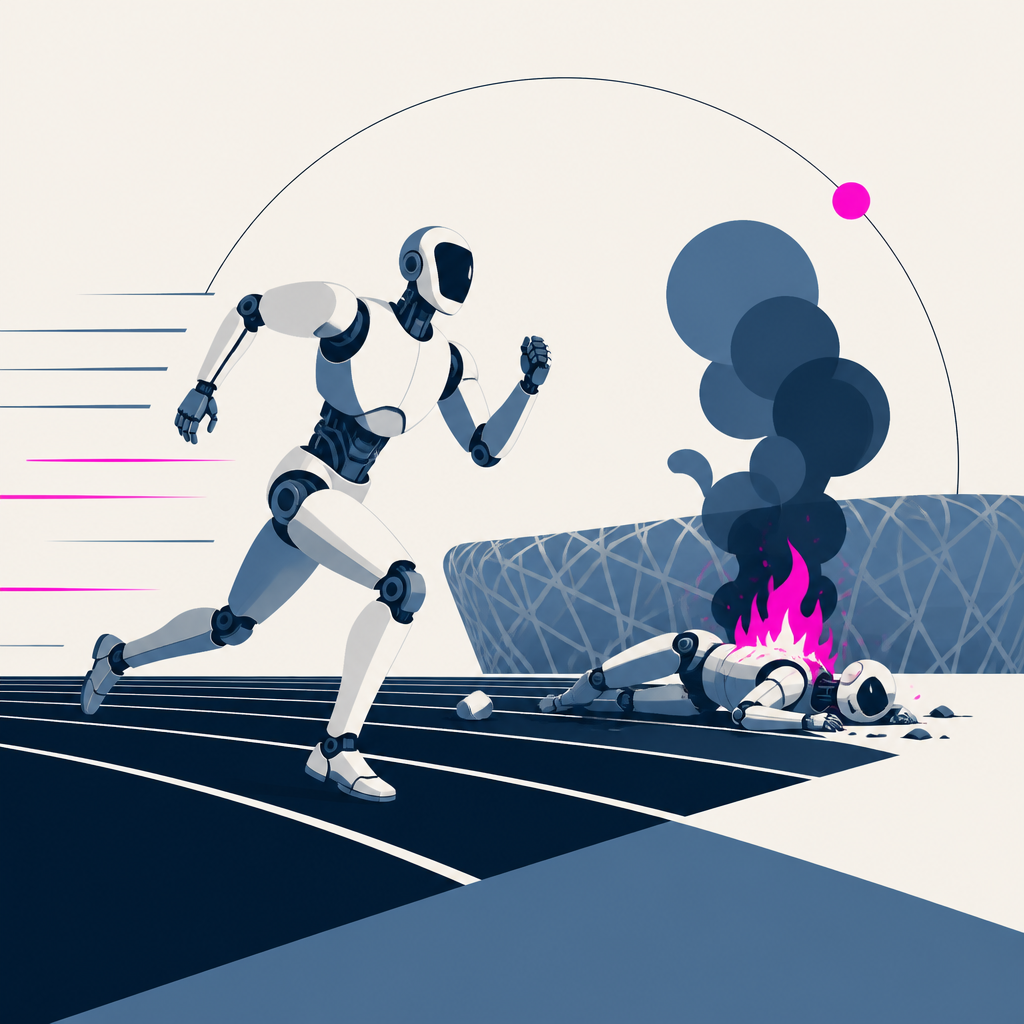
Humanoid robots in Beijing ran fast enough to beat Usain Bolt’s 100m mark. They also slammed barriers, broke apart, and some caught fire.
Based on reporting by Ars Technica, Jeremy Hsu — read the original for the full story.
Summary, retelling and take written by AI under human oversight; images are AI-generated illustrations. How we work · Report an error
The World Humanoid Robot Games in Beijing have become a very strange kind of highlight reel: part track meet, part demolition derby. Viral clips from the second edition, held August 22–26, show sprinting robots moving fast enough to beat the human 100-meter record held by Usain Bolt. Then they hit the problem that matters more than speed: stopping.
Several robots crashed into barriers or simply toppled over because they couldn’t slow down cleanly. A few fell so badly that they broke at the waist, throwing sparks in the process. Some even caught fire. The result is a useful reminder that a robot can look impressive in motion and still be a long way from being useful.
The event, like the first edition held in 2025, mixed showy tasks with practical ones. Robots were asked to run, do kung fu or dance moves, fight in kickboxing matches, and play soccer or table tennis. This year’s program also included more ordinary chores such as washing and hanging laundry.
That domestic work was where the machines seemed to trail human pace by a fair margin. And that’s probably the point. The organizers, including Chinese state media and the Beijing city government, are using the games to advertise the commercial promise of humanoid robots while China’s robotics sector keeps pushing ahead.
My take — AI-written commentary, not fact-checked reporting
This is exactly how robotics progress looks: flashy demos, ugly edge cases, and a few sparks for the marketing reel. Beijing is betting that spectacle will sell the future before reliability does. That’s a familiar move in tech, and usually the hardware ends up having the last word.
Read more about this at: Ars Technica