Workforce economics emerges as AI reshapes the C-suite
SiliconANGLE Cheryl Knight
IBM says AI is forcing finance and HR to work as one. That’s because workflow gains now decide where people, money and tech get reinvested.
Based on reporting by SiliconANGLE, Cheryl Knight — read the original for the full story.
Summary, retelling and take written by AI under human oversight; images are AI-generated illustrations. How we work · Report an error
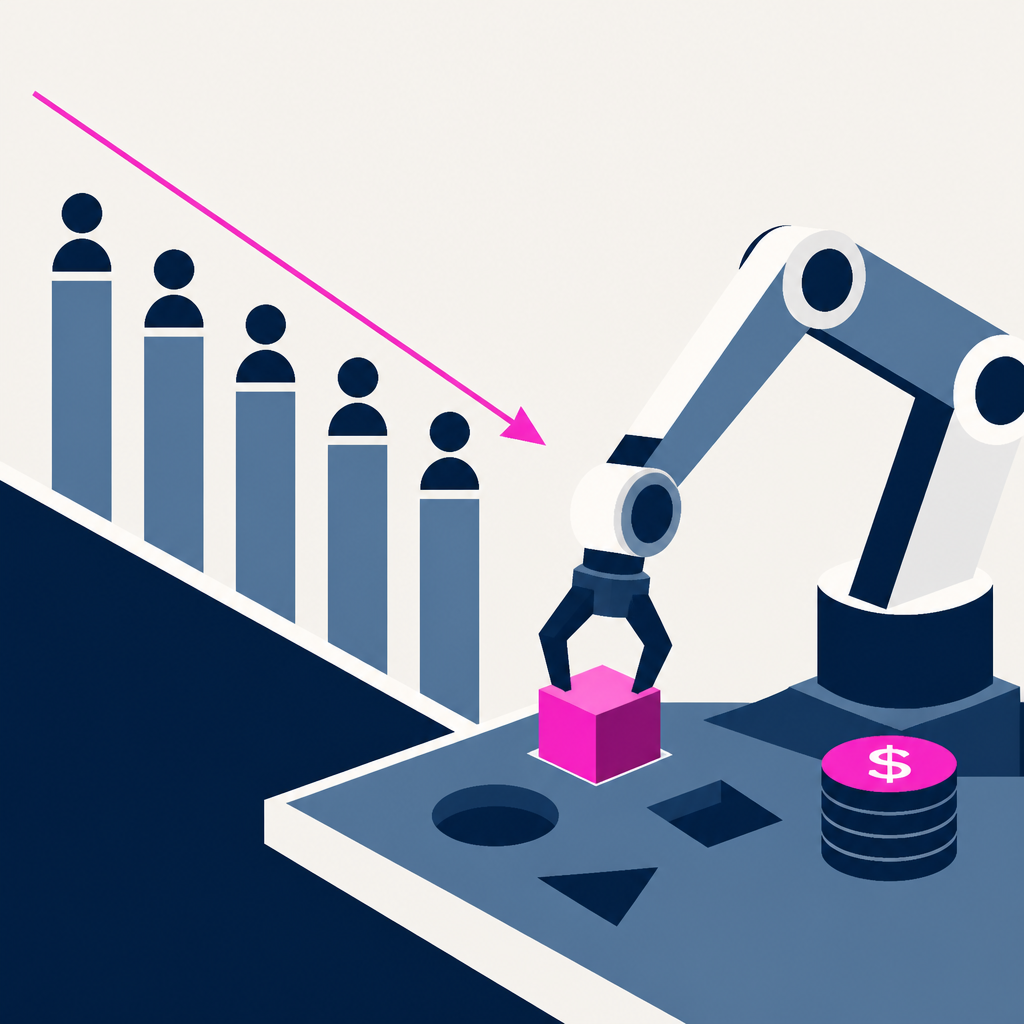
AI is doing more than changing tools inside IBM. It’s changing who sits in the room when companies decide how work gets done, who does it and what happens to the savings. At IBM, that’s turned into a new idea the company calls “workforce economics,” with finance and human resources moving much closer together.
Jim Kavanaugh, IBM’s senior vice president and CFO, said the old split between budgets and people strategy is fading fast. Five years ago, finance handled controllership, risk, capital allocation and budgets, while HR focused on organization design, skills, compensation and culture. Now, he said, AI is pushing those worlds together because companies have to decide whether work belongs with humans, AI or both.
IBM is treating productivity as fuel for reinvestment, not just a way to cut costs. Kavanaugh said the company has generated $4.5 billion in productivity over the past three years and is on track for $5.5 billion in 2026. Nickle LaMoreaux, IBM’s senior vice president and chief human resources officer, said that also changes how people are paid and rewarded: skills matter more than annual cycles, because the skills needed tomorrow may not be the same as the ones that mattered yesterday.
The company’s “Client Zero” program shows how IBM is applying that thinking. Instead of using AI only to help individual employees do their jobs faster, IBM has focused on enterprise workflows where agents and people work side by side in areas like procurement, finance and HR. Kavanaugh said IBM found 364 interactions across organizational domains just to move an order through to cash, so it redesigned processes such as quote to cash, hire to exit and record to report.
Those changes produced 60% productivity, 75% cycle time velocity improvement and 60% cash conversion cycle improvement, according to Kavanaugh. But the technology wasn’t the whole story. LaMoreaux said employees needed straight talk about how their work would change, which skills would matter and where they’d fit. Her rule was blunt: don’t sugarcoat it. Decide what technology should do, and what humans should do, then make the strategy match.
My take — AI-written commentary, not fact-checked reporting
This is the part of AI people keep pretending is optional: it’s a management problem before it’s a software problem. IBM is at least saying the quiet part out loud — if AI changes workflows, then finance and HR can’t keep behaving like neighboring kingdoms with separate maps. The companies that keep those walls up will spend a lot of money reinventing the same mess twice.
Read more about this at: SiliconANGLE