Waymo vs Tesla: Two Ways to Build Self-Driving Cars
ByteByteGo Newsletter
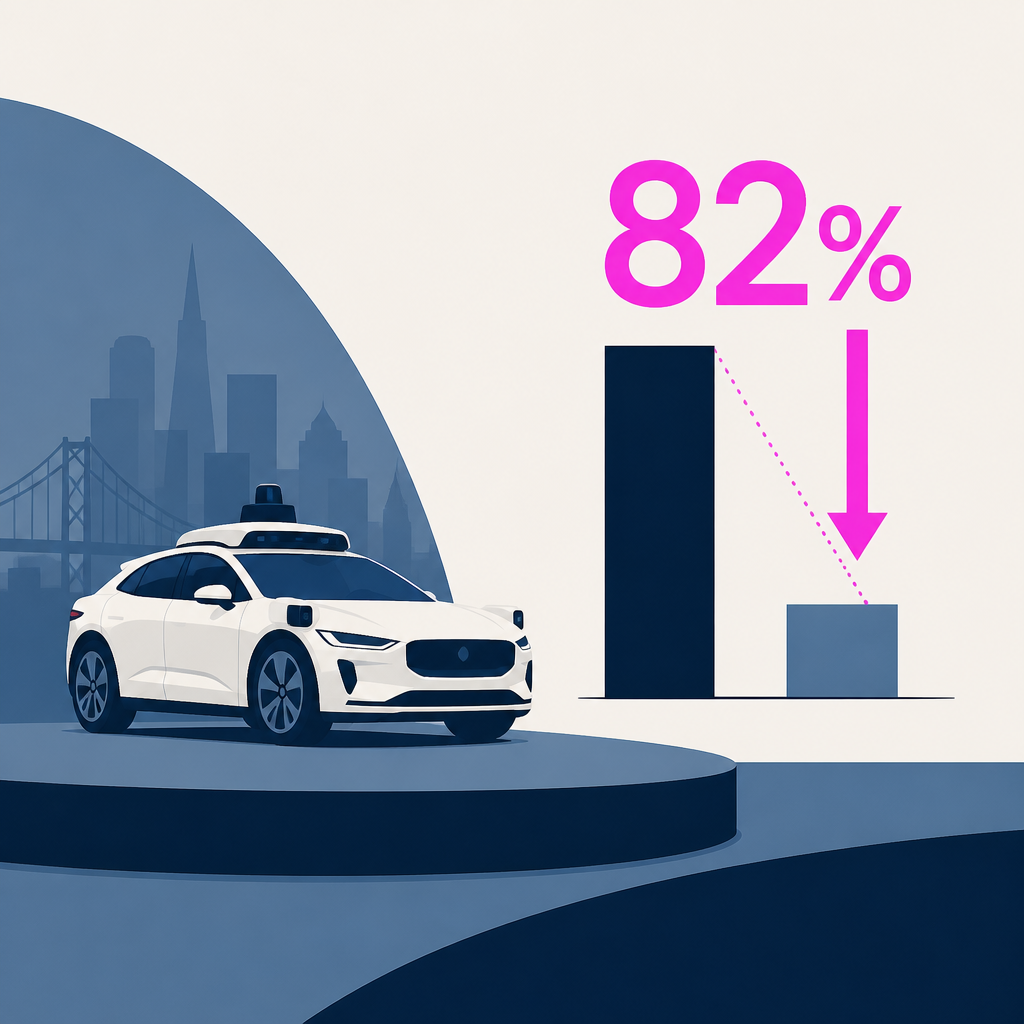
Waymo and Tesla pursue opposing architectural strategies for autonomous driving: Waymo uses lidar, cameras, and radar to build explicit, interpretable world models with separate validation layers before action, while Tesla relies on camera-only vision with end-to-end learned representations and currently requires human supervision for most vehicles. Waymo reports 220.6 million driverless miles through March 2026 with a 94% reduction in serious injury crashes versus human drivers in comparable areas, while Tesla has 1.28 million Full Self-Driving subscriptions but almost all require an attentive driver. The fundamental tradeoff is between Waymo's inspectable, verifiable but computation-intensive approach and Tesla's learned, adaptable but less transparent system.
Why it matters
Waymo and Tesla have developed different approaches to the self-driving car problem, both relying heavily on machine learning but differing in how much gets fixed in advance.