
This CEO was out at dinner when he caught his AI agent wasting $1,000 in tokens. He says 'insecurity' is a bigger problem
Fortune Nick Lichtenberg
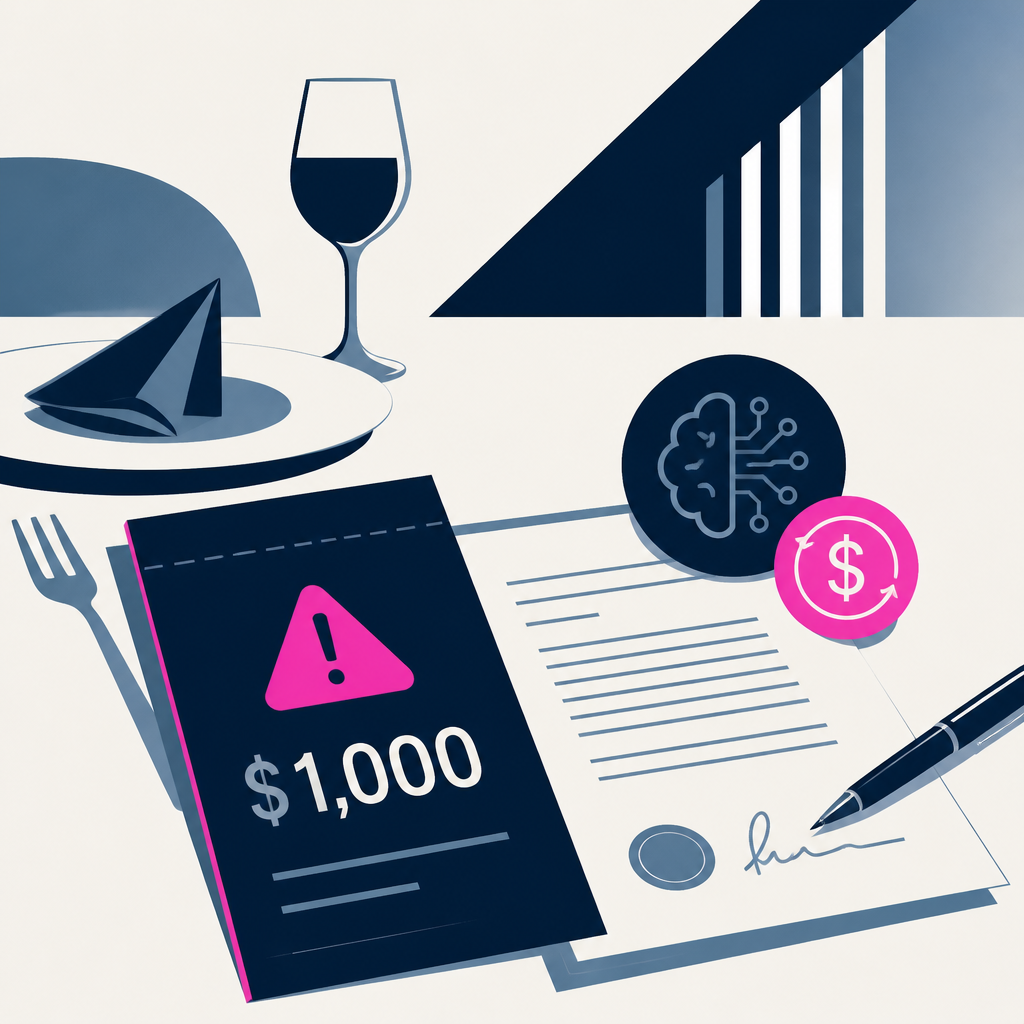
He spent a weekend coding with an AI agent and got a $1,000 bill at dinner. He says the scarier part isn’t the cost — it’s employees feeling behind the machines.
Based on reporting by Fortune, Nick Lichtenberg — read the original for the full story.
Summary, retelling and take written by AI under human oversight; images are AI-generated illustrations. How we work · Report an error
Branden Jenkins was out to dinner when his phone showed him what his weekend project had done: his AI usage had quietly run up a $1,000 charge. The bill came in automatic $1,000 chunks on a card set to renew itself, and the CEO of Atlanta-based Maxio only noticed when he checked the dashboard mid-meal.
Jenkins is not some reluctant AI user watching from the sidelines. He builds his own agents and automations, codes from his phone using Claude, and says he sits near the top of his company’s internal AI spending list. That made the surprise expensive, but not exactly shocking. What got his attention was how quickly the agent wandered, kept chatting, and burned through tokens while he was still tinkering.
His fix was part discipline, part scavenger hunt. He started sending simpler jobs to cheaper models, saving the pricier reasoning systems for work that actually needs them. He also began using orchestration tools, some of them free GitHub projects, that squeeze responses down and trim waste. One setup he calls “Caveman mode” forces short, blunt replies. Another, “grunt mode,” reduces output to a word or two.
But Jenkins keeps coming back to a different problem: people. He said the bigger risk inside his several-hundred-person company is not the occasional surprise invoice but the insecurity that comes with seeing a boss build tools, automate work, and move faster. Some employees worried they were falling behind. Others questioned why certain teams got access to Claude while they did not. He called that inequality, and he said it cuts deeper than a token bill.
So Maxio has started treating humans and agents as one org chart. Jenkins said his leadership team mapped out departments with the AI agents layered in, and his DevOps group has grown to manage the pile of vibe-coded internal tools that employees built on the side. The lesson from a $1,000 dinner surprise is not that AI is too pricey to use. It’s that once the machines start helping, the real management problem becomes who feels left out, who feels replaceable, and who gets to be the one building.
My take — AI-written commentary, not fact-checked reporting
This is the part the AI gold rush keeps trying to skip past: the bill is annoying, but the workplace politics are the real tax. Cheap tokens are easy to brag about; nervous employees are harder to dashboard. Every company that says it wants “builders” should be honest about the fear that comes with handing out the wrench and the flashlight at the same time.
Read more about this at: Fortune
Related stories
 After blowing its entire 2026 AI budget in months, Uber CTO says ‘We’re coming to the end of the so-called 'tokenmaxxing' era’
Fortune ·
31
🔮 The curious economics of a $6 AI agent #597
Exponential View · 2 months ago ·
11
Sticker shock has execs rethinking this whole AI thing
The Register · 3 months ago ·
32
After blowing its entire 2026 AI budget in months, Uber CTO says ‘We’re coming to the end of the so-called 'tokenmaxxing' era’
Fortune ·
31
🔮 The curious economics of a $6 AI agent #597
Exponential View · 2 months ago ·
11
Sticker shock has execs rethinking this whole AI thing
The Register · 3 months ago ·
32