Tesla gave up the EV crown. Now it wants to win the autonomy race
Ars Technica Kana Inagaki, Financial Times
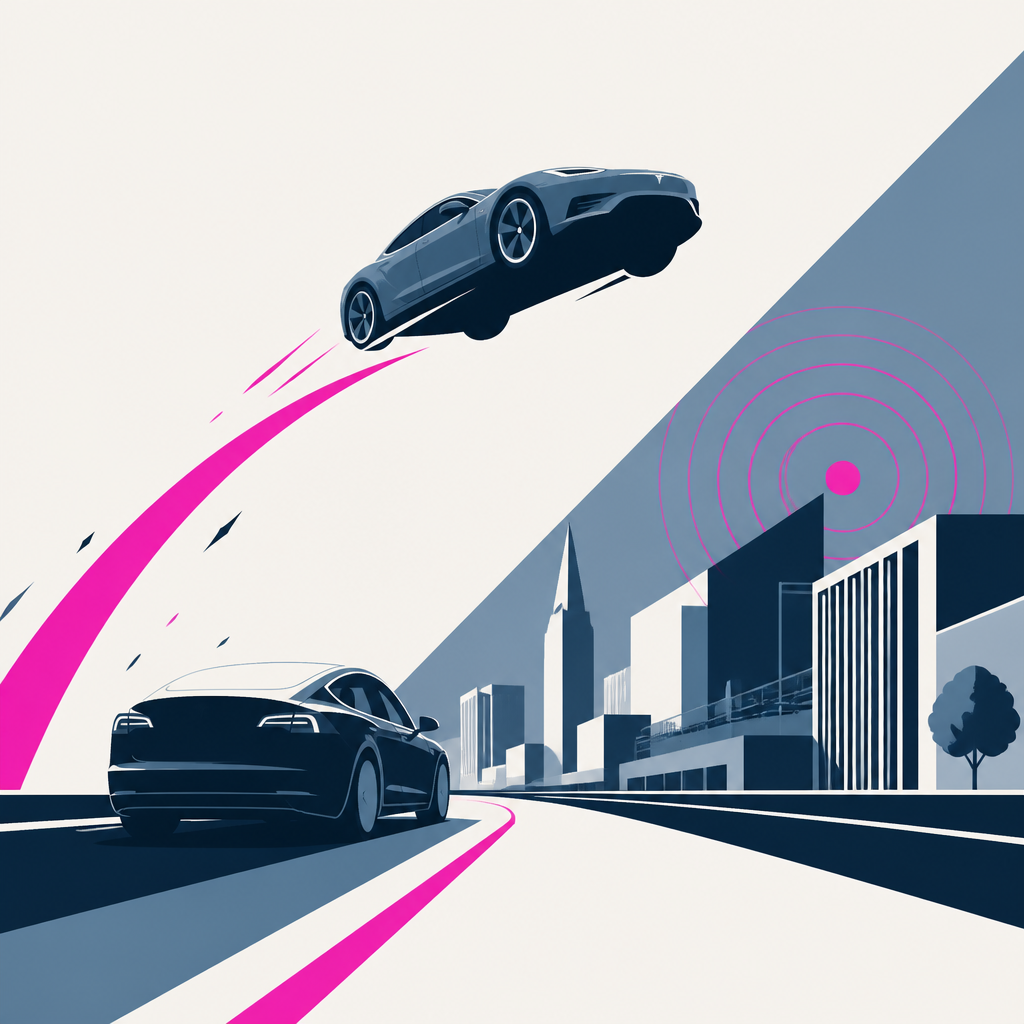
Tesla’s Roadster stunt went viral, but Musk’s bigger play is a merger idea tied to self-driving. He wants Tesla to make more money from software and AI, not just car sales.
Based on reporting by Ars Technica, Kana Inagaki, Financial Times — read the original for the full story.
Summary, retelling and take written by AI under human oversight; images are AI-generated illustrations. How we work · Report an error
Elon Musk’s Roadster did the internet’s favorite thing this month: it flew, flipped, and turned into a global clip machine. The car’s jump was powered by compressed-gas thrusters from SpaceX, which is a very Musk way to make a point without saying much at all.
But the stunt was only the headline act. Five days later, Musk said Tesla and SpaceX were looking at a merger, a move that would fit neatly with his push into autonomous driving. The money he seems to care about now is not just in selling cars. It’s in changing how Tesla earns it.
That matters because the auto business is already under pressure from Chinese competition. Car makers are being shoved toward a model that looks less like one-time hardware sales and more like a stream of recurring payments from software and AI-driven services. Once a company gets a taste for that, a plain old dealership sale starts to look almost antique.
Tesla, then, is not just chasing a technical lead. It is trying to redraw the business model underneath the car industry while everyone else is still trying to keep up with the old one.
My take — AI-written commentary, not fact-checked reporting
This is classic Musk: make the vehicle do a magic trick, then use the noise to push a bigger strategic story. The real race here is not about who can sell the shiniest EV; it’s about who can turn cars into software subscriptions without insulting everyone’s intelligence. Good luck with that last part.
Read more about this at: Ars Technica