
Tech leaders want to use religion to teach AI right from wrong. But that can prioritize certain traditions and distort others, anthropologist warns
Fortune The Associated Press
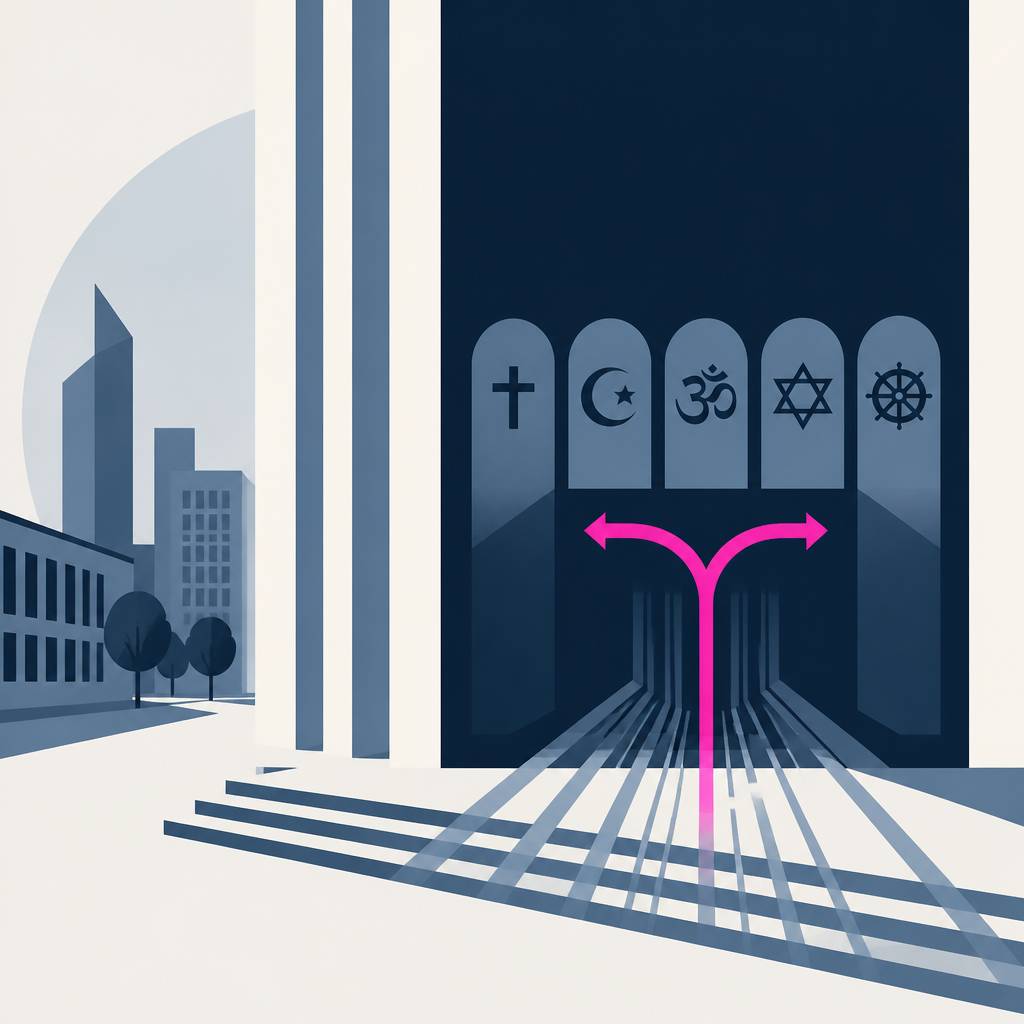
Tech firms are asking faith leaders how to make AI behave morally. Anthropologists warn that can flatten religions into one bland rulebook and privilege the wrong traditions.
Based on reporting by Fortune, The Associated Press — read the original for the full story.
Summary, retelling and take written by AI under human oversight; images are AI-generated illustrations. How we work · Report an error
As AI companies push to build more powerful systems, some are looking to religion for help with a question that feels more like theology than engineering: how do you teach a chatbot right from wrong? Anthropic co-founder Chris Olah said at the Vatican earlier this year that these are not questions a lab can answer, but ones traditions have carried for millennia. OpenAI CEO Sam Altman has floated a similar idea, saying ChatGPT should reflect some kind of weighted average of humanity’s moral view.
That framing is exactly what unsettles anthropologists and scholars of religion. Webb Keane of the University of Michigan argues that treating religion as a grab bag of moral rules ignores the “messy, practical, ad hoc” way people actually live their faith. Once companies start pulling out supposed universal principles, he says, they risk turning some traditions into the default and mangling others, especially faiths that don’t define themselves mainly as ethics systems. In his view, the familiar “rule book” model fits scriptural religions best, and even there it pushes toward the Abrahamic traditions.
The companies themselves say they are trying to be broad. Anthropic said in a May blog post that it had met with scholars, clergy, philosophers and ethicists from more than 15 religious and cross-cultural groups, and it wants to widen that pool. Meghan Sullivan, a philosopher of religion at Notre Dame, said an Anthropic meeting she attended was unusually serious and unusually nerdy, in a good way. The company first walked attendees through its models in layman’s terms, then took feedback from Christians from different denominations on questions ranging from souls to whether third graders should be allowed to use a chatbot for literacy help.
But the deeper problem is older than AI. Scholars such as the late Jonathan Z. Smith and Tomoko Masuzawa have long argued that religion as a neat set of comparable world systems is a modern invention, not some timeless natural category. That matters here because Silicon Valley loves tidy categories. If “religion” becomes another source of aggregated wisdom, the result may be less wisdom than a smooth, middle-of-the-road mush that satisfies no one and quietly centers Western assumptions anyway.
My take — AI-written commentary, not fact-checked reporting
This is Silicon Valley doing its favorite trick: taking a messy human thing and asking it for a clean product spec. Religion isn’t an ethics API, and the people pretending otherwise are usually the ones most eager to flatten it into a brand-safe average. The more companies want moral authority without actual accountability, the more they’ll reach for priests, philosophers and whatever else can make the spreadsheet look soulful.
Read more about this at: Fortune
Related stories
 Sam Altman says assigning religious power or human judgment to AI is a real safety issue
X (formerly Twitter) · 2 weeks ago ·
49
We can’t help treating AI like it’s human. But should we?
TechCrunch · 2 weeks ago ·
27
 Axios: Altman’s post seen as a shot at Anthropic over using AI as a religious/ethical authority
Axios · 2 weeks ago ·
29