
Steel ships, railroads, and data centers: A VC takes the Industrial Revolution analogy seriously
Fortune Allie Garfinkle
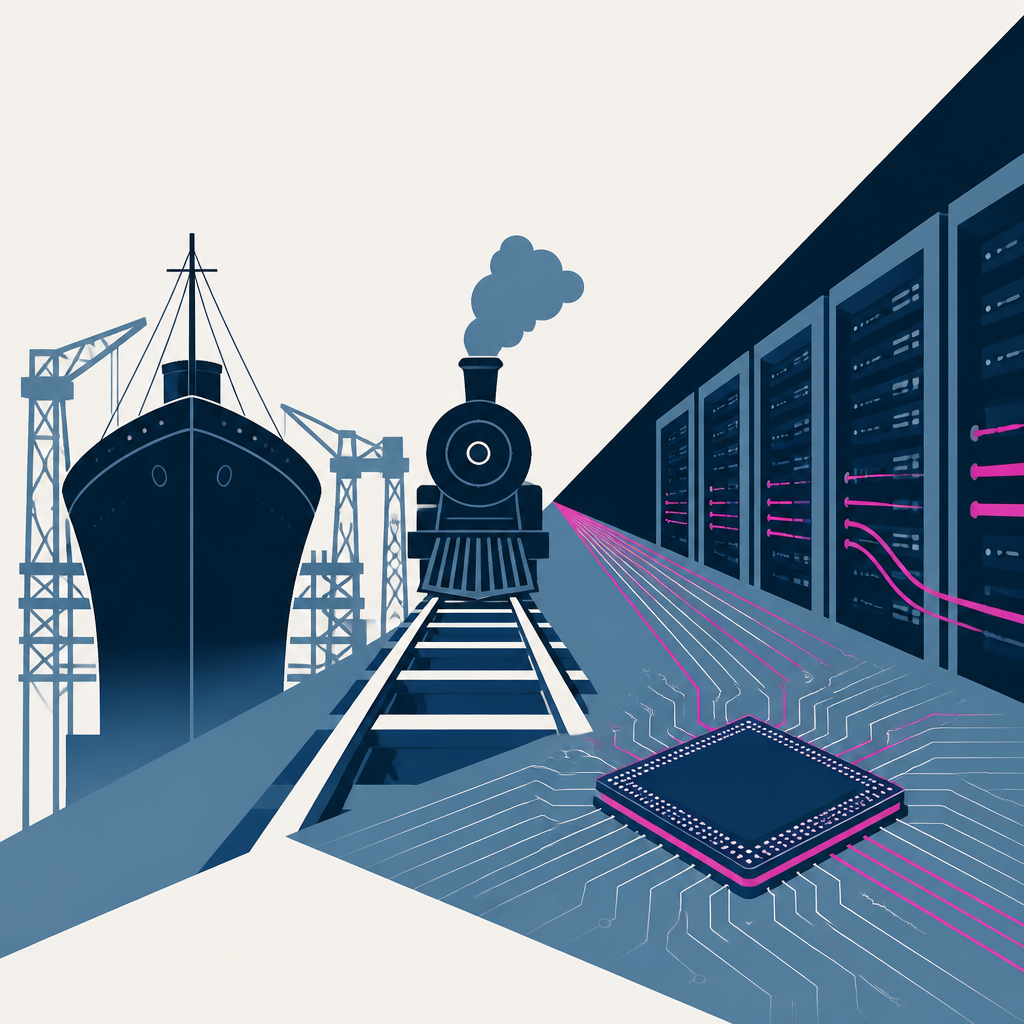
A VC says AI only wins if the buildout around it does. His point: data centers may matter more than the model hype.
Based on reporting by Fortune, Allie Garfinkle — read the original for the full story.
Summary, retelling and take written by AI under human oversight; images are AI-generated illustrations. How we work · Report an error
Venture capitalist Tung is taking the Industrial Revolution comparison for AI all the way to the metal. Notable Capital’s managing partner says the big story is not just clever software, but the infrastructure that lets it spread, endure, and dominate. For him, the useful analogy starts with ships: wooden fleets were outclassed once Britain scaled steel ships powered by steam.
He points to a hard number from that era. In 1890, he says, 80% of the world’s ships came from British shipyards. That wasn’t just a nice industrial flex. It was the foundation for British power that lasted for more than a century, and Tung argues the same logic applies now. A breakthrough only becomes geopolitical leverage when there’s enough machinery underneath it.
That’s why he thinks the AI debate is too fixated on apps and companies. Better models do not matter if compute is scarce. “The models that win are the ones that are available,” he says. In his framing, data centers are the railroads of the 21st century: not glamorous, but decisive. He backs that up with Civil War history, where the North’s denser railroad network helped shape the war, and where, as he notes, many major battles were fought within 24 miles of a railroad.
The China comparison makes the point sharper. Tung says China has spent nearly 20 years building subway and high-speed rail at a pace he calls unprecedented, and now has more high-speed rail than the rest of the world combined. He also says more than 80% of new shipbuilding orders worldwide go through China, and that one state-owned conglomerate builds more commercial ships each year than the entire U.S. industry has built since World War II ended.
On data centers, the picture is less lopsided but still unsettling for the U.S. China has about 24 gigawatts of working data center compute capacity, while the U.S. has at minimum 47 gigawatts by conservative estimates. But Tung’s real warning is about execution. The U.S. may have the talent and the ideas. If it can’t build fast enough, that may not count for much.
My take — AI-written commentary, not fact-checked reporting
This is the part of AI everyone keeps trying to turn into a software story when it’s really a concrete-and-copper story. The bubble talk is loud; the boring stuff wins. There’s a reason empires, railroads, and server farms all look suspiciously like logistics with better branding.
Read more about this at: Fortune