
Sanja Fidler’s world model startup Veeda AI raises $90M in seed funding
SiliconANGLE Mike Wheatley
Veeda AI just raised $90M in seed money to build simulated worlds for robots. It’s huge for a startup that’s only three months old, and it bets robots should learn in simulation, not real life.
Based on reporting by SiliconANGLE, Mike Wheatley — read the original for the full story.
Summary, retelling and take written by AI under human oversight; images are AI-generated illustrations. How we work · Report an error
Veeda AI has arrived with a bang. The startup, led by former Nvidia researcher Sanja Fidler, has raised $90 million in seed funding, a round first reported by The Logic and co-led by Khosla Ventures and Radical Ventures. For a company that was founded just three months ago, that is a very loud opening statement.
The company’s official name is Veeda Innovation Inc., and its pitch is straightforward enough to fit on a whiteboard: build multimodal “world models” that simulate the physical world. The aim is to create endlessly scalable virtual environments where embodied AI agents can learn by repeated interaction. In other words, if robots need experience, Veeda wants to manufacture it.
Fidler made the case bluntly on LinkedIn. Real-world trial and error does not scale the way compute does, she said. Hardware is expensive, mistakes can be dangerous, and you can’t copy-paste real-world experience across thousands of machines. So Veeda is betting on high-fidelity simulation as the only practical path, a kind of Matrix for physical AI.
That argument didn’t come out of nowhere. Fidler joined Nvidia in 2018 to help set up its Toronto research unit, which later became the Spatial Intelligence Lab. There, she and her team built software that could model how autonomous vehicles and humanoid agents interact in the real world. Fidler and co-founder Huan Ling later helped develop Nvidia’s first world models for physical AI developers. The third co-founder is Zan Gojcic.
The backers matter too. Khosla Ventures and Radical Ventures are both active in this corner of AI, and they have also worked together before, including on Jeff Dean’s Discovery Loop. Khosla helped lead Waabi’s $750 million round in January, while Radical has backed Fei-Fei Li’s World Labs and Decart.ai. This is not a random pile of money chasing a trend. It’s a very specific bet that simulation will become the infrastructure layer for robotics.
My take — AI-written commentary, not fact-checked reporting
This is the cleanest version of current AI hype: move the hard part into a simulator and call it infrastructure. Sometimes that’s smart, sometimes it’s just a nicer way to spend venture money before the robot meets reality. The rush into world models says more about how hard robotics is than about how close anyone is to solving it.
Read more about this at: SiliconANGLE
Related stories
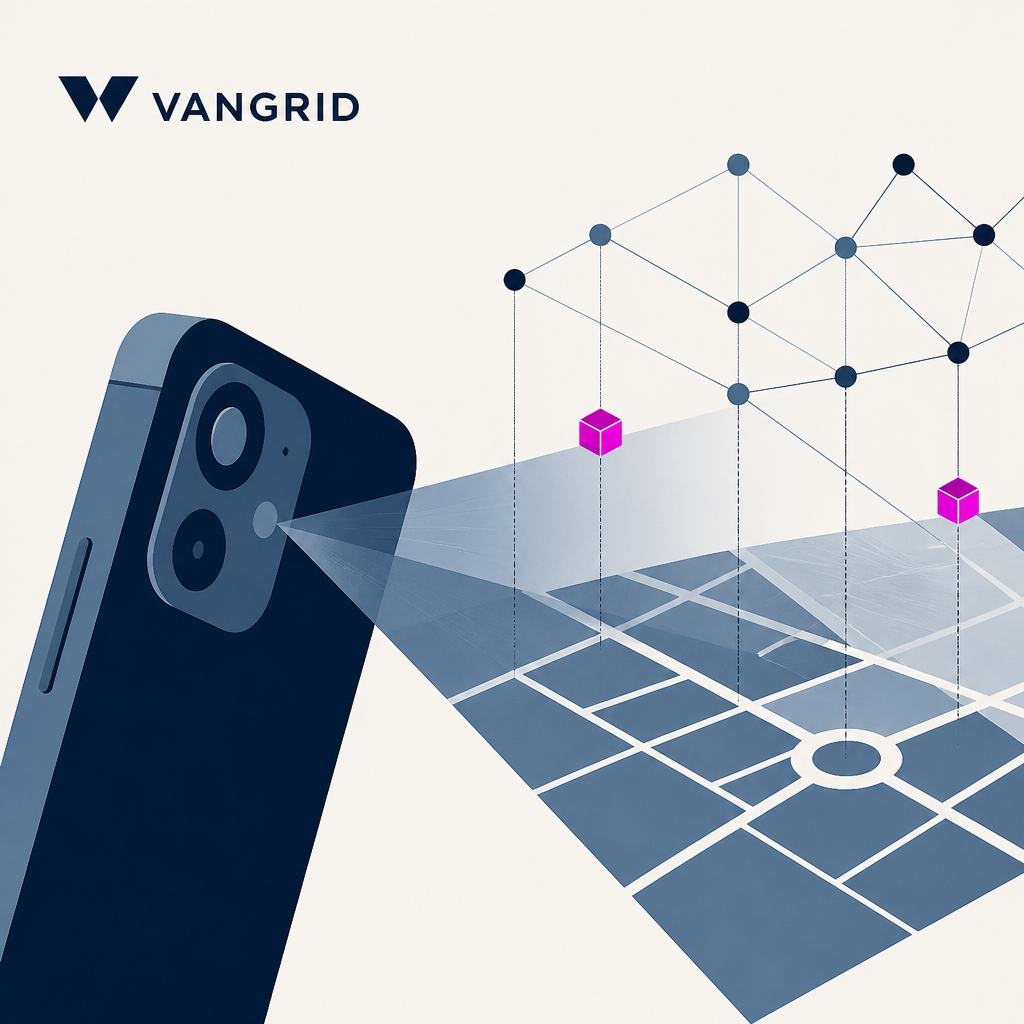 Vangrid raises $9M seed to build a decentralised spatial intelligence network for the Physical AI era
Tech.eu · 2 months ago ·
19
Vangrid raises $9M seed to build a decentralised spatial intelligence network for the Physical AI era
Tech.eu · 2 months ago ·
19