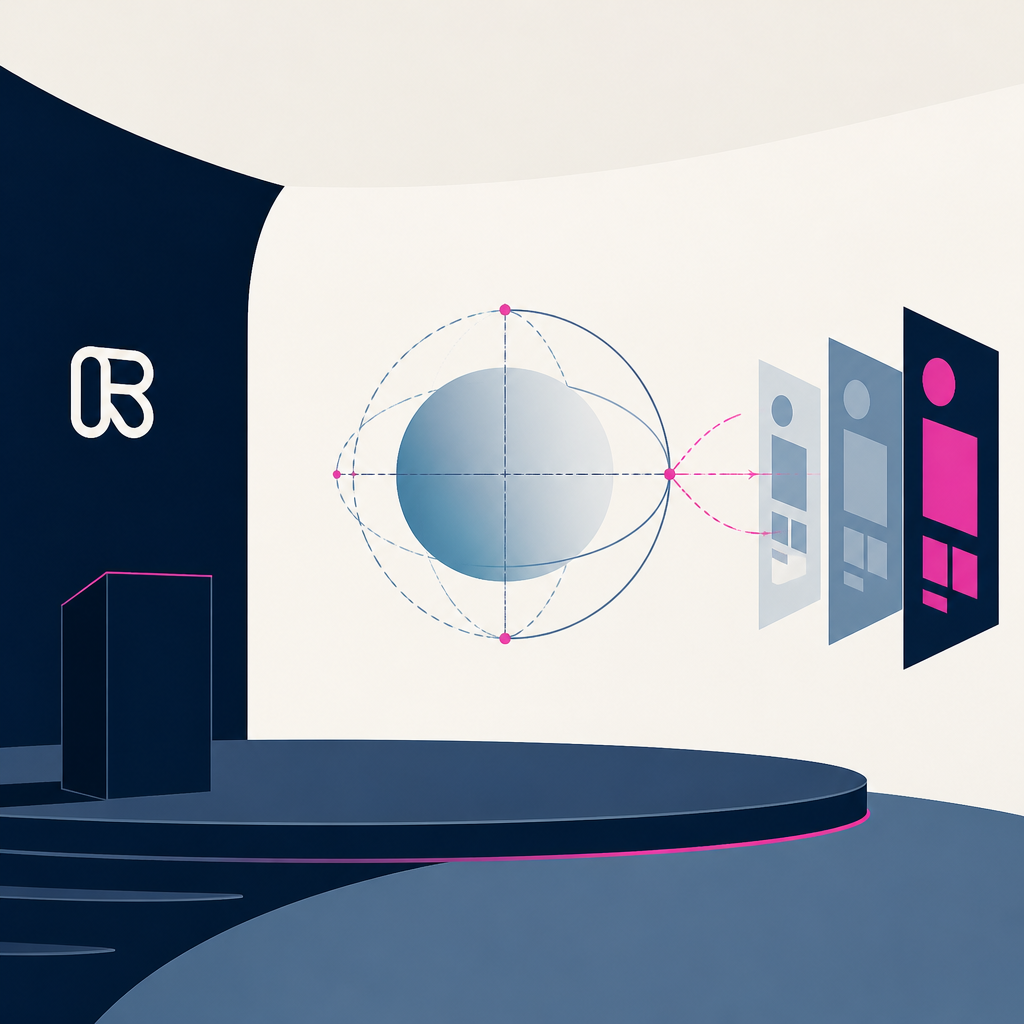
Runway wants to generate software as you use it. Solaris is its first step.
The New Stack Meredith Shubel ● Covered by 2 sources
Runway unveiled Solaris, a model that builds the interface as you use it. It’s meant to skip the code step and turn the screen itself into the app.
Based on reporting by The New Stack, Meredith Shubel — read the original for the full story.
Summary, retelling and take written by AI under human oversight; images are AI-generated illustrations. How we work · Report an error
Runway has put a name on a very specific bet: software may stop being something designed first and rendered later, and start being something generated live in front of you. Solaris, announced Monday, is the company’s first Interface World Model, and Runway says the whole point is to make the visual interface the application itself.
That is a direct challenge to the usual workflow. Today, designers sketch screens and developers translate those designs into code, with interactions mapped out in advance. Runway wants to skip that handoff. Solaris generates the interface frame by frame, watching clicks, drags, and other user actions, then deciding what should appear next. In Runway’s phrasing, the entire frame becomes the interface.
The model sits on top of Runway’s Gen-4.5 video generation system and follows GWM-1, its general world model. Runway says it cut denoising steps, taught Solaris to generate frames autoregressively, and trained it on its own outputs to keep visuals coherent over longer sessions. It also pairs Solaris with a language model so one part handles reasoning and the other handles rendering. The split is simple enough: the language model figures out what to do, Solaris draws it into the scene.
Runway’s examples are deliberately tactile. Drag a shirt onto a photo of yourself. Move furniture around a room. Drop ingredients into a salad bowl and watch the bowl change. The company’s larger claim is that this approach could help agents cope with interfaces that shift shape, since coded layouts can break the moment the screen changes.
It has tested that idea, too. In one evaluation, multimodal language models including Claude Fable 5 tried to recreate website interfaces from a single screenshot. Runway says that across 30 interfaces, reconstruction quality dropped as the visuals got more complex. In another test, Solaris went up against Claude Opus 5 on the same starting image and interaction requests. Runway says 250 people in a user study chose Solaris more often, especially for following instructions and feeling more natural in the scene.
There’s still a long list of hard problems, and Runway says so plainly: stable text, long-session coherence, better grounding in verified context, and tying generated interfaces into the rest of the software stack. But the pitch is bigger than one model. Runway is talking about a new operating layer, personalized storefronts, tutorials, and maybe a future where apps are no longer the basic unit of interaction. It’s already taking early-access requests and working with partners to launch Solaris publicly.
My take — AI-written commentary, not fact-checked reporting
This is the kind of idea that sounds wild until the old UI model starts looking tired and brittle. Open, generated interfaces are a cleaner fit for how people actually use software; closed, pre-baked screens feel more and more like duct tape on a moving target. The catch, as usual, is that a shiny demo is easy and stable text is where the ghosts live.
Read more about this at: The New Stack