Roundtables: A Conversation With the Creator of AI-Designed Viruses
MIT Technology Review MIT Technology Review

A Stanford PhD student used AI to sketch genetic plans for tiny viruses. It’s not AI-made life yet, but it’s a real step toward it.
Based on reporting by MIT Technology Review, MIT Technology Review — read the original for the full story.
Summary, retelling and take written by AI under human oversight; images are AI-generated illustrations. How we work · Report an error
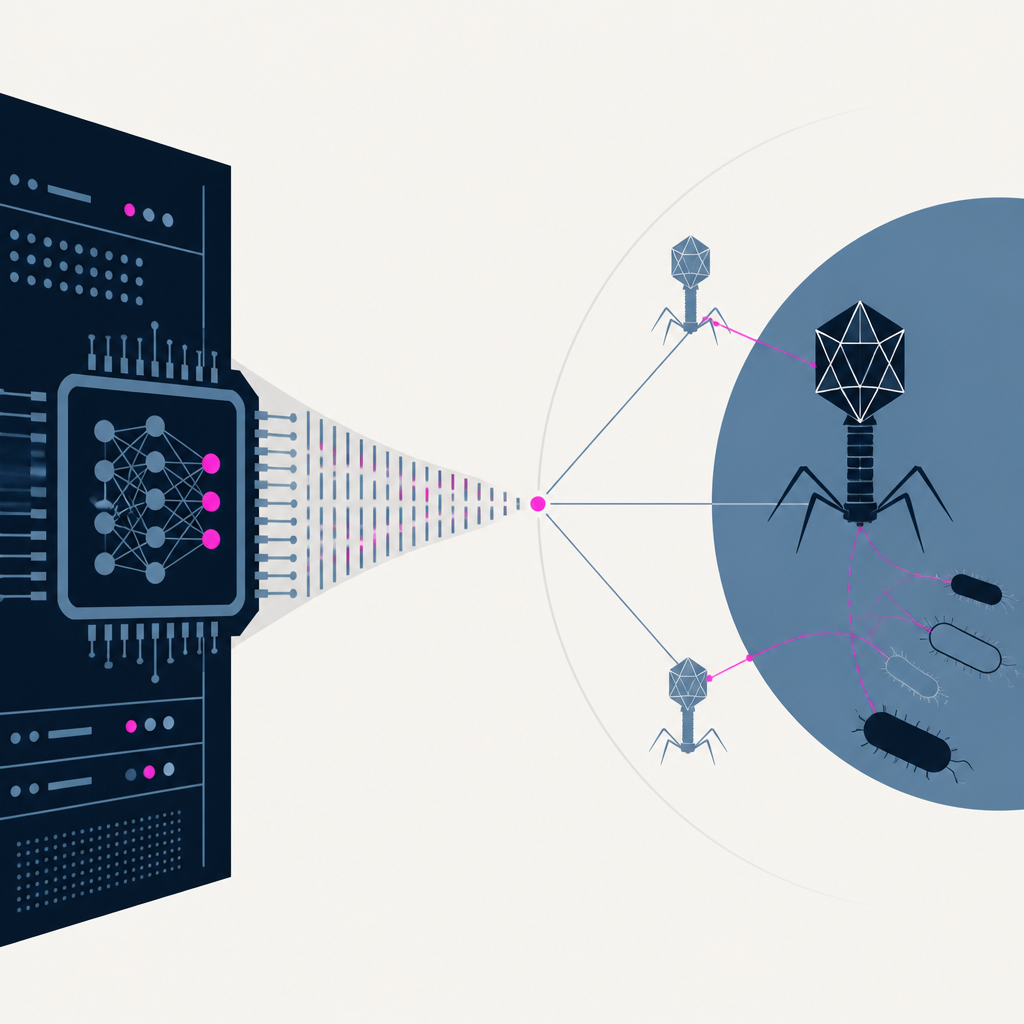
Stanford PhD student Samuel King used a generative AI model to propose genetic blueprints for microscopic viruses. That’s the basic answer he arrived at in 2025 to a question that sounds like science fiction and reads, for now, like early-stage bioengineering: can AI design new life forms?
Not quite, at least not yet. The work is not the same as AI-generated life, but it does push the idea closer to something concrete. The source frames King’s result as a preliminary answer, which is the right way to treat it. Early signals in biology often arrive as something smaller and messier than the headline suggests.
MIT Technology Review is leaning into that tension by putting King in a Roundtables conversation with senior AI reporter James O’Donnell. The interview also circles around King being named one of MIT Technology Review’s Innovators Under 35, and around the broader idea that AI may change how people look at biology, not just how they model it.
The session was recorded on Friday, October 16, 2026, and it sits alongside related coverage that makes the same point in sharper language: AI-designed viruses are already a thing, and they’re already killing bacteria. This is still a frontier with more questions than answers, but it is no longer a hypothetical one.
My take — AI-written commentary, not fact-checked reporting
This is the kind of story that makes hype merchants start purring, and they should be ignored. The real takeaway isn’t “AI will invent life tomorrow”; it’s that biology is becoming legible to models in ways most people still haven’t clocked. That’s impressive, slightly unnerving, and exactly why the serious work needs more attention than the victory lap.
Read more about this at: MIT Technology Review