Replit’s CEO says an idea from 1937 could make the org chart obsolete
The New Stack Amanda Caswell
Replit’s CEO says AI agents could take over most company work. He thinks that would flatten the org chart, and he’s betting on it by 2030.
Based on reporting by The New Stack, Amanda Caswell — read the original for the full story.
Summary, retelling and take written by AI under human oversight; images are AI-generated illustrations. How we work · Report an error
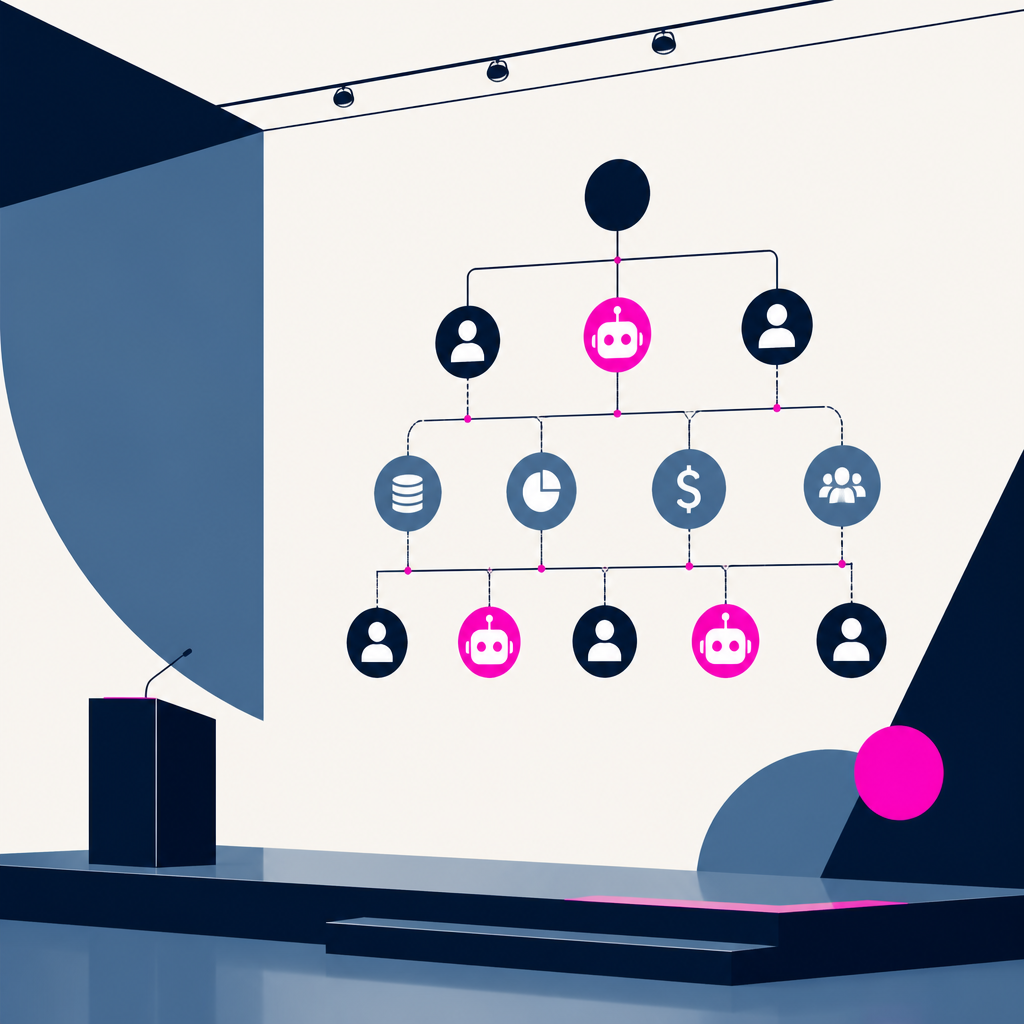
Replit CEO and co-founder Amjad Masad is pushing a big claim: AI agents are not just useful helpers, they are the thing that could make the old company structure look unnecessary. In a thread on X on Monday, he said businesses are moving toward a “self-driving company” where people handle judgment and agents do most of the execution.
His argument leans on Ronald Coase’s 1937 question of why firms exist at all. Coase’s answer was that companies exist because internal coordination is cheaper than using the market for everything. Masad says AI is about to crush those internal coordination costs — the meetings, the reporting, the management overhead that firms have treated as part of the deal for decades.
He went further and said “every company in the Fortune 500 will be a Self-Driving Company” by the end of 2030. That’s a lot of confidence for a future that still has a very long runway, but Replit is already building products around the idea. Replit for Business gives AI agents access to company systems, data, and workflows while keeping permissions and approvals in place. Masad calls the setup an “Agent Habitat,” where agents can work alongside employees and each other without roaming free across company resources.
That freedom problem is the real tension here. Masad is reacting to the messy way many companies already use agents: scattered chat windows, personal accounts, custom scripts, and credentials handed out ad hoc by employees. Replit’s answer is to centralize the controls instead of letting agents sprawl everywhere. The company also wants employees to reuse what agents learn, so a correction in one place can become shared instruction for others.
On Tuesday, Replit took another step with Cloud Agents, which let employees change a codebase without setting up a development environment or understanding the application’s guts. Engineers still approve what ships, but employees can bring them tested changes instead of filing a ticket and waiting. Replit says the setup is already cutting costs in its own testing, with a 51% drop in token use and a routine data task falling from 16 minutes to one, while output quality stayed the same. It also says code output nearly tripled in the first half of 2026 without longer review times or more reversions or production incidents. Those are nice numbers, but they’re still Replit’s numbers.
The company is also using agents beyond engineering, with designers building features and support teams digging into customer issues. Cloud Agents are generally available to Pro and Enterprise customers, while skills are still in early access. The bigger “Agent Habitat” idea is still a blueprint, and Replit hasn’t shown that agents can really run company-wide work the way Masad imagines.
My take — AI-written commentary, not fact-checked reporting
This is classic AI-company ambition: turn messy human coordination into a product and call it the future. The trick is that the hard part is usually not execution, it’s deciding what to trust, what to approve, and who gets blamed when the shiny agent goes off-script. The org chart may not die, but it will absolutely grow a few new permission layers and a lot more paperwork with better branding.
Read more about this at: The New Stack