
Here's what the AI-native org chart could look like
Fortune Kristin Stoller
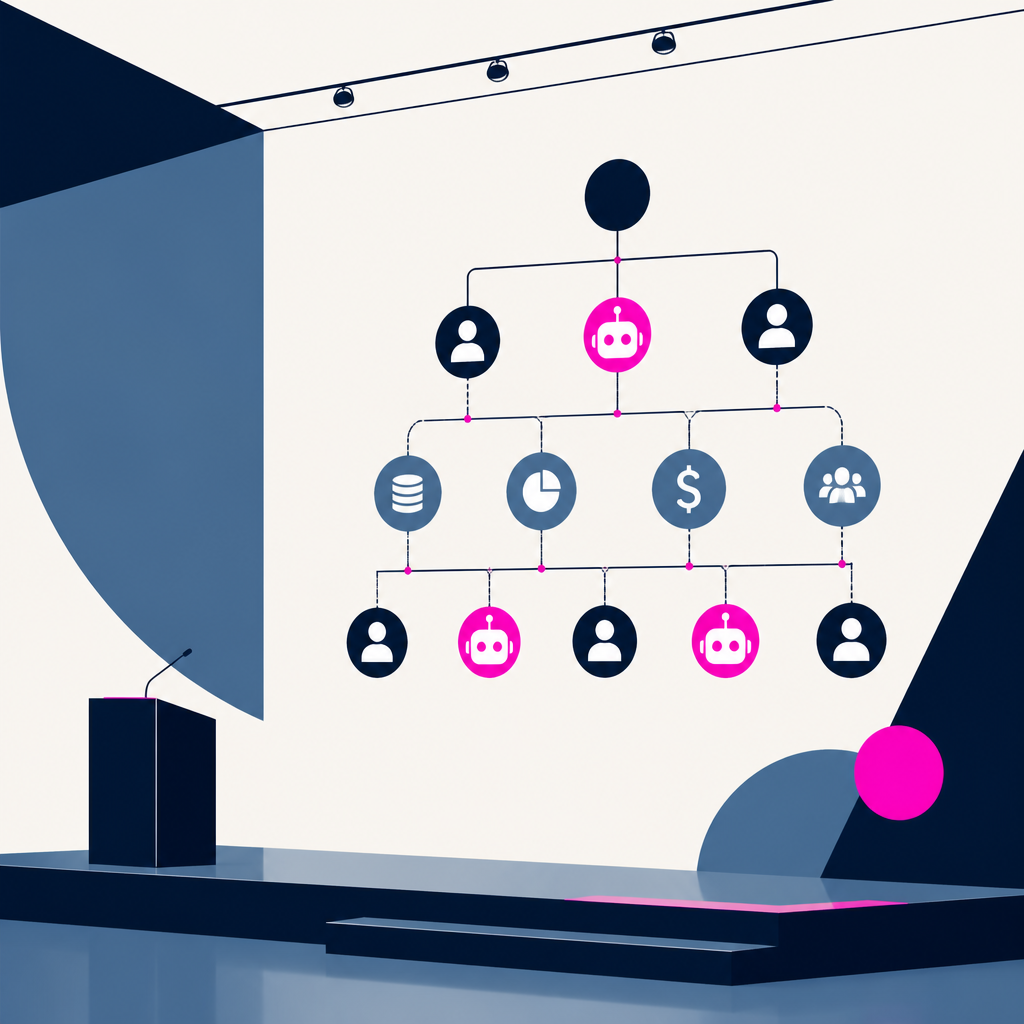
MIT’s Paul Cheek wants the org chart to map people and AI access, not just bosses and reports. He says HR could end up running how companies decide who — or what — does the work.
Based on reporting by Fortune, Kristin Stoller — read the original for the full story.
Summary, retelling and take written by AI under human oversight; images are AI-generated illustrations. How we work · Report an error
The org chart may be headed for a rewrite. MIT professor Paul Cheek is pitching a version that doesn’t just show reporting lines, but also who can touch which systems, who can spend from which budgets, and who gets pulled into which projects.
That’s a pretty sharp shift for HR chiefs, and Cheek wants them in the middle of it. His argument is that as AI spreads through the workplace, CHROs should own the question of how humans and AI agents are arranged across the company. In his telling, HR isn’t just about headcount anymore. It’s about deciding when a role needs human judgment and when an AI agent’s uptime is the more useful thing to manage.
Cheek is backing that idea with numbers from a study by his independent research group, the AI-Driven Enterprise Institute. Just over 30% of executives at S&P 500 companies are AI-literate, the study found, and that group is delivering 78% stronger AI execution than their peers. His prescription starts with training: teach executives and employees how AI works, then build from there.
And then comes the bigger move: rethink the org chart itself. In Cheek’s model, it would be a living document, updated as AI agents are added, retired, or even start building agents of their own. It would also track access to things like social media accounts and Salesforce, along with spending authority and decision-making responsibilities.
Cheek admits he hasn’t found a company that has actually done this yet, though he says AI could help generate the chart and that he has built a prototype himself. Still, he’s making a fairly blunt bet: the CHROs who lean into this shift will become some of the most influential leaders in the company. That is a lot of power for a role that used to be seen as mostly paperwork and policy.
My take — AI-written commentary, not fact-checked reporting
This is the rare AI pitch that gives HR more power instead of more admin, which is probably why it sounds both smart and slightly dangerous. Open-model cheerleaders will love the flexibility; everyone else should notice the surveillance-shaped shadow behind the nice language about “access” and “responsibilities.” If the future org chart needs to track who can spend, who can click, and who gets consulted, then the real question is whether companies trust humans less than they trust the spreadsheet that follows them around.
Read more about this at: Fortune