
Physical AI’s moment has arrived – but moving from demo to deployment is the hard part. AWS wants to fix that
SiliconANGLE Zeus Kerravala
AWS is pushing cloud tools for robots and other physical AI systems. The hard part isn’t the demo — it’s getting them to work safely in messy real places.
Based on reporting by SiliconANGLE, Zeus Kerravala — read the original for the full story.
Summary, retelling and take written by AI under human oversight; images are AI-generated illustrations. How we work · Report an error
Physical AI has moved from buzzword to building block, and AWS wants a bigger role in the messy part between a flashy demo and something a company can actually run. Last month, the cloud giant rolled out cloud-to-edge tools for customers building systems that perceive, reason about and act in the physical world. That means robots, industrial machines, cameras and autonomous mobile robots that have to deal with real environments, not neat prompt boxes.
The pitch is simple enough. Traditional robotics was built around fixed instructions. If the world changed, the machine usually needed help. The newer approach starts with a model, feeds it sensor data and lets it learn from experience. Sri Elaprolu, who runs AWS’s Generative AI Innovation Center, said the field is broadening beyond large language models into world models, vision-language-action models and systems that power robotic fleets.
But the nice story stops when the hands come out. Dexterous manipulation is still hard, because a machine has to see, feel, calculate and recover from mistakes all at once. AWS customer RLWRLD is attacking that with RLDX-1, an 8.1-billion-parameter robotics foundation model for five-fingered dexterity. It blends vision-language understanding with proprioception, tactile sensing and torque sensing, and it’s meant to work across single-arm, dual-arm and humanoid systems. The catch is that the model is only one piece of the puzzle. RLWRLD trains on hundreds of terabytes of factory and service data, which tells you where the real work lives.
Data is the bottleneck that keeps showing up. Config, another AWS partner, has built a robot-data pipeline with more than 200,000 hours of action data and adds about 20,000 hours a month. Even so, it still had trouble with variation in lighting, surfaces and object types. AWS and Config used a generative, multi-view augmentation pipeline built with a post-trained version of Nvidia’s Cosmos-Transfer2.5 model, and Config said an out-of-distribution test saw success rates rise from 8.3% to 75% when augmented data was added. That kind of jump is why synthetic data is turning from nice-to-have into necessity.
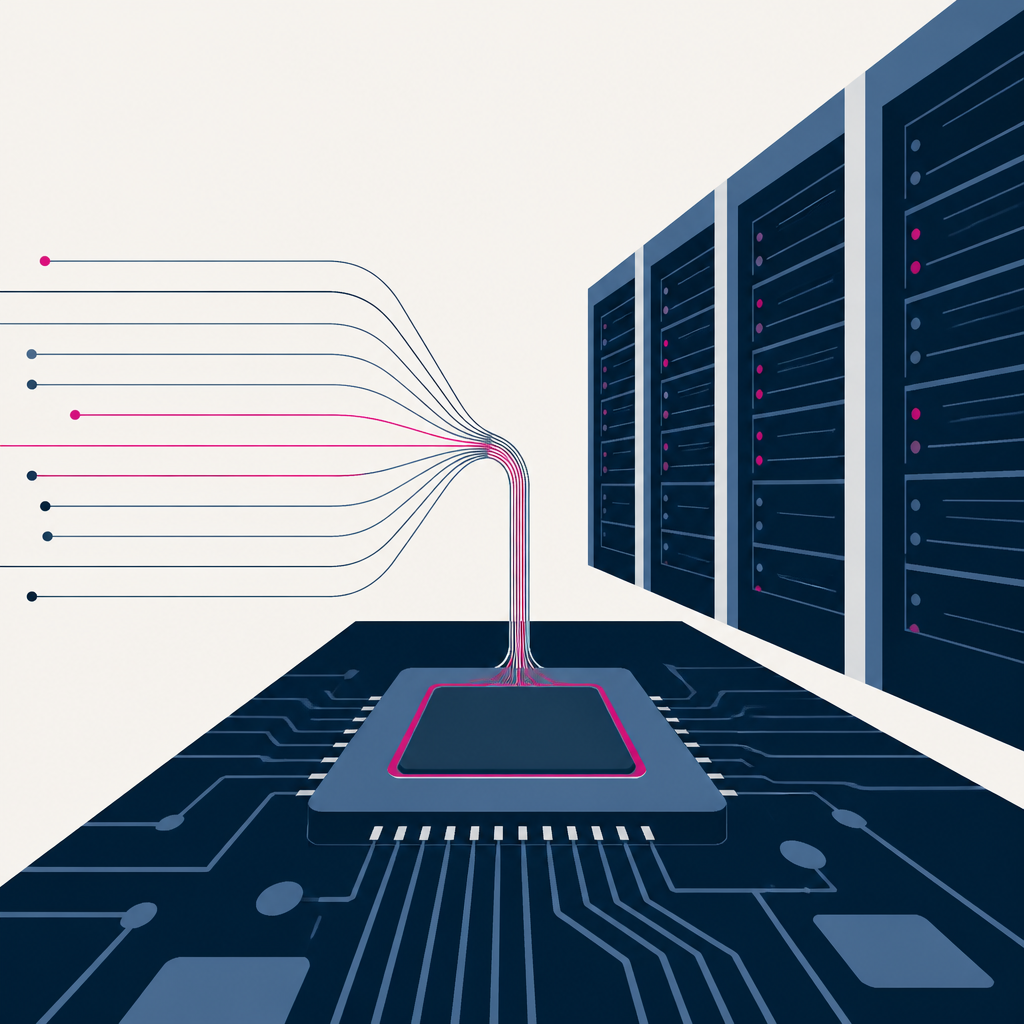
Then there’s the cloud-versus-edge problem. Big models can train in the cloud, but a robot in a hospital hallway or a machine on a production line can’t wait for a round trip to a distant region. AWS is pushing a tiered setup: cloud for training and orchestration, edge infrastructure for local intelligence, and smaller models on devices. Its work with Edge Impulse shows the pattern well: lightweight object detection on edge cameras, then a quantized vision-language model only when something is detected. The company is also lining up the rest of the stack, from EC2 GPU instances and SageMaker to IoT Core, Greengrass and partner tools for industrial systems. The message is plain: physical AI won’t be won by the biggest model, but by the best operating system around it.
My take — AI-written commentary, not fact-checked reporting
AWS is doing what cloud companies always do when a new category gets real: trying to become the plumbing before anyone notices the pipes. That’s probably the right bet, because physical AI won’t be decided by one clever robot demo; it’ll be decided by boring things like latency, rollback and data pipelines. The irony is delicious: the future of robots may depend less on robot companies than on whoever makes deployment less miserable.
Read more about this at: SiliconANGLE
Related stories
 Put AI to work: Lessons from hundreds of successful deployments
OpenAI · 2 years ago ·
40
Put AI to work: Lessons from hundreds of successful deployments
OpenAI · 2 years ago ·
40