
Perplexity just separated reasoning from authority. Here’s why it matters for enterprises.
The New Stack Janakiram MSV ● Covered by 5 sources
Perplexity split its agent’s thinking from its power to act. That makes the security boundary the real story, not just the pricey hardware.
Based on reporting by The New Stack, Janakiram MSV — read the original for the full story.
Summary, retelling and take written by AI under human oversight; images are AI-generated illustrations. How we work · Report an error
Perplexity has pushed its Computer agent into a local-first form called Portable Computer, running on an Nvidia DGX Spark workstation. That setup is not cheap: the DGX Spark starts at $4,700, and even an older 24GB RTX 3090 still goes for more than $1,500. But the hardware bill is only the obvious part of the story.
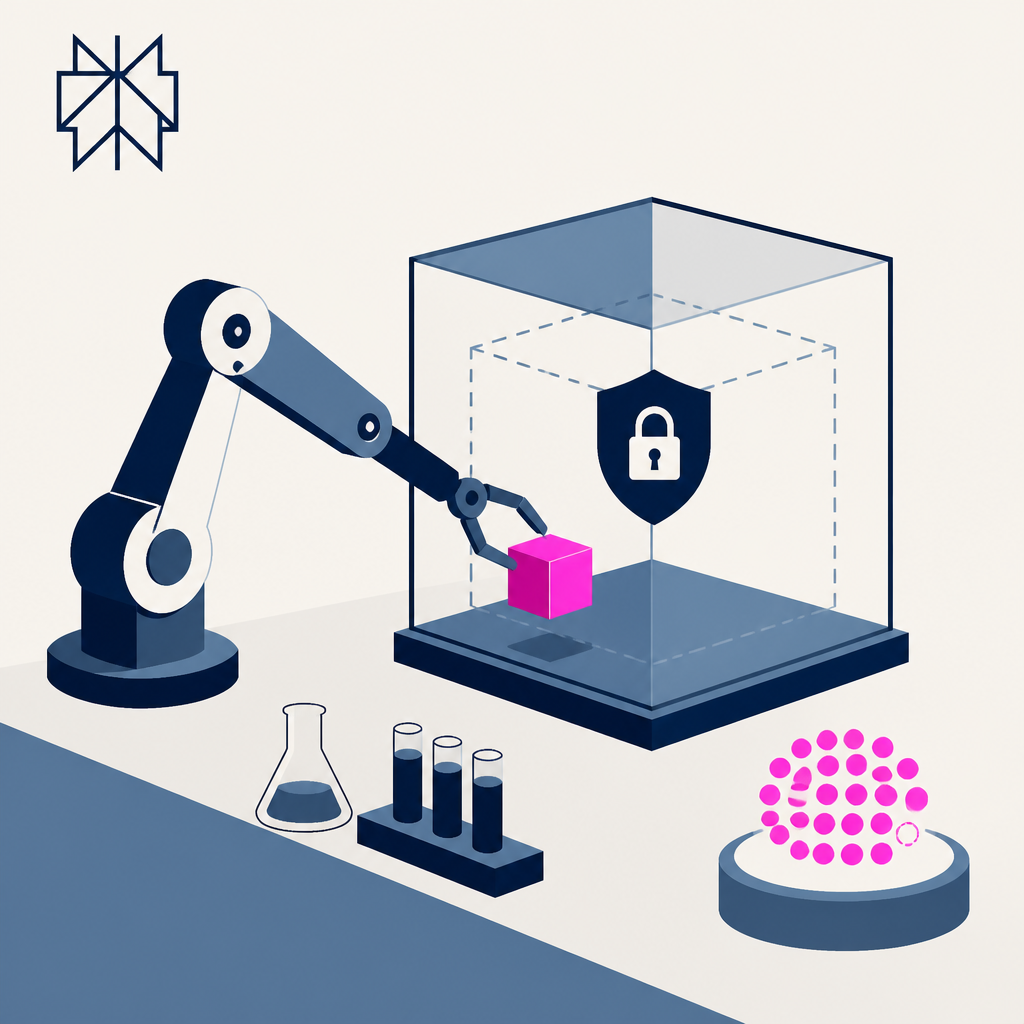
The more interesting move is architectural. Instead of piling on more models to improve reliability, Perplexity split thinking from authority. The local model proposes what to do next, including when to call a tool or ask a cloud advisor for help. A separate runtime controller — which Perplexity also calls the orchestrator — handles context, policy, and approved tool calls inside an OS-level sandbox. The company says that controller is deterministic code, not another model.
That distinction matters because it changes where you look for risk. In Perplexity’s setup, the sandbox is the real boundary. It restricts processes, filesystem paths, and network access, and if the sandbox isn’t available, the harness shuts itself down before any tool call happens. Deterministic code can still make a bad choice, or execute a permitted mistake, but it can also make permission rules much easier to inspect.
Perplexity says it kept the base model and silicon constant while comparing three agent stacks built around Qwen3.8-27B on the same DGX Spark. On its internal Local Knowledge Work Bench, a 53-task held-out set, Computer scored 82.6%, ahead of Pi at 77.6% and Hermes at 74%. On ParseBench-100, which covers charts, layouts, tables, and formatting, Computer scored 65.1%, while Hermes hit 34.6% and Pi 13.9%.
The company also says post-training helped: its PPLX 27B reached 85.4%, above the base-model figure. And context management mattered too. Although Qwen3.8-27B advertises a 260,000-token window, Perplexity says it starts to struggle beyond 100,000, so the harness keeps the core prompt and toolset small and loads skills only when needed. The whole package is still vendor-reported, and the bench is not open source yet, which is exactly why enterprises should care less about the model name and more about who gets to say yes.
My take — AI-written commentary, not fact-checked reporting
This is the part of agent systems everyone keeps skipping past: not the chatty model, the boring control layer. Open models get the headlines, but the enterprise value sits in the permissioning, the sandbox, and the parts that fail closed instead of failing poetic. If the policy lives in code, at least somebody can audit the mess without reading tea leaves.
Read more about this at: The New Stack
Related stories
 Perplexity Portable Computer Is Now Available on Windows, Powered by NVIDIA RTX
NVIDIA Blog · 1 month ago ·
6
Perplexity Portable Computer Is Now Available on Windows, Powered by NVIDIA RTX
NVIDIA Blog · 1 month ago ·
6
 Perplexity open-sourced SPACE, the sandbox behind its Computer agent
Perplexity AI · 3 days ago ·
16
Perplexity brings its Personal Computer AI agent to Windows
SiliconANGLE · 2 months ago ·
13
Perplexity open-sourced SPACE, the sandbox behind its Computer agent
Perplexity AI · 3 days ago ·
16
Perplexity brings its Personal Computer AI agent to Windows
SiliconANGLE · 2 months ago ·
13