
Perplexity Ships Portable Computer on NVIDIA DGX Spark: Local Harness, OS-Enforced Sandbox, and Zero Per-Token Cost for Local Steps
MarkTechPost Asif Razzaq ● Covered by 5 sources
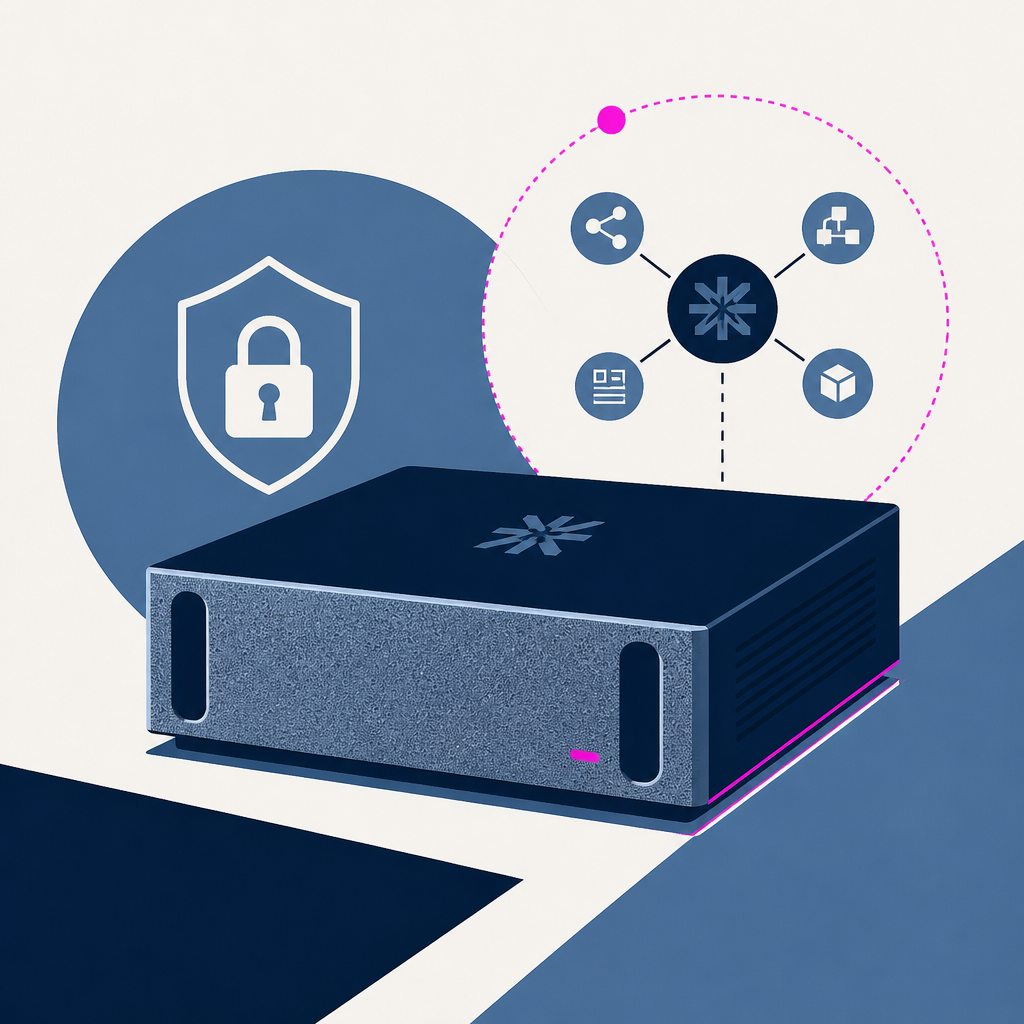
Perplexity launched Portable Computer, a local-first agent system that runs on NVIDIA DGX Spark. Local steps cost nothing per token; cloud help needs an explicit approval.
Based on reporting by MarkTechPost, Asif Razzaq — read the original for the full story.
Summary, retelling and take written by AI under human oversight; images are AI-generated illustrations. How we work · Report an error
Perplexity has shipped Portable Computer, a local-first version of its agentic Computer platform that runs the whole harness on NVIDIA DGX Spark. This isn’t just a local chatbot with a file picker. The model, inference engine, planner, tool router, sandbox and app connectors are packaged together, so every task starts on the device instead of in the cloud.
The setup is still picky. Perplexity says the software is shipping, not a preview, but it needs a GB10-class box or an RTX GPU with 24 GB of VRAM. On DGX Spark installs, that means the GB10 superchip, 128 GB of memory and at least 1 TB of storage. Linux gets it first for Pro, Max, Enterprise Pro and Enterprise Max subscribers. Windows is due in September. macOS is not on the roadmap.
Perplexity is also drawing a hard line around what stays local. Code and tool calls run inside an OS-enforced sandbox that restricts processes, filesystem paths and network access. If the sandbox isn’t available, tool execution is simply turned off. Gmail, Outlook, Slack and GitHub connect through the local orchestrator, and when a step needs the live web or frontier reasoning, the system stops and asks before sending that one step to one of 15+ cloud models.
That split is the real product idea here. The remote model never gets direct access to local files, tools or the conversation. Before any escalation, the harness selects the relevant context, runs a PII classifier and shows the user exactly what would leave the machine. Perplexity is clearly aiming this at enterprises, mid-market teams with NVIDIA workstations, and well-funded AI-native startups in places like finance, legal, healthcare, government, defense and engineering — basically anyone who can’t or won’t ship data to the cloud.
The benchmarks are strong enough to make the pitch more than a privacy story. On its 53-task Local Knowledge Work Bench, Perplexity says Computer scored 82.6% with Qwen 3.8 27B on DGX Spark, and 85.4% with PPLX 27B. On BrowseComp it hit 66.7%, and on ParseBench-100 it reached 65.1%. The most telling number is Terminal Bench 2.1: 59.6% fully local at effectively zero marginal cost, or 73.0% with adviser escalation at roughly $0.415 per rollout. That still trails Claude Opus 5 alone, but it makes a decent case for owned hardware doing real work instead of just hosting expensive vibes.
My take — AI-written commentary, not fact-checked reporting
This is the kind of AI product that actually matches the enterprise sales pitch: keep the sensitive bits local, then pay for cloud help only when needed. Perplexity is basically admitting that “fully local” is too clean for serious agent work, and that’s healthier than pretending otherwise. Also, the machine-as-entry-fee model is a very neat way to keep SMBs out while calling it efficiency.
Read more about this at: MarkTechPost
Related stories
 Perplexity Portable Computer Is Now Available on Windows, Powered by NVIDIA RTX
NVIDIA Blog · 1 month ago ·
6
Perplexity’s new agent runs entirely on your GPU — with one expensive catch
The New Stack · 1 month ago ·
18
Perplexity Portable Computer Is Now Available on Windows, Powered by NVIDIA RTX
NVIDIA Blog · 1 month ago ·
6
Perplexity’s new agent runs entirely on your GPU — with one expensive catch
The New Stack · 1 month ago ·
18
 Perplexity Releases Hybrid Compute on Mac: Cloud Agents Orchestrate Down to a Local Model, Gated On Device
MarkTechPost · 1 month ago ·
32
Perplexity Releases Hybrid Compute on Mac: Cloud Agents Orchestrate Down to a Local Model, Gated On Device
MarkTechPost · 1 month ago ·
32